
A Tale Of Two Michelin Meals
In Croatia, fancy food done right and wrong

Back in 2022, when my wife and I visited Croatia, we went to two Michelin restaurants. One was a true Michelin-starred place; the other was just a step below, an entry in the Michelin Guide. The two meals could not have been more different—and it surprised us both that the greatly inferior meal was the starred one, not the mere Guide one.
Monte, the Michelin-starred establishment—the first restaurant in Croatia to receive a Michelin star—was not just mediocre. Our meal, anyway, was actually bad, and we agreed that it was the worst and most overpriced food we had on the whole trip. The other meal, conversely, was one of our favorites, and was pretty moderately priced for the type of place it was.
What I found interesting about these two meals was not just the inconsistency of relying on Michelin recommendations (or perhaps that we have pedestrian tastes), or just the anecdote of a Michelin meal being no good. It was rather that these restaurant meals were poor, and excellent, in interesting ways.
Five-course Monte
A negative review on TripAdvisor, which for me perfectly captured the overly engineered but ultimately unimpressive food at Monte, received this response from the owner: “The story above says more about You, as a person, than about us, as restaurateurs.”
Maybe it does, but not the way he thinks.
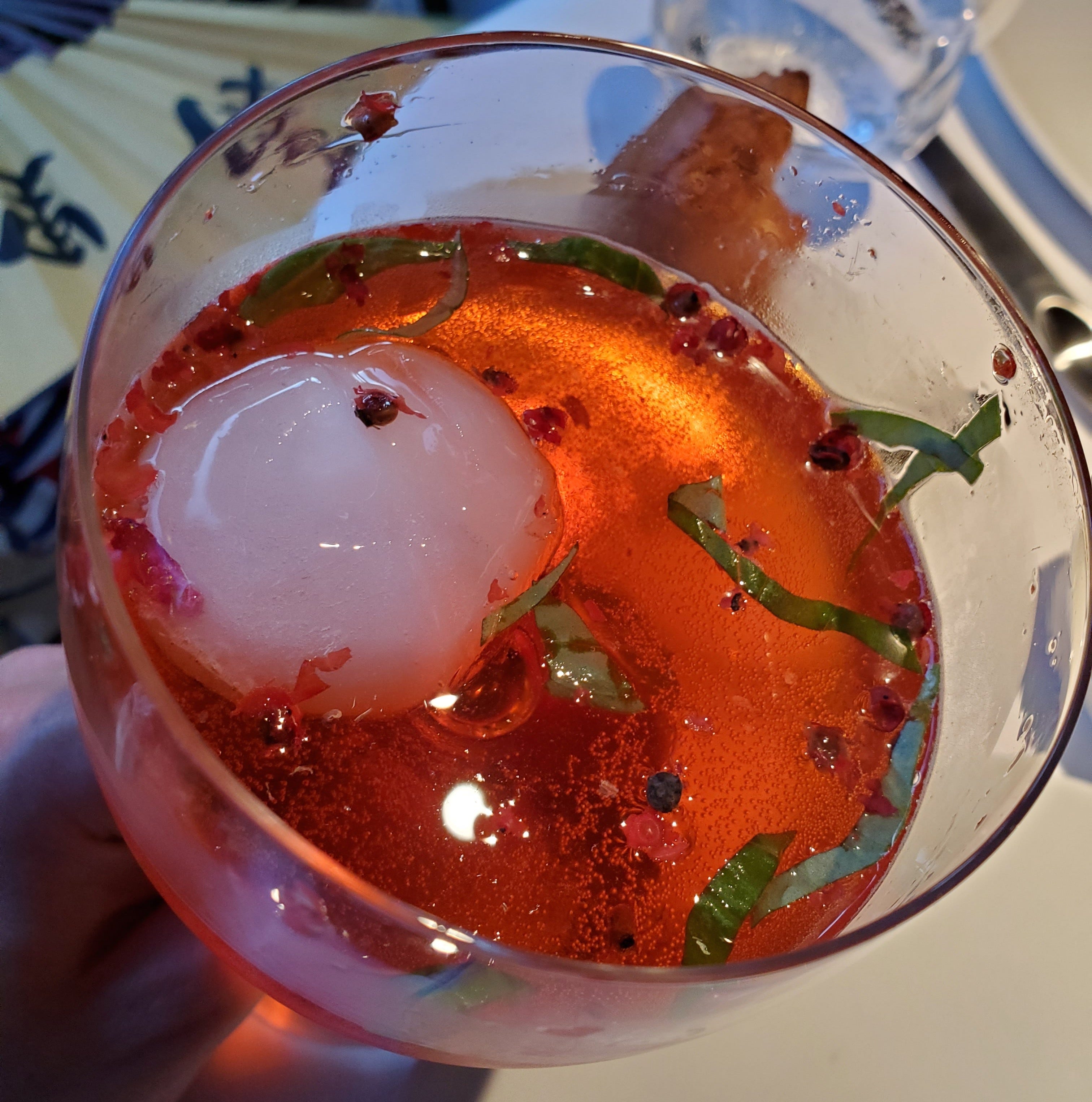
The whole experience felt like a parody of a Michelin star/fine-dining restaurant. First off was a creative cocktail with pink peppercorns in it. Not pink peppercorn oil or essence; actual crunchy/chewy pink peppercorns, with little papery outer skins, floating in the otherwise decent but unremarkable drink.
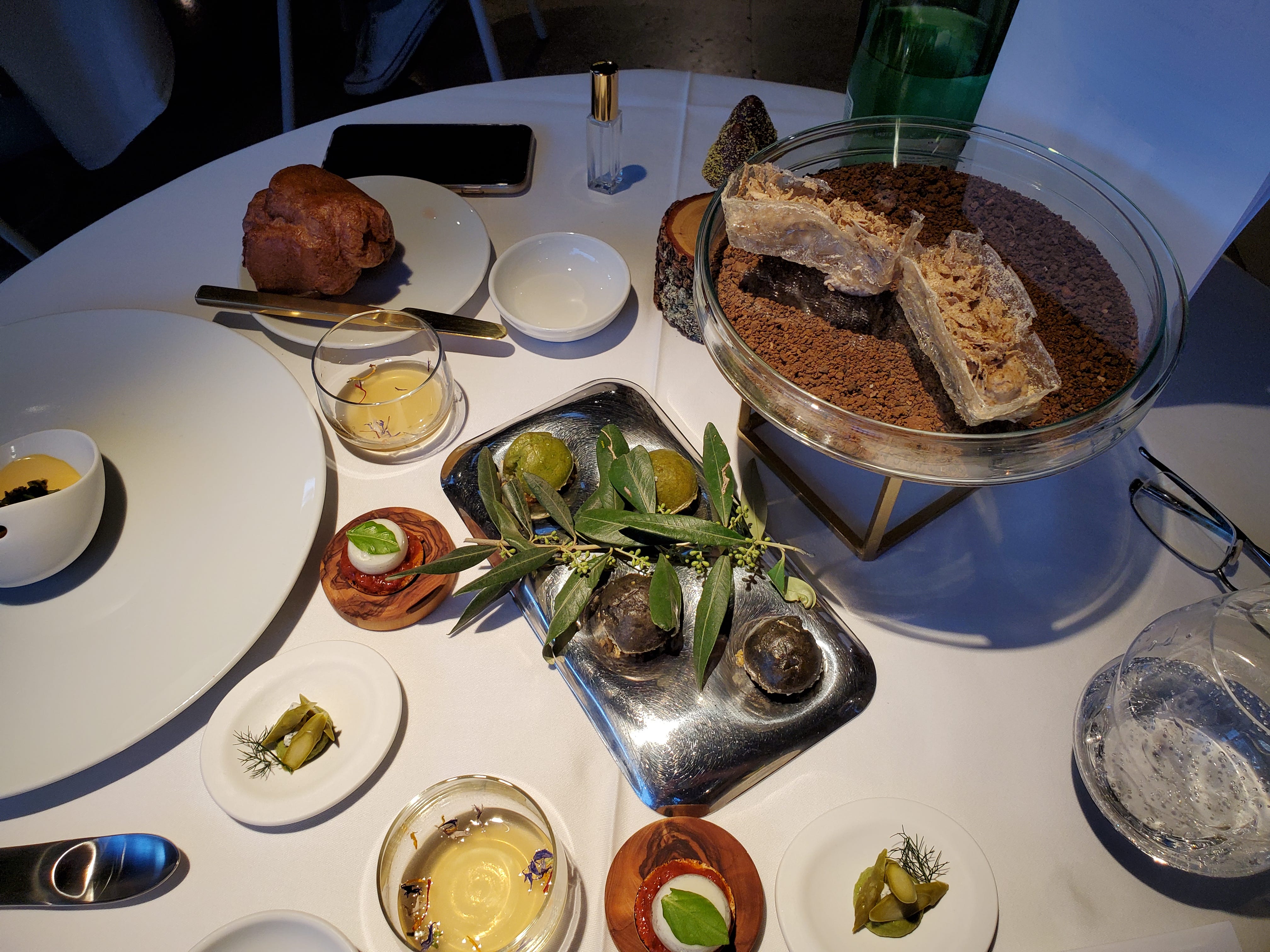
The bread came in a tray of crystalline rocks and pebbles, which looks neat, but which presents a non-zero chance of a smaller rock getting into a bite of bread (dental work not included in dinner price). The olive oil came in a tall test tube tucked into a little nook in the bread tray, finnicky to pick up and down.
The service was…strange. There were a lot of waiters, and they seemed to swarm the table, removing and placing different stuff during course changes. My wife and I thought it felt like a bit from a Three Stooges short where, say, they were mistaken for the waitstaff at a fancy restaurant they were trying to hide in, or something.
The food itself was just surprisingly uninteresting but absurdly over-engineered. One of the dishes was raw mussels in a vinaigrette. Okay, that’s interesting—mussels aren’t usually eaten raw, and these must be very good quality to eat that way. But they didn’t taste amazing, and I mean, mussels? Not oysters? Not a live scallop?
What even is this?
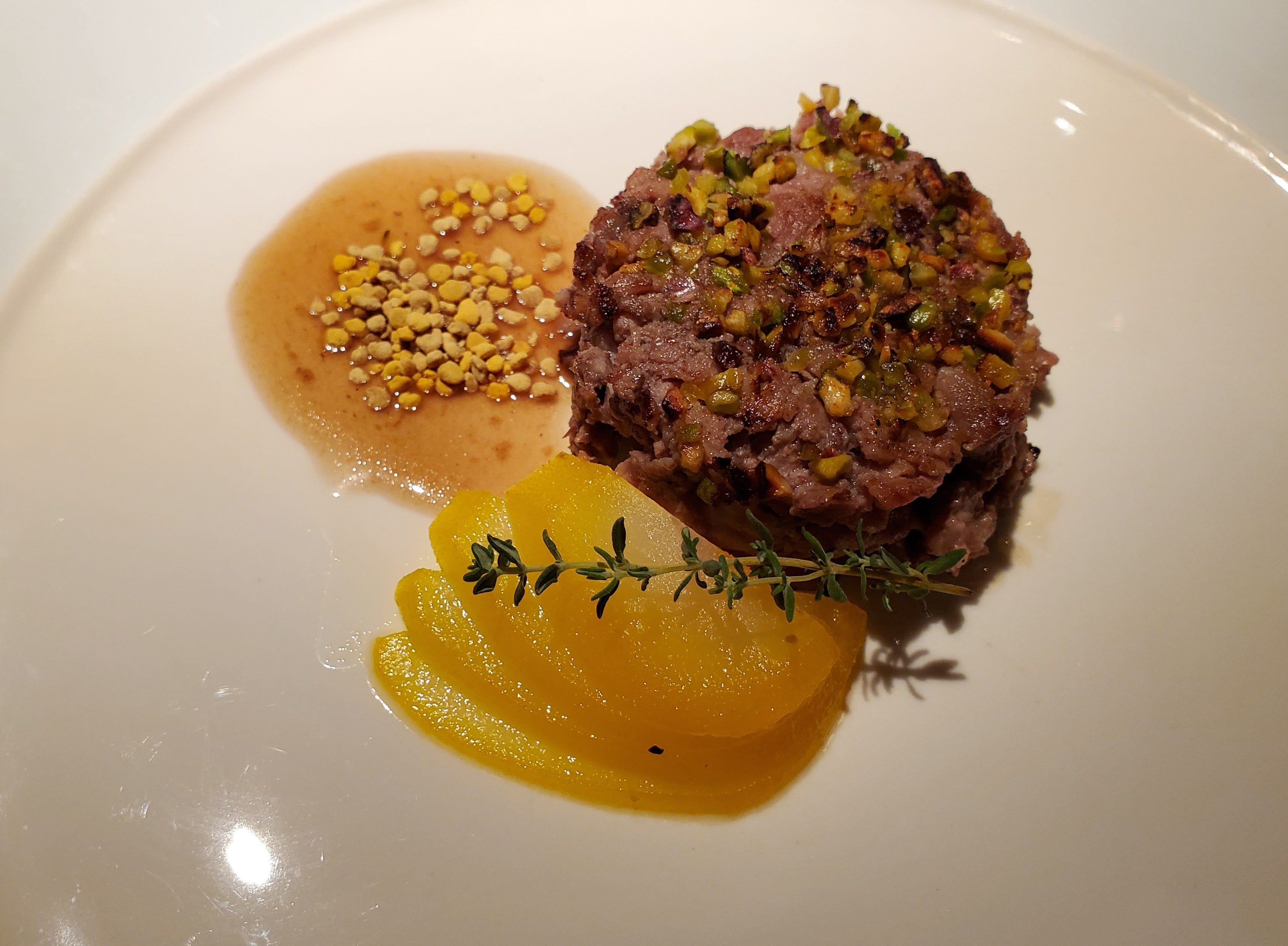
The only other course I actually remember was a chopped/ground wild boar terrine. The boar meat tasted livery and overcooked if not burned. It was not tender or tasty. It was dry. It didn’t really even look nice.
There were no expensive courses to justify the price, not even cheating—you know, caviar over lobster topped with gold leaf, or whatever. In fact, the only thing that wasn’t pretentious was the food. When the bill came, we were somewhat shocked. This was a meal in the $150-200-per-person territory, and there was not a single course that was even really good, let alone wow, this is amazing, how did they make this? In terms of the price-to-quality ratio, this remains one of the worst restaurant meals we have ever had.
The Guide beats the Star
Our Michelin Guide-recommended restaurant was Pod Zidom Bistro, an upscale place in Zagreb, the Croatian capital. We didn’t choose it because it had the Guide recommendation, but we decided not to skip it for that reason either, which we had contemplated doing.
I’m glad we went, because it was really, really good. Not just good, but good in the way that fine, “chef-driven” food should be; combinations or concoctions that taste great and yet don’t seem like obvious pairings or ideas. But once the chef puts it in front of you and you try it, you feel like you should have been able to think of it. It’s elevated, non-obvious food that is more than the sum of its parts, and it’s creative, not just stacking expensive ingredients on each other.
Two examples of this really stood out to me; I could see how the chef was thinking. For example, one dish of fish carpaccio used a sauce of pureed green apple, cilantro, and coriander oil. (Sauce not pictured—it was poured after I took this quick picture.)
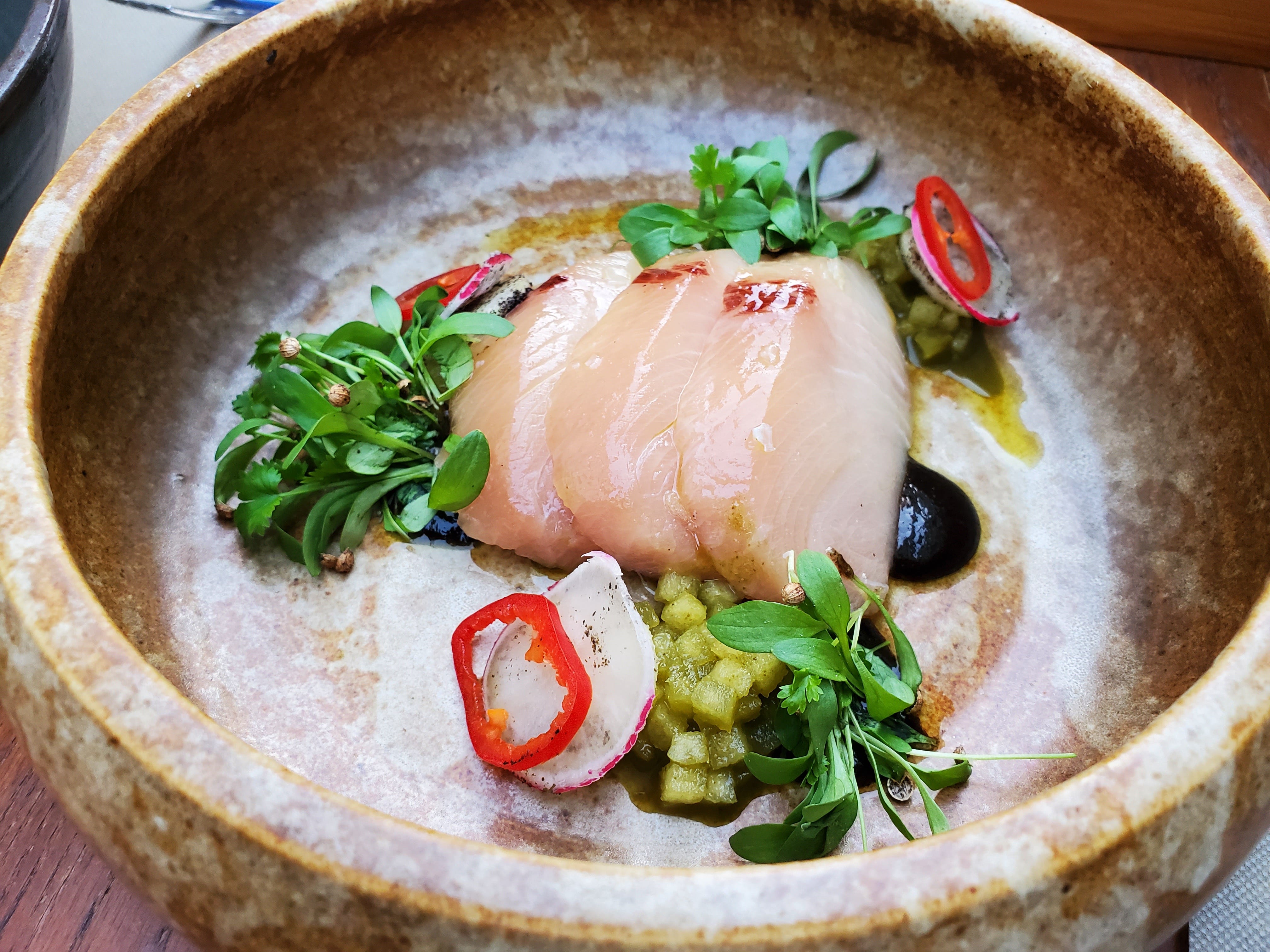
That sounds weird—cilantro and apple? But it worked. It had a fresh grassy sweetness, like a sweeter Indian chutney. Another dish was a hot chili beef tartare. That sounds a little weird or gimmicky. But it was incredible; it took a cold dish and gave it a “warm” element. Fundamentally familiar but enhanced in a non-obvious way that just works.
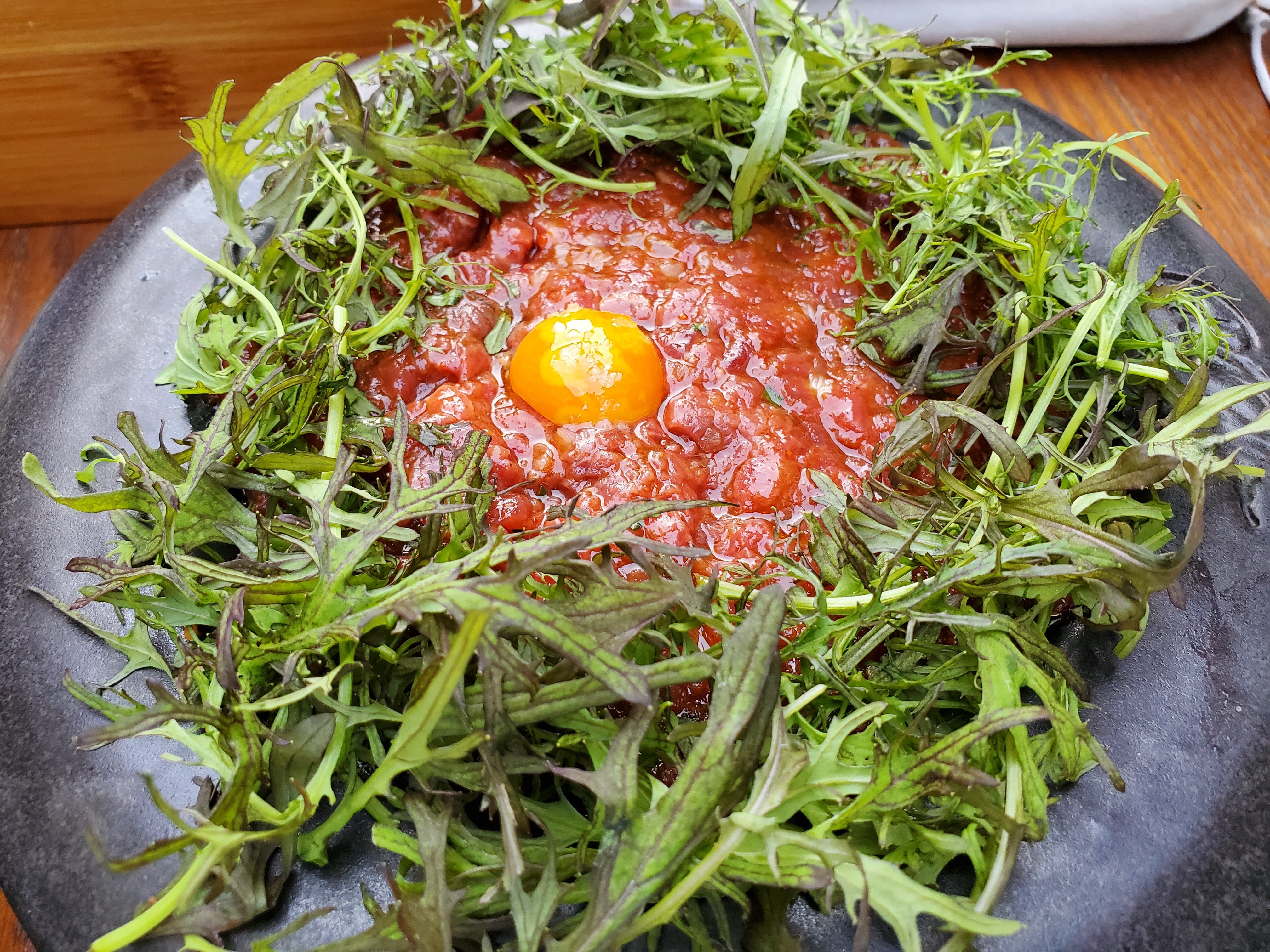
Those were appetizers—the entrees weren’t revelations like that, but they were good, in that sort of “elevated but familiar” plane. Roast lamb belly, an unusual cut, and a pasta dish:
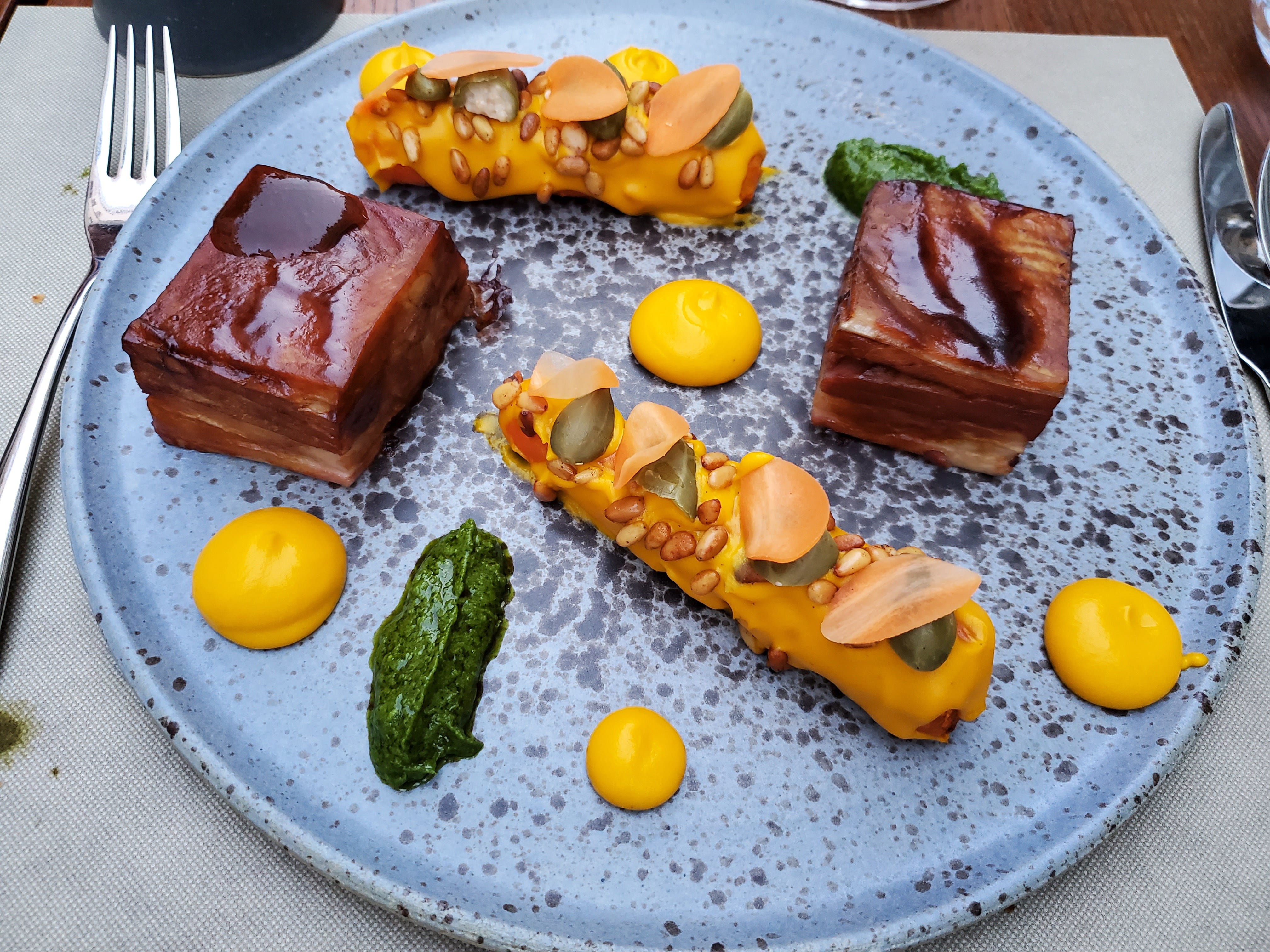
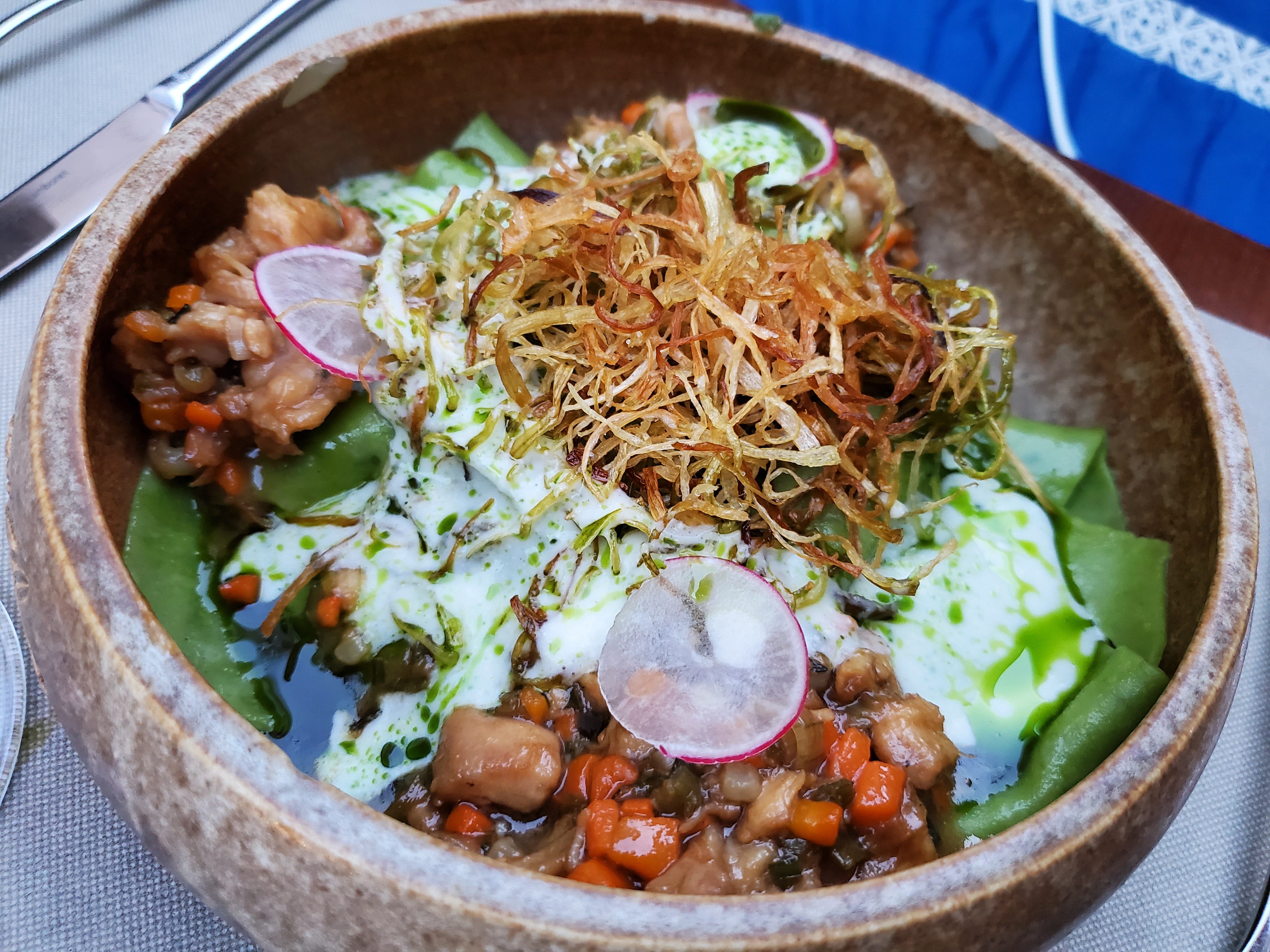
You could see the Michelin aspect, I guess. The green sauce was poured at the table from a jug. The food had that look to it that a lot of upscale places have, of a lot of effort going into the plating and final appearance. I remember thinking that the Michelin folks seem to lean towards a certain kind of place, but it isn’t really a guarantee that the food will actually be great.
Final notes
This led me to think that a more useful approach to something like the Michelin Guide might be not so much “does this look like it would fit in the Michelin Guide?” but more like, “Does this place execute their concept with excellence and a bit of creative flair without being ridiculous?”
There’s a Thai restaurant, for example, that my wife and I go to, near our home. It more or less has a familiar Thai-restaurant-in-America menu, but with a handful of different or creative additions (a green curry fried rice, for example). The dishes look nice, are consistently good, and just stand out from the crowd of dozens of similar restaurants. The interior is really nicely put together, the menu is fun—each page is called a “room,” and the place is called My Home Thai. A pleasant little gimmick, like you’re guests in a house exploring the “rooms.” It’s really well done.
I guess I think a place like that should be a Michelin Guide restaurant. That would be cool and frankly more useful for the average diner. Which of the 25, 50, 100 Italian, Mexican, Chinese, Thai, Vietnamese, bar-and-grill American, etc. places are really excellent? Which top five percent just have a je ne sais quoi that’s hard to pin down but transcends the expectations for the cuisine/format without being something else entirely?
Anyway, I would like for that guide to exist, but I wanted to share what I look for in a high-end restaurant and how these two Michelin meals were in some ways superficially similar but completely divergent in the dining experience.
Related Reading:
Three Cheers For The Blue & White
The Restaurant Vs. The Supermarket
Buffet Chronicles: Bigger Isn’t Always Better
I have a very limited interest in restaurants that serve courses rather than mains and sides. I have the same reaction to wine tastings too.
My palate can appreciate a half dozen things and enjoy the flavors. Adding anything more, no matter how creative it is, is simply overwhelming. I don't want a meal that is constantly surprising and past a certain point I can't even taste new things.
My typical reaction to a Michelin meal, which of course you can't say, is 'take all this shit away and just bring me a full size portion of that one dish I really liked.'
"more than the sum of its parts" is, I think, the whole thing you ought to get out of a restaurant like these - a creative, unusual combination that actually tastes good in a way you wouldn't have imagined. unfortunately some of them seem to stop at the "creative, unusual combination" part. it is, unsurprisingly, a lot harder to succeed at this kind of cooking than it is to do a classic combination well, and it seems like the odds are so poor that I won't go to this style of restaurant anymore unless someone else is paying.