
Why Do People See YIMBYs As "Entitled"?, And Much More
Long thoughts on housing quality, the past, and progress

I read this excellent piece from Bonnie Kristian, “Density is not the point of density,” critiquing not so much modern architecture as modern (lack of) urban planning:
The arrangement of the townhouse blocks is the big giveaway, and you can see it in how I’ve cropped all the images here. These townhouses are not arranged like real townhouses but like single-family homes in c. 1980s suburbia. They meander around curving roads, almost never directly facing each other (or, in the exceptions, facing each other at an excessively polite remove).
The length of each run of units is based on vibes, not roads, which means the end units aren’t reliably placed at intersections. At least as often, they abut a small lawn that is unlandscaped, unloved, and unused, except as a consequence-free dog poop repository. It’s not too much to say the name townhouse is a misnomer here: There is no town, and in fact the houses are arranged in a pointedly un-town-like manner.
Every big metro area and a lot of smaller towns and cities have these developments: subdivisions all separated from each other, sold and often managed as single communities, rarely with any integration of basic commerce. Sometimes they’re made of detached single-family houses, sometimes townhouses, as she’s writing about here. Sometimes apartment buildings are thrown in. Always the home is reduced to a product aiming for a market segment. There is little or no sense of these subdivisions being part of anything, really.
Kristian goes on:
It’s not just that the materials and finish work are million times better—though that’s certainly part of it. It’s not just that cars are not permitted to dominate the entire facade as they are in the hello and welcome to my garage layout of the modern buildings—though that matters too. It’s that these older townhouses are not pretend.
They are houses built for town. Cost was undoubtedly a factor in the density decision back then, just as now, but their density has a function and purpose that the contemporary imitations utterly lack.
Of course, the purpose that these modern townhouses, or other dense housing types, do have is to house people. I wouldn’t say that the shortfalls in decent urban planning should mean we should oppose housing. I struggle myself over this question of whether NIMBYism is basically correct when the form or location of new housing fails to be properly urbanist. But I tend to come down on the side of, build stuff now however we build stuff now, and fight for better planning now and in the future.
But Kristian is correct that raw density, without walkability or the mixing of uses—without a shred, that is, of urbanity—loses many of its benefits. She writes, of the old-fashioned townhomes-in-a-real-town form: “I suspect that if this (and not the townless townhouses) were the face of housing density, many Americans would be a lot less density-skeptical.”
You’re never going to convince a certain segment of NIMBYs, but I suspect as well that the whole package of urbanism is an easier sell, even in America, than density without urbanism.
But my favorite line from her piece is actually this, on the flatness/blankness of a lot of modern residential architecture: “The whole look is flat, denuded, not quite 3D. (Call it 2.85D, maybe.) I find it very off-putting.” I try not to be a snob, but I know precisely what she means, and I feel the same way. Here, for example, are a couple not far from my home:
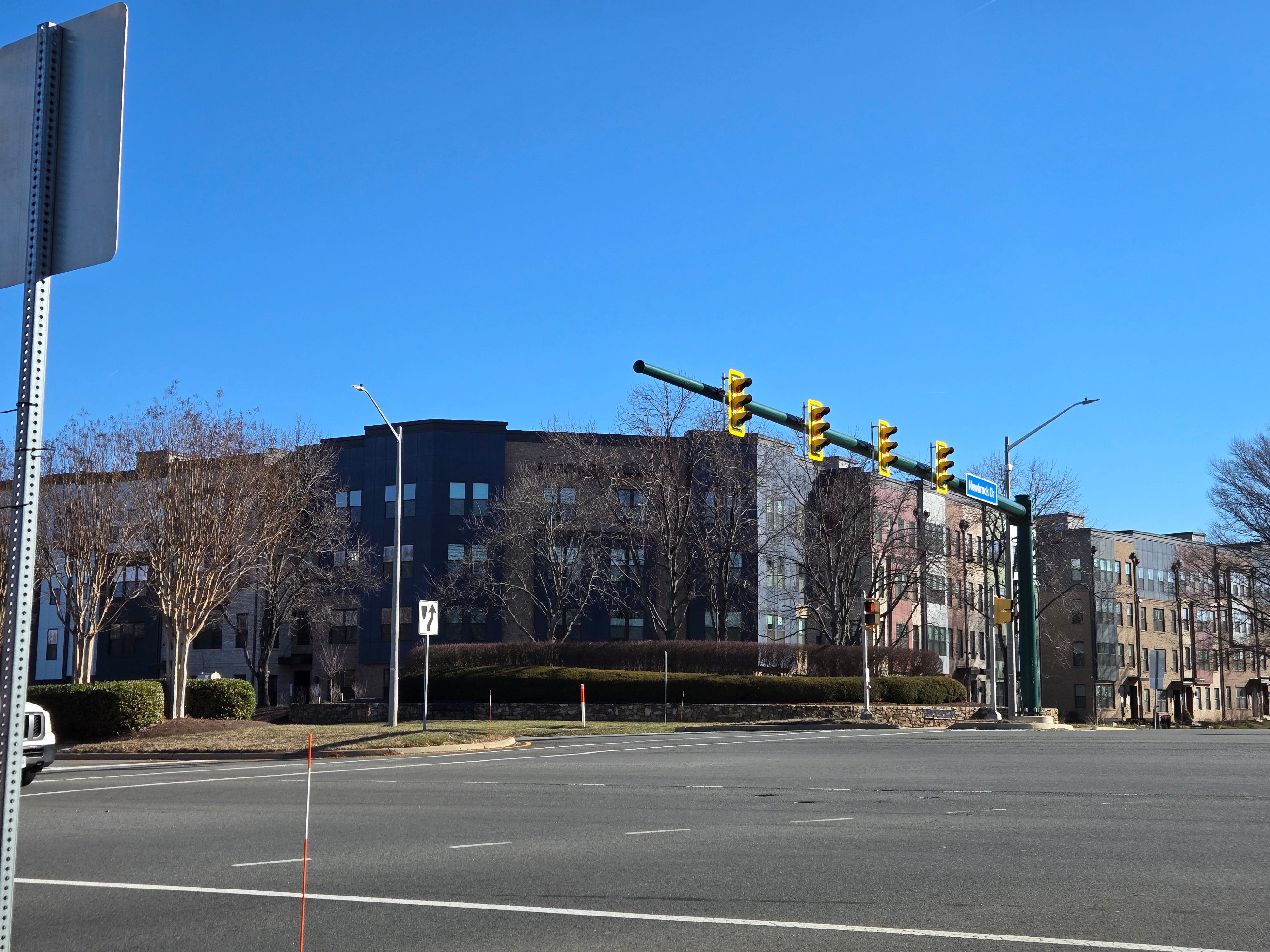
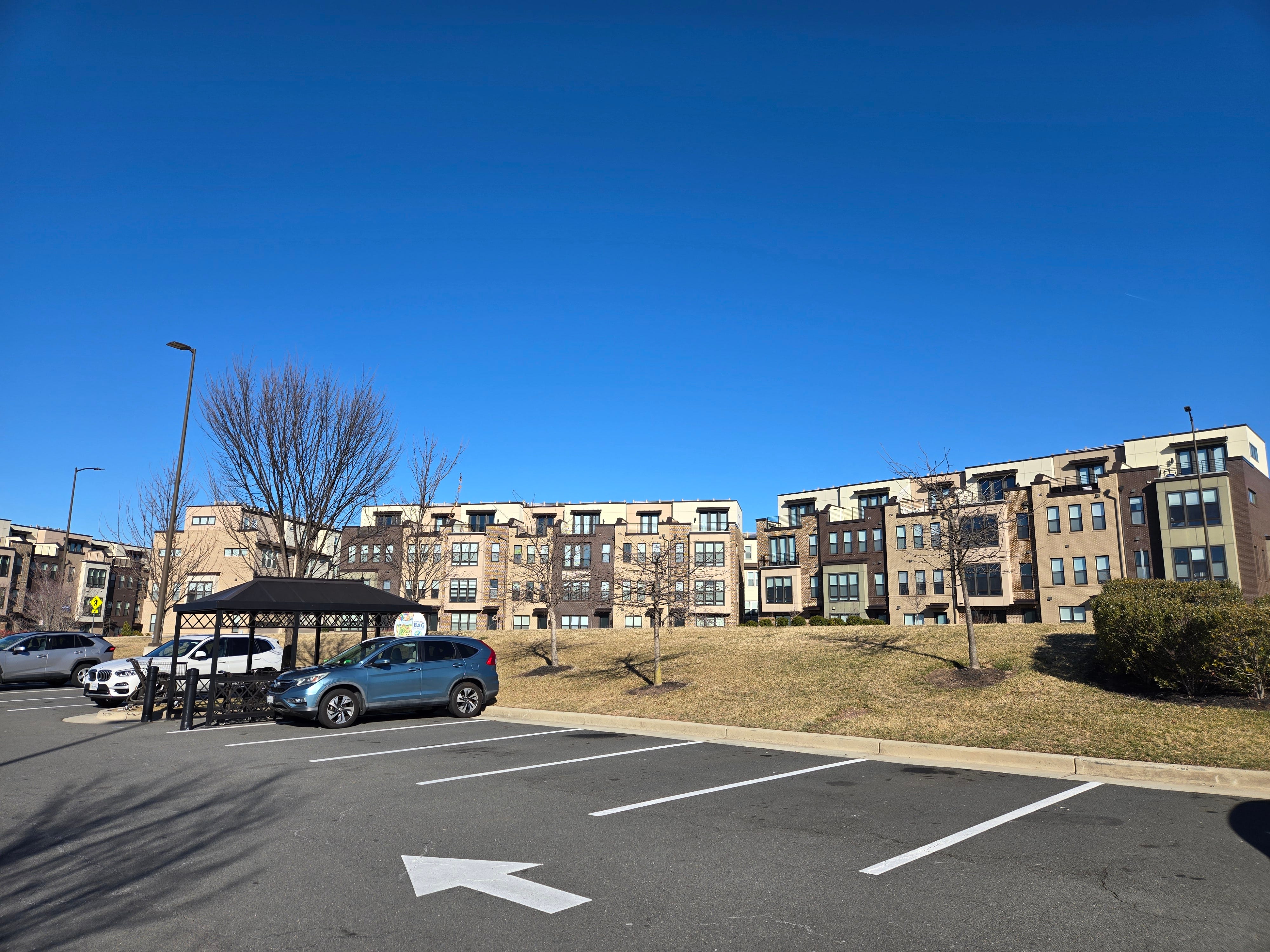
These aren’t even so bad, really, and in any case I don’t think my own aesthetic preference should determine whether other people’s homes get built. But reading Bonnie’s “2.85D” line, I realized that what these look like to me are video-game graphics, from like, a PS2 or maybe very late PS1 game. They look like polygonal renderings that haven’t quite been fully drawn yet, or which have been stripped down due to lack of computing resources.
What I realized they look like to me, in fact, is this:
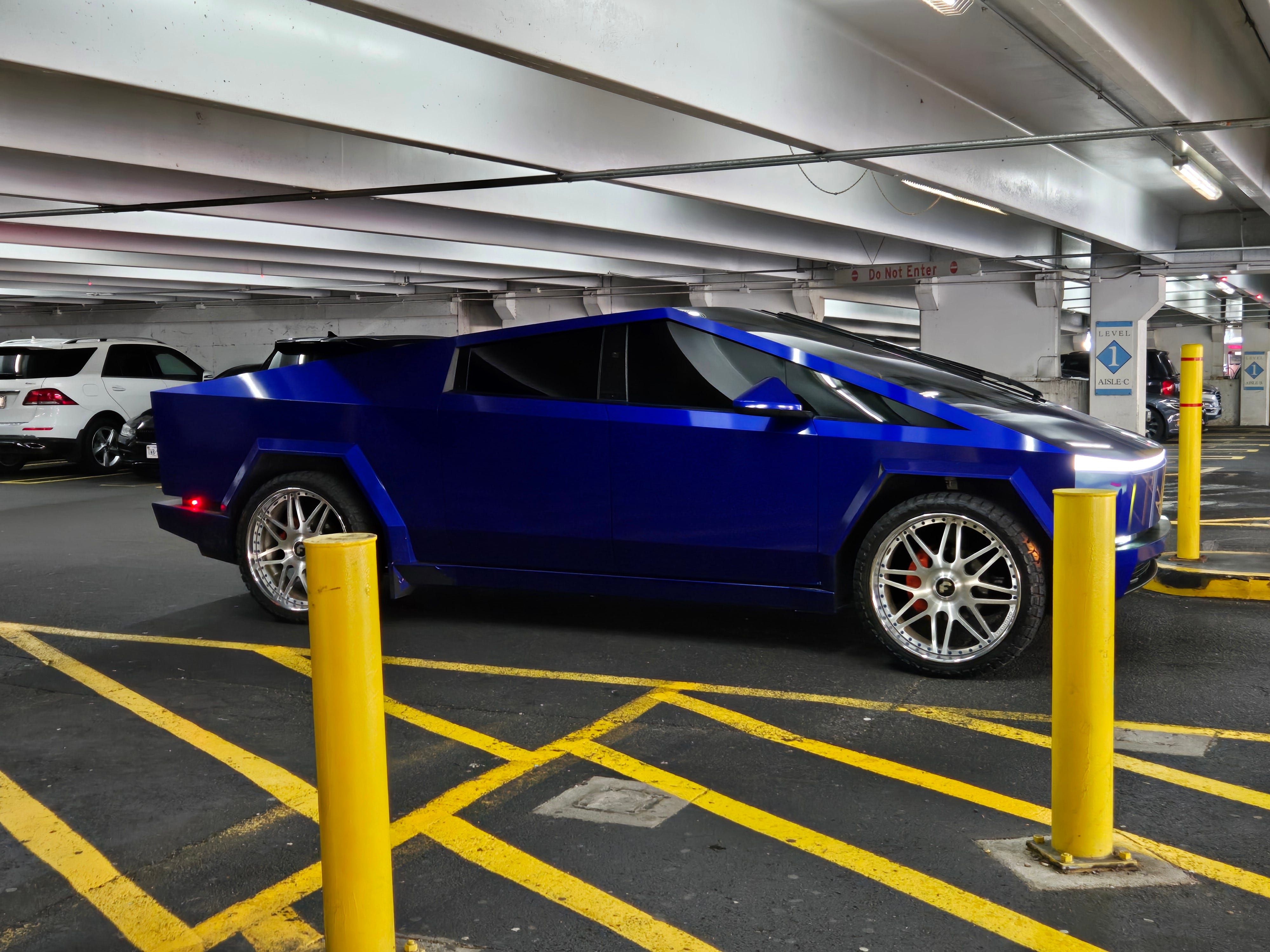
These “2.85D” homes do the same uncanny-valley thing that the Cybertruck does! Something about the way the light plays on the materials, or the angularity alongside the lack of surface details. Basically, they look cheap, but in a very slick sort of way.
I don’t know about the truck, but the materials used in these houses will look new and shiny at the start, but will probably degrade quickly. The joints where different facade materials meet will eventually separate and let in water. The buildings will probably start to look shabby in not that long. Maybe that’s fine.
Again, I really don’t think these things should hold up getting homes built. But I do think these critiques go beyond “aesthetics.” Design is not aesthetics; quality is not aesthetics. I understand these design choices can be explained, mostly as a question of keeping costs low while trying to capture a modern look. Also, sometimes, because of design rules in the zoning codes which try to reverse engineer “beauty.” But being able to explain an issue doesn’t mean that it doesn’t exist.
All of this is to say that I don’t find it quite satisfying to dismiss this entire conversation with something like “Markets will produce all of these options if we allow them to” or “Nobody is forcing you to buy a home you don’t like.” It’s not that these rejoinders are not correct. And maybe I’m just a bit of an abstract thinker. But I find it slightly off-putting when people seem allergic to abstract questions, to questions of values, to questions of what the things we do and make symbolize and point to.
I really don’t mean “Someone who likes classical architecture is morally superior,” or whatever. I suppose I mean something more like, I think you probably do have some ideas about these questions, and I don’t think you should reduce all of your preferences down to just being your preferences, which robs them of any meaning. There is a little middle ground between not mistaking your own preferences for truths about the world, and not having the courage of your convictions.
Along these lines, sort of—maybe you won’t think so, but all these elements ran together in my head—I want to share a comment from Sonja Trauss, one of the original YIMBY movement founders, on one of my link roundups (about a piece on very large suburban homes, specifically. She comments against the “nobody needs a big house” discourse:
1 bedroom for the parents, 1 for each kid. A home office because one if not both parents work from home. A guest bedroom because one of not both parents moved away from the place they grew up, so in order to maintain relationships with even just their nuclear family, not to mention any cousins they were friends with in their youth, or college friends, they should have a place for guests to stay overnight. A dining room and living room for company, and a playroom or den for their kids to make a mess in.
Having separate entertaining rooms for company is huge for facilitating adult social life because it already takes a couple of hours to make food and stuff. If you also have to straighten up the room where your kids play together (because you only have one living room) AND keep it picked up it adds a whole other dimension of work. Also of course, the kitchen should be separate from the entertaining rooms because again - making food AND cleaning the kitchen before anyone gets there isn’t realistic, especially if you’re also watching the kids while this is happening.
That’s 8 rooms - 4 bedrooms, 1 work room and 3 living/ entertaining rooms; not counting bathrooms. IMO people don’t really need more than 3 bathrooms for a house like this but now a days the trend is to have one bathroom for each bedroom plus a half bathroom, so a house like I describe would have 4.5 bathrooms. Plus a two car garage. That’s about 3000 sq ft….
To be clear - we have 5 people living in 1600 sq ft, because given our constraints, I’d rather trade walkability for space. But that doesn’t mean I wouldn’t rather have both space and walkability. They’re not inherently impossible. We can still build more.
She characterizes “who needs a big house?” as a kind of NIMBYism. I don’t exactly think it is, but when I talk about “big houses,” what I mean is “Big suburban houses in areas that should be more urbanized,” so I don’t really mean to suggest we can’t or shouldn’t have what some folks call “family-sized” homes in more urban forms. I think we need more of those.
I do think some modern houses are oversized in a design sense; our house is much closer to 2,000 square feet than 3,000 (let alone 4,000 or 5,000) and is more or less the same floorplan as Trauss describes. (Four bedrooms, two living rooms, a formal dining room, a small area that could serve as an eat-in area for the kitchen, plus a ground-floor office, a real foyer, a laundry room, and a full downstairs bath along with the two upstairs full baths. I’ll note that having a basement helps, which homes in many areas don’t have.) I’ve seen houses in the 1,800 square foot range that get a little tight but still manage to have all those rooms, but again also typically have a basement.
But basically, I take her point that there’s nothing wrong with having space, and that urbanism shouldn’t be a hairshirt penitential movement about giving up nice things for the sake of community, or the environment, or whatever. The idea that urban living means giving up private space is partly based on land prices/square footage prices, of course, but it’s also downstream of underbuilding in cities. And ironically, the failure to build enough in cities creates the impression that urban living means deprivation, which in turn causes some people to dismiss it, as though it were inherently what we have artificially made it.
I want to tie this to yet another essay, and to my response to it: this piece from Eric Erins, and my response here. This one is about floorplans and apartment design, and how a lot of modern floorplans lack privacy. The point I take from this piece is that good design is even more important when you have less space to work with. But of course you need enough space to subdivide into usable rooms, too. (Again, we need all of these types of homes.)
One of the questions that all of this raises is whether things were better in the past. Someone points out in the comments on my piece linked above:
I’m an architect and a developer of multifamily and I am curious what sorts of “families” those 1920s (or 1890s) buildings were built for. I suspect they were more affluent relative to the overall cost of living than many of today’s renters. To the extent they had children, and a single income, even more so. The less affluent folks lived in less well-built (and less well-appointed) buildings that were farther out and likely demolished decades ago. In other words, the OP and many commenters may be comparing modern buildings built for entry-level accommodation with more upscale buildings of yesteryear.
Those lovely old buildings may be among the lower-cost in-town options today (because they were so well built they far outlived their original cost, and are well-located enough to still be desirable, a financial lesson in the value of building well in an urban pattern). That doesn’t mean they were built for equivalent households as today’s apartments. Many new apartments are economically more comparable to tenements built for new arrivals to the City, but better built (and therefore costlier to rent) because of stringent regulation. They’re accompanied by amenities for the sake of marketing because it’s cheaper (for the developer and thus for tenants) to build a sexy pool and clubhouse for 200 apartments than to upsize each apartment with extra rooms, walls, square footage, etc.
In other words, the old buildings that survive and remain in decent condition are probably disproportionately the higher-end buildings with higher-end conceptions of design. It’s basically the survivorship-bias problem: we imagine the artifacts we see from the past are the average, while they’re actually exceptional, because the low-quality junk from the past didn’t survive.
This doesn’t mean, of course, that we can’t build better and more varied apartments today. What it means is that the past wasn’t a paradise where everyone lived in walkable cities in stately buildings with well-designed layouts. Most people never got to have all of that. Many people never got any of it.
But there is this part of me that wonders whether getting by with less didn’t make us better in some respect. I guess on some level I do equate “having a higher material standard of living” with “growing soft.” I guess I sort of do see hardship as meritorious, even though I argue against that idea quite often here!
I replied to Trauss that I have no issue with people wanting big houses, but that I feel some…almost, duty, I guess, to understand how people did it back then. How did they raise four or five kids in a tiny home with only one bathroom? The fact that it feels impossible to me, I guess, feels like an invitation to figure out what they had that I don’t have. Her answer, and I think the answer of a lot of YIMBY and Abundance folks, is that life was just harder for them. They weren’t special or better; they did more with less because they had to, and when we didn’t have to, we stopped:
They didn’t need it as much because they didn’t move away from their families. When your cousin lives down the street and your parents live a few blocks away, etc. etc. no one needs to visit you. Plus air travel was expensive.
As far as having dinner parties, people were poor in the past. life was actually just worse, so fewer people could afford to have dinner parties….
….expectation is exactly the elephant in the (small, crowded) room. In a world where no one knows anyone who has more than a 2 bed 1 bath, one wouldn’t necessarily think to ask for it. But we do know that when they got the opportunity, most Americans did choose to move to the suburbs. A lot of of those houses started out almost as small as the apartments they left, and over time they added additions. And over time they wanted to buy bigger and bigger houses.
Revealed preference is an important data point. Of course, an adult with a happy childhood will look back and say “oh when I was a kid, we were happy with this small amount of space,” but we can see what adults have been choosing. It does show that when people can afford more space they take it.
This challenges me, because it makes me realize that I have always taken it almost as a foundational fact that “things used to be better.” Part of this impression is because I like to mess around with old stuff—electronics, consumer goods, old homes, etc.—and the ease with which that old stuff can be worked on and fixed is amazing. It’s difficult to conceptualize that what you’re literally looking at and holding in your hands is not a reliable guide to the time it came from.
I suspect that some folks look askance at YIMBYism precisely because of its refusal to myth-make about the American past. Its dismissal of effort as worth. On some level that feels like a lack of patriotism or a lack of gratitude.
I write all of that not because I think it myself—I very much don’t—but because I can understand where that perception comes from. Or perhaps more accurately, how people with certain predispositions can see it that way. And I think there are people out there who would find that having their own impressions explained to them would help them to see the thing differently.
That is how I came to this broad movement and issue—mostly via curiosity. I can easily imagine a version of myself that never found urbanism, that simply inherited all of the viewpoints I grew up hearing about cities (bad), housing (no), and kids these days (soft and entitled).
I hope, in any case, these long meandering pieces help you to think about things a little differently.
Related Reading:
Sacramentalism and Consumerism
How Do We Know What’s History?
Part Of Why Everything Feels Like It’s Always Getting Worse
Thank you for reading! Please consider upgrading to a paid subscription to help support this newsletter. You’ll get a weekly subscribers-only piece, plus full access to the archive: over 1,500 pieces and growing. And you’ll help ensure more like this!
"In other words, the old buildings that survive and remain in decent condition are probably disproportionately the higher-end buildings with higher-end conceptions of design. It’s basically the survivorship-bias problem: we imagine the artifacts we see from the past are the average, while they’re actually exceptional, because the low-quality junk from the past didn’t survive."
I'm not sure this is true, though.
E.g. our neighborhood in the Twin Cities was always a workingman's neighborhood that was visibly distinct from the middle class neighborhood south of it (well, what was left of it--it was predominantly black and mostly got bulldozed for the midcentury highway, but the remaining homes were larger). And it was *very* different from the run of Victorian mansions (plus fancy four- and six-plexes and even a few townhouses accommodate your wealthy bachelors and maiden aunts) south of that.
Our neighborhood had a little modern infill, but it was mostly where corner stores had been demolished after going out of use. The housing stock was easily 95% intact and still cheap, but also still fairly solid, especially for how much neglect, bad flips, and foreclosure many of these houses had endured over 100 years.
So, I live in one of those "townhouses." It is indeed not traditional, but it is affordable and mostly functional, though too small for entertaining at any scale. There is no dog poop on the lawn (that is not about housing form!). Yesterday when I needed AA batteries, I was able to walk to get them (even though it was -7 outside). That isn't a possibility in some similar developments here, but I think we must be careful in pointing out these design distinctions and looking back to the past not to make people feel judged. That's not how you recruit for your cause.
We also have to have real historical perspective instead of cherry-picking. When it was built in 1984, this project was high density (the adjoining lots are half-acre, this is about 5 per acre) and offered a housing type that wasn't available anywhere else in this town at that moment. It was a response to a perceived market (a correct response as it turned out), not the result of a YIMBY campaign, but at least in this particular context (and all housing markets are particular), it was aa good enough answer to sprawl.