
Buffet Chronicles: Bigger Isn't Always Better
Covering all your bases means covering none of them well

I finally tried a large new-ish buffet restaurant in Rockville, Maryland, Umi Hotpot Sushi & Seafood Buffet. It opened in mid-2024, and I’d wanted to try it, but just held off because it’s a little pricey and the reviews are mixed. A reader sent me a message, however, about a new buffet opening in Alexandria, which she thinks was an Umi (I haven’t seen the sign or news about it myself), and thought of my series of buffet review essay pieces. So I decided to finally try this place out.
Bonus note: it’s in an old Shakey’s Pizza building, and it happens to sit just across Rockville Pike from the building which once housed America’s first Toys ‘R’ Us store, which is the building in this photo I took from my booth:
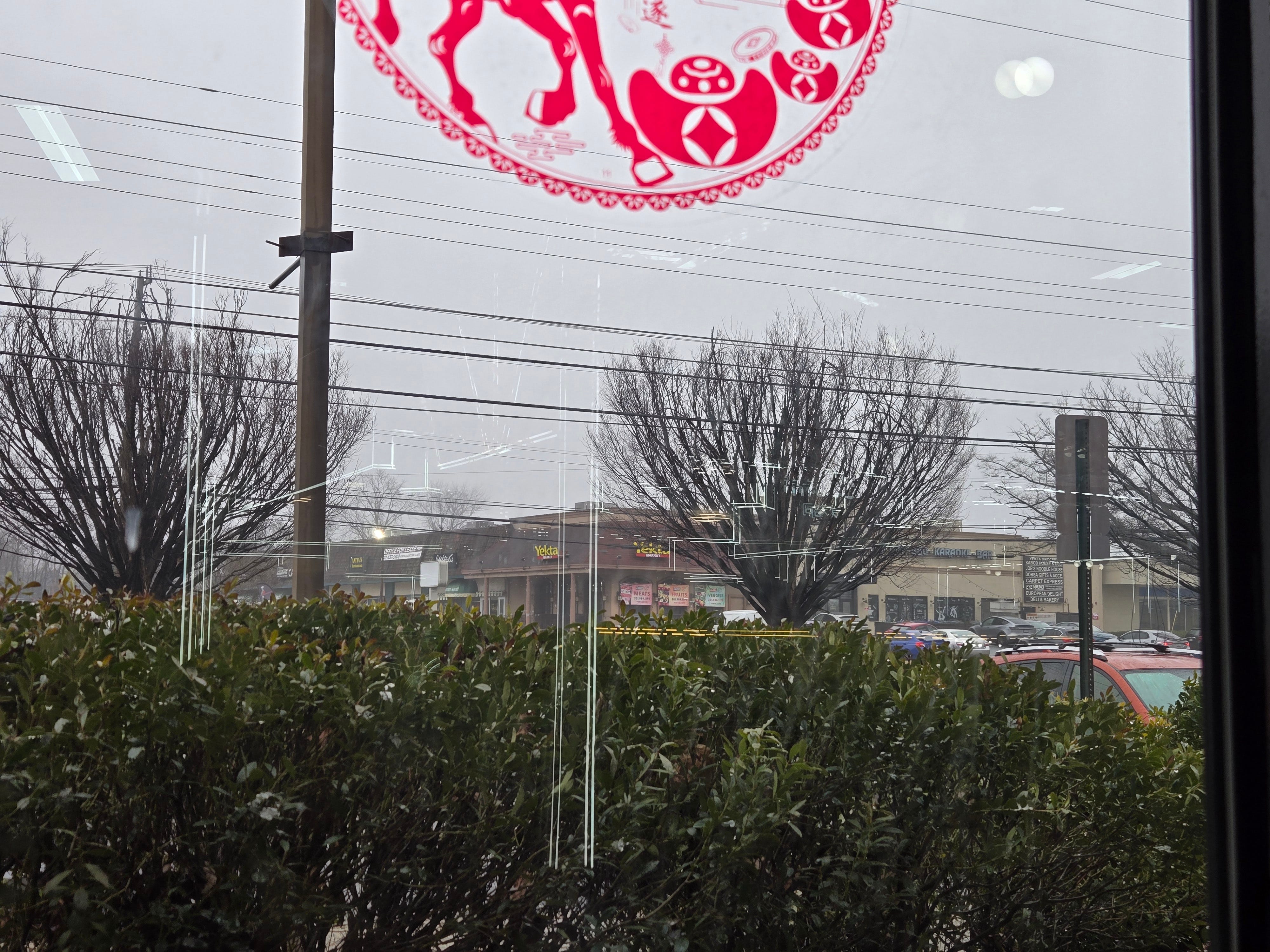
So that’s a neat little suburban history factoid. Lucky you, if that should ever be asked at a trivia night. But anyway.
Sometimes the place fills up, and there’s apparently often a wait, but I went on a gray, rainy day, and it was mostly empty. Because the food sits out, these places are almost always better when they’re full, because the turnover is faster (they’re worse when they’re full if the food is simply not replenished). Some of what I’m going to say may be down to the food having sat a bit, but I went at about 12:20 in the afternoon, so it shouldn’t have been sitting that long.
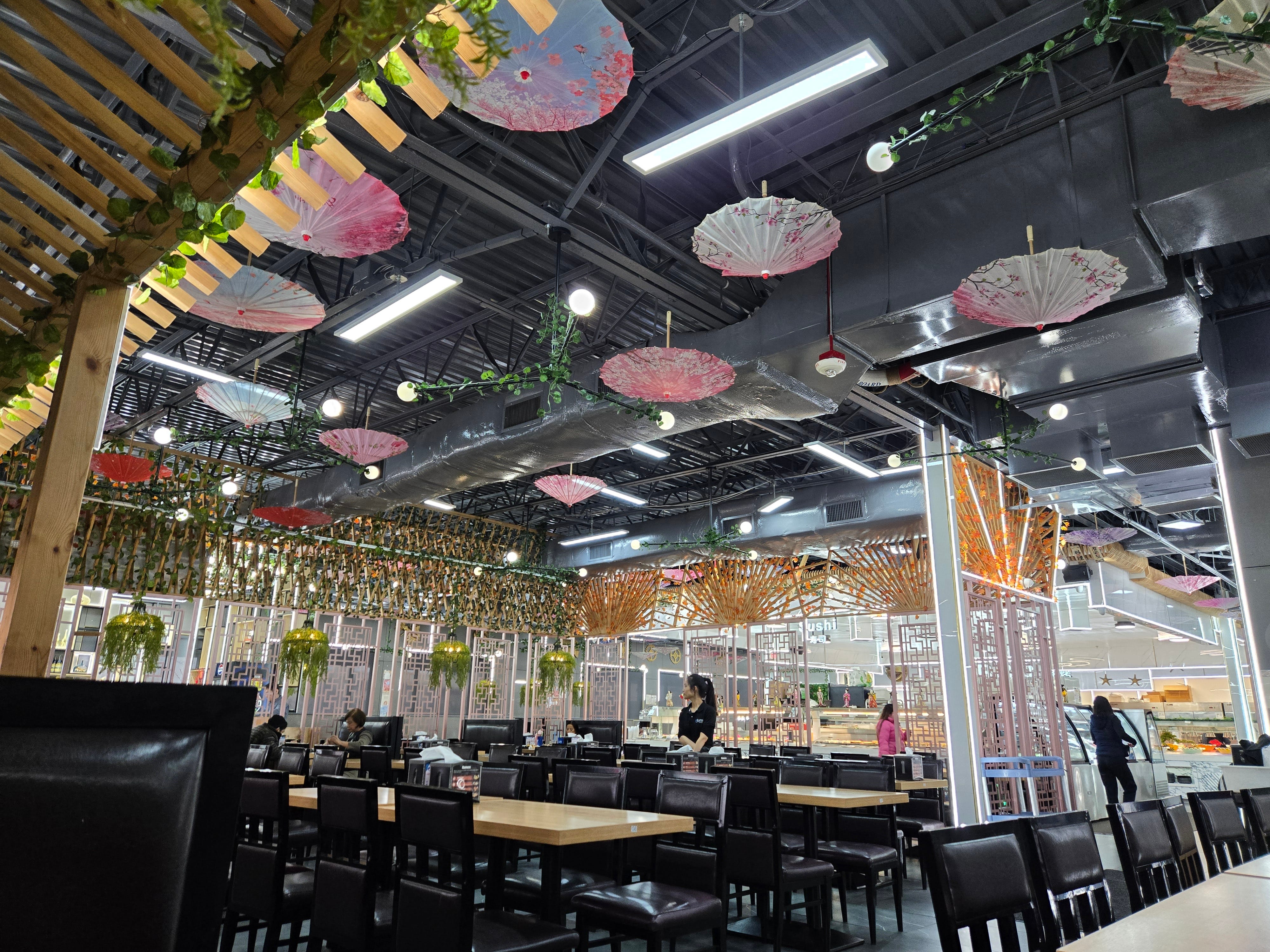
The place looks nice—high ceiling, bright, airy. The fixtures and finishes look nice, and it’s clearly trying to look and feel a cut above a typical Chinese buffet—which is what it is, only with a lot of other expanded offerings appended on.
It feels a bit like a flipper house. It’s the epitome of “Instagrammable”: it photographs well, but it feels a bit ticky-tacky, especially the plastic decor hanging from the ceiling.
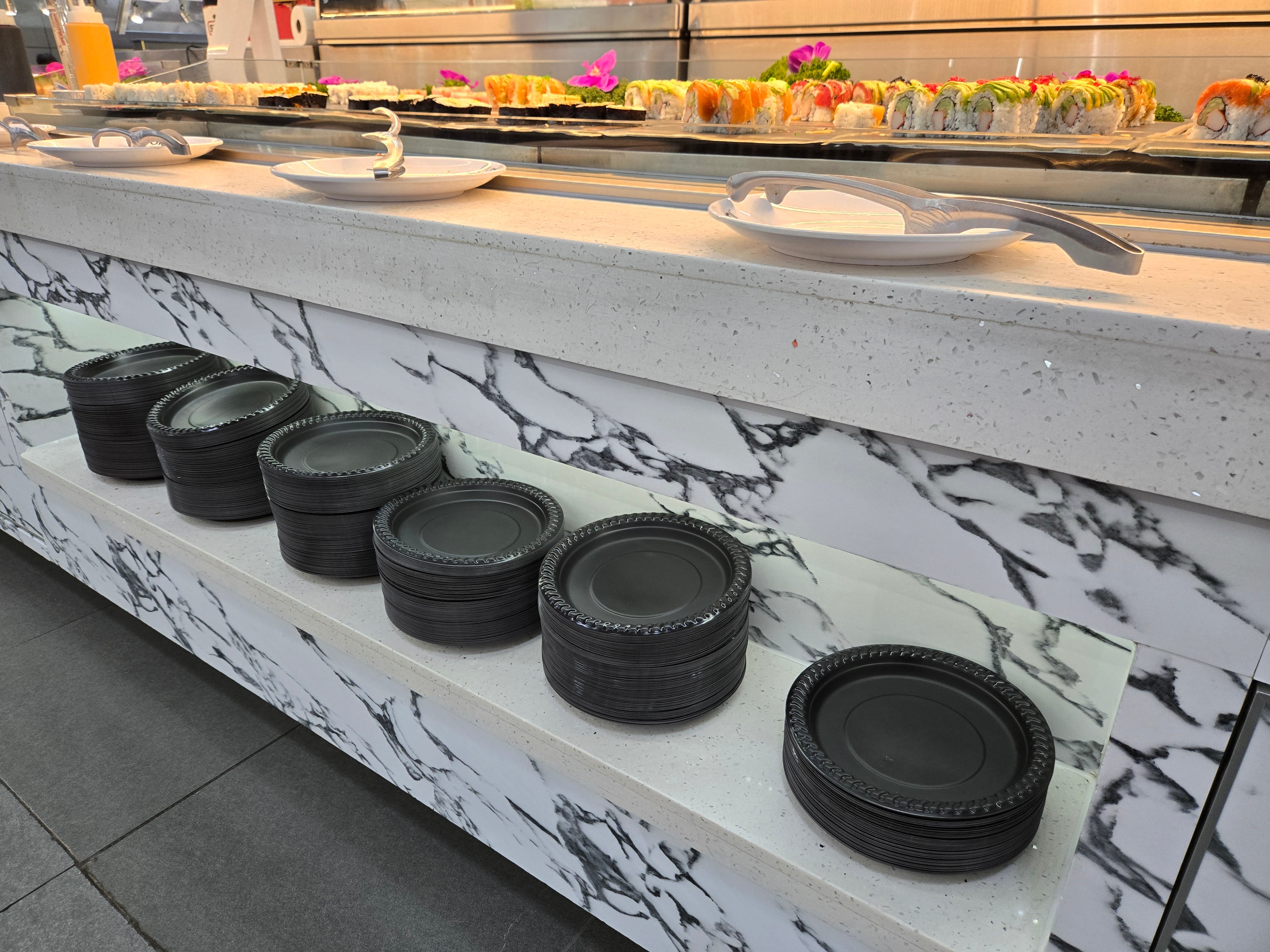
And the plastic, disposable plates, though I suppose you’re not supposed to photograph them1:
I also spotted a grinning woman with her phone out, slowly circling every steam table and counter, taking a video of the entire buffet. So I guess the Instagrammable angle works.
The music was strange, too. You’d typically expect either some kind of upbeat dance/pop music, or else Chinese-ish traditional music over the speakers in a place like this. Maybe some Muzak or bad covers. Instead, it was what sounded like an algorithmically curated2 playlist of slow, melancholy, tritely emotional nasally Millennial songs—one of which, from the lyrics I was able to make out, was about trying unsuccessfully to run away from depression. So maybe it was an appropriate soundtrack, for a mediocre buffet.
Also, this stock-photo-looking white guy who answers the bad reviews on the Umi Yelp page is almost certainly not the business manager, any more than the cute grinning young woman is really on the other end of the discount electronics website’s help line.

But if the food made up for these little dings, it would be all good. I’m not a stickler about atmosphere. But, unfortunately, the food didn’t make up for much of anything. The spread at Umi is kind of like a low-end version of piling caviar and gold flakes on a wagyu burger: instead of truly elevating the raw ingredients, or doing something interesting with them, you’re just executing a bougie combo and jacking up the price accordingly. This place takes the same approach, but with ingredients which aren’t very good.
As I noted, it’s not really a premium Asian buffet as much as an enhanced Chinese buffet. There’s a much larger and nicer sushi bar than your typical Chinese buffet, and there’s even some basic sashimi, along with the regular rolls and nigiri.
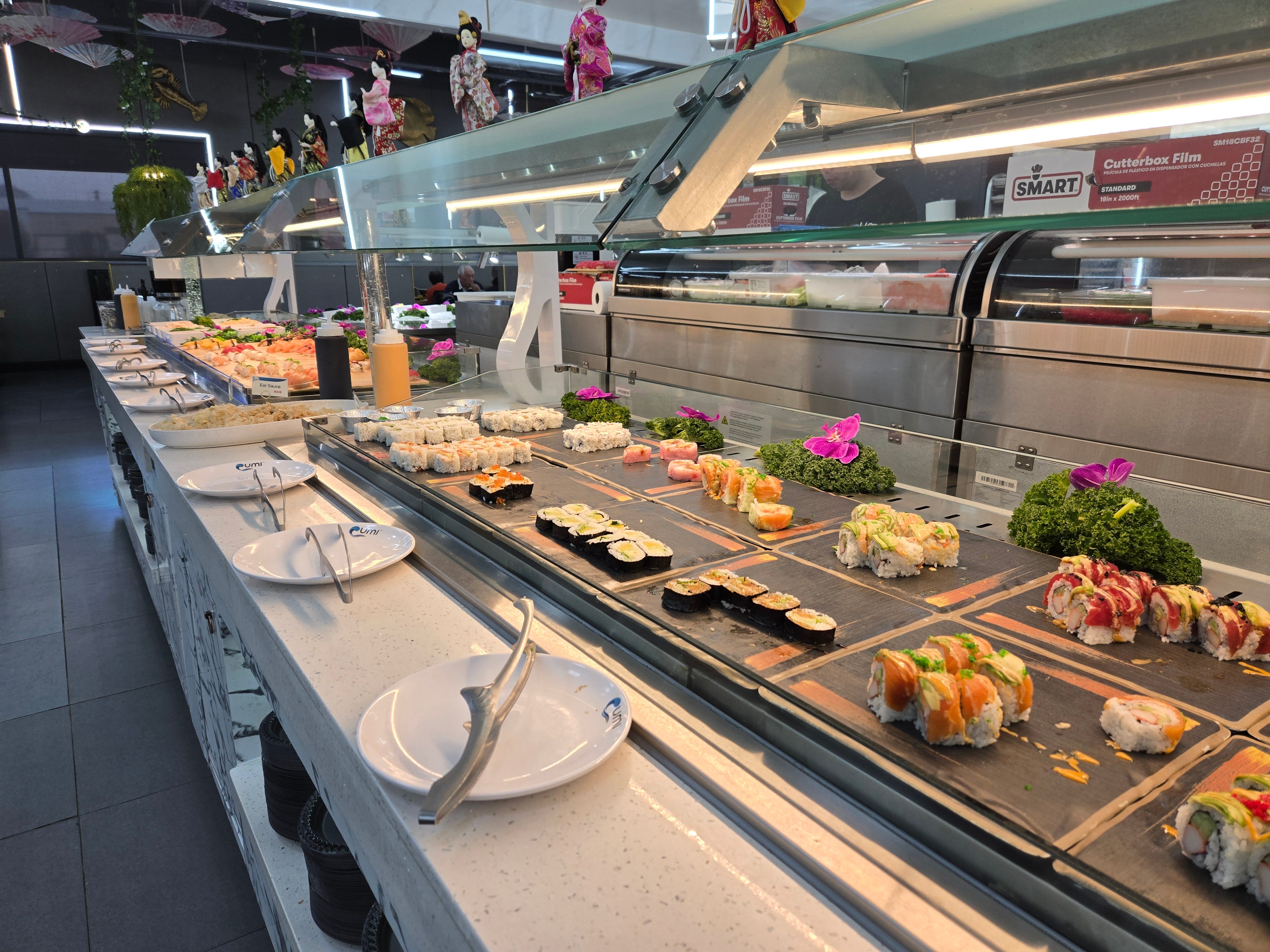
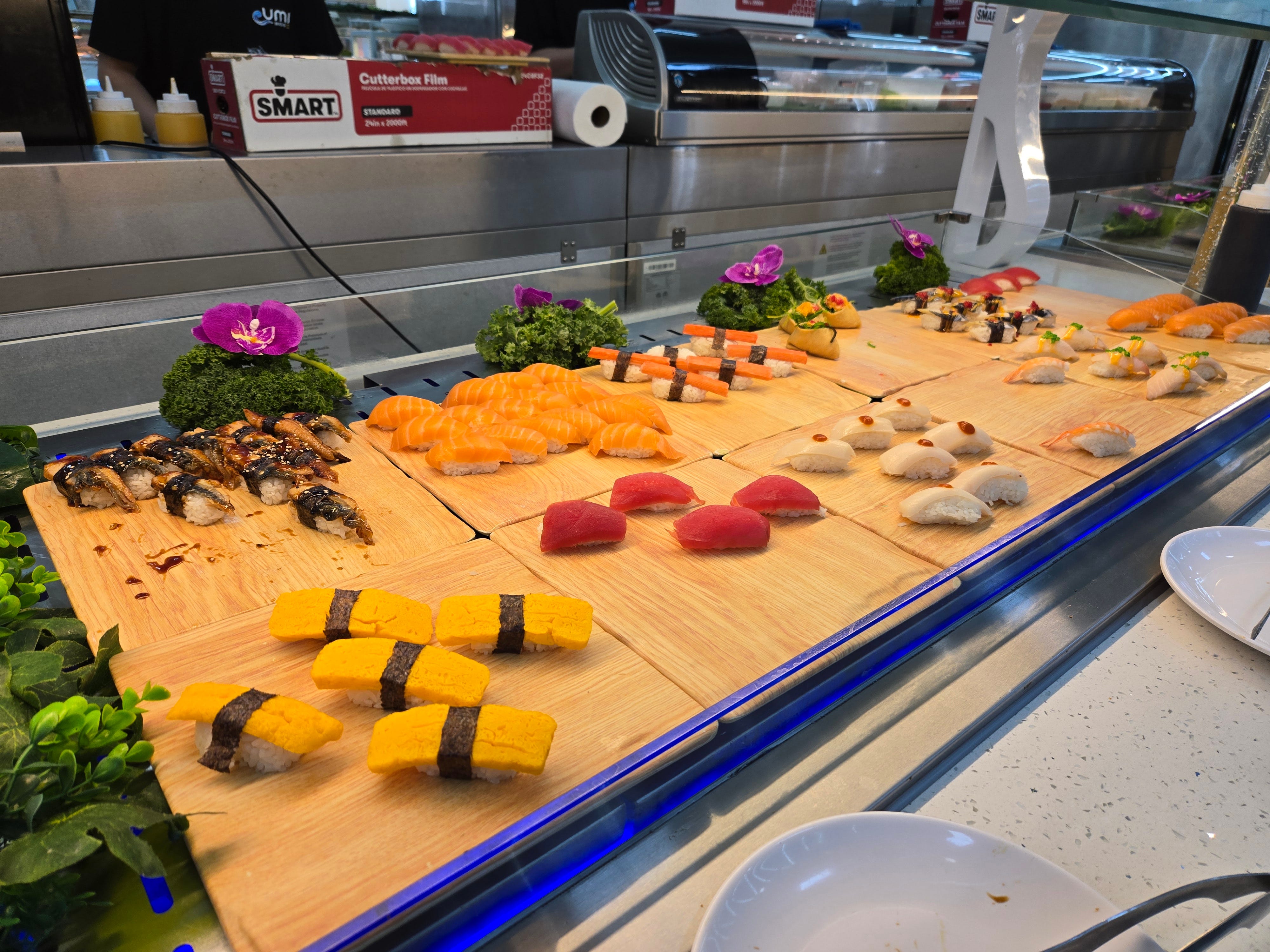
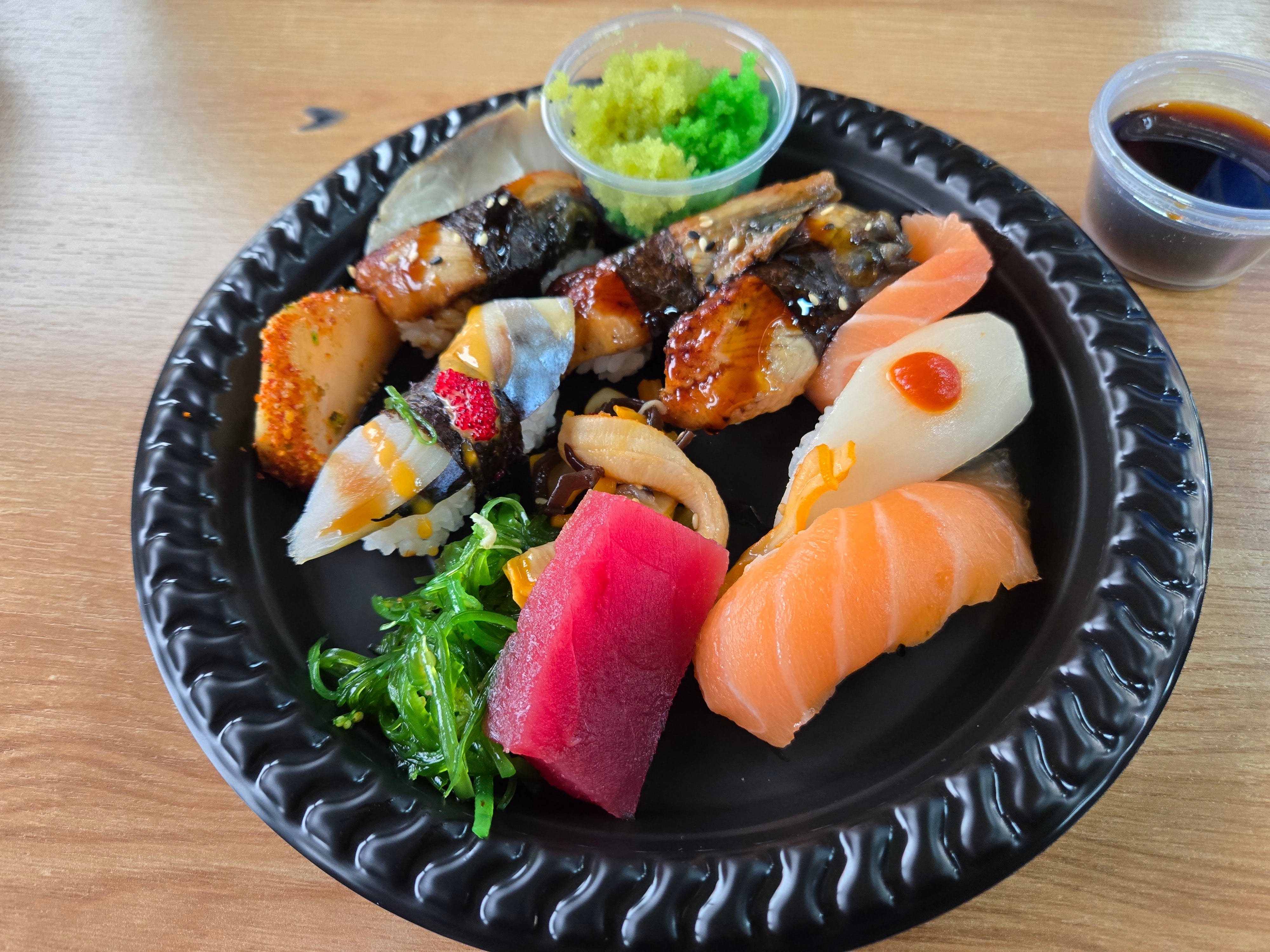
There are more kinds of fish, but none that are unusual or premium or better than typical frozen cheap sushi fish. The rolls are too large and have too much of a proportion of rice. It’s pretty good for a buffet, but it doesn’t quite satisfy the all-you-can-eat sushi craving.
There’s a hotpot section, with personal little hotpots heated by Sternos (on a busy day, when I went in and decided I didn’t want to wait, the whole place smelled like Sterno fumes). The ingredients look fine, and cover the primary bases, but there’s much less selection than an actual hotpot restaurant.
There’ a ramen bar, which I didn’t try, and there’s a sign for “BBQ,” but nothing clear as to what it is—I don’t think there’s a make-your-own hibachi/teppanyaki bar here, which is one of the highlights of inexpensive Chinese buffets.
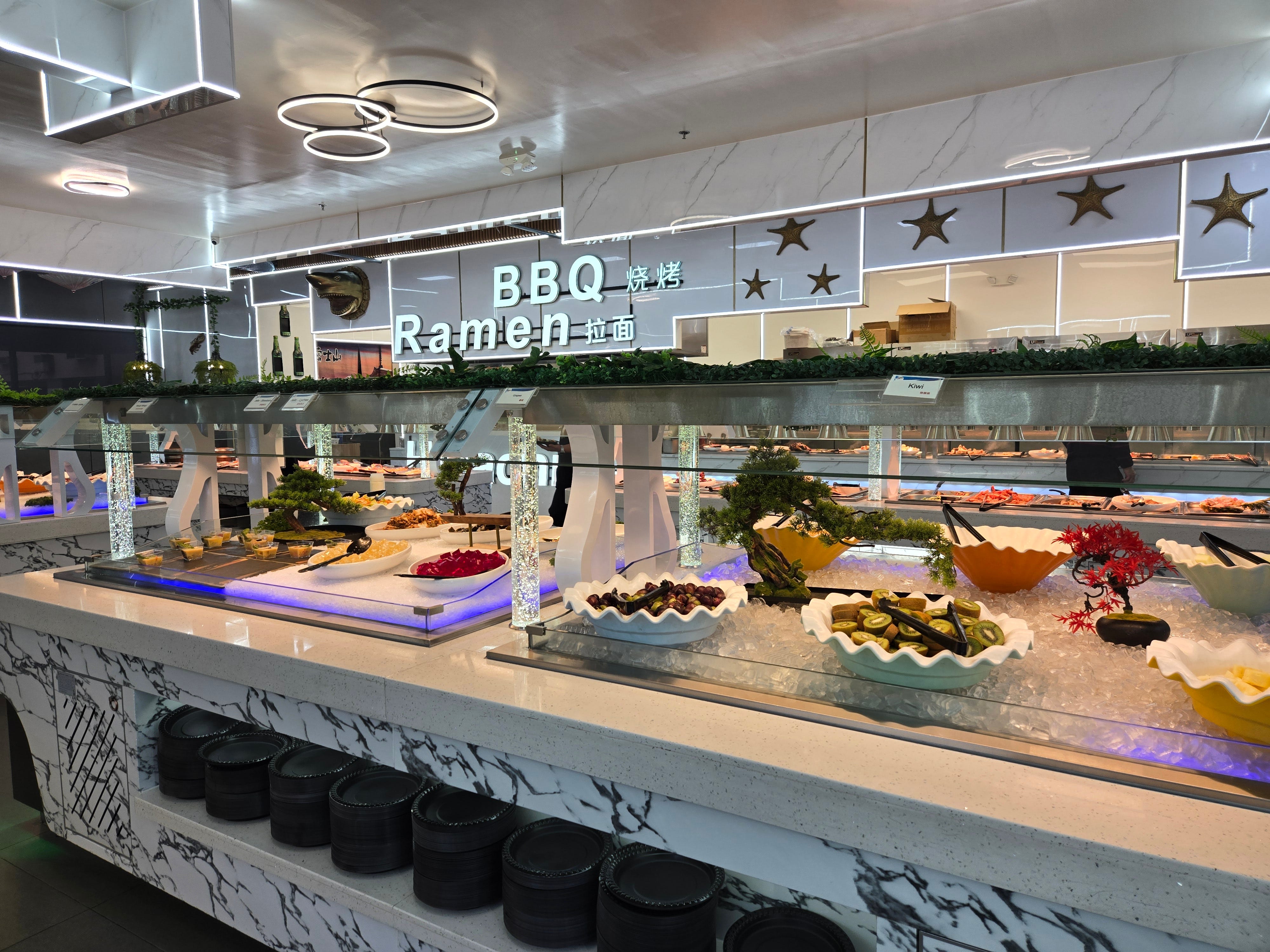
The cooked food selection has a number of on-paper premium or slightly exotic stuff: cuttlefish in XO sauce, scallion-oil steamed squid, braised pork belly, a leg of lamb carving station, takoyaki balls. However, none of it is really good (the squid was a little mushy and had not been cleaned well; the takoyaki had tiny baby octopuses stuck inside them, with the tentacles facing out and getting hard and dry; the pork belly was tough; the only shrimp dish I saw was dry and the shrimp were starting to dry out).
Overall, there are fewer cooked food options here than a usual Chinese buffet, and I actually missed the crispy, greasy, you-can-almost-taste-the-MSG stuff that always fills up at least one plate when I indulge in one of those places. There were no crab rangoons, chicken and broccoli, sauteed baby shrimp, deep-fried chicken in black pepper honey sauce, etc.
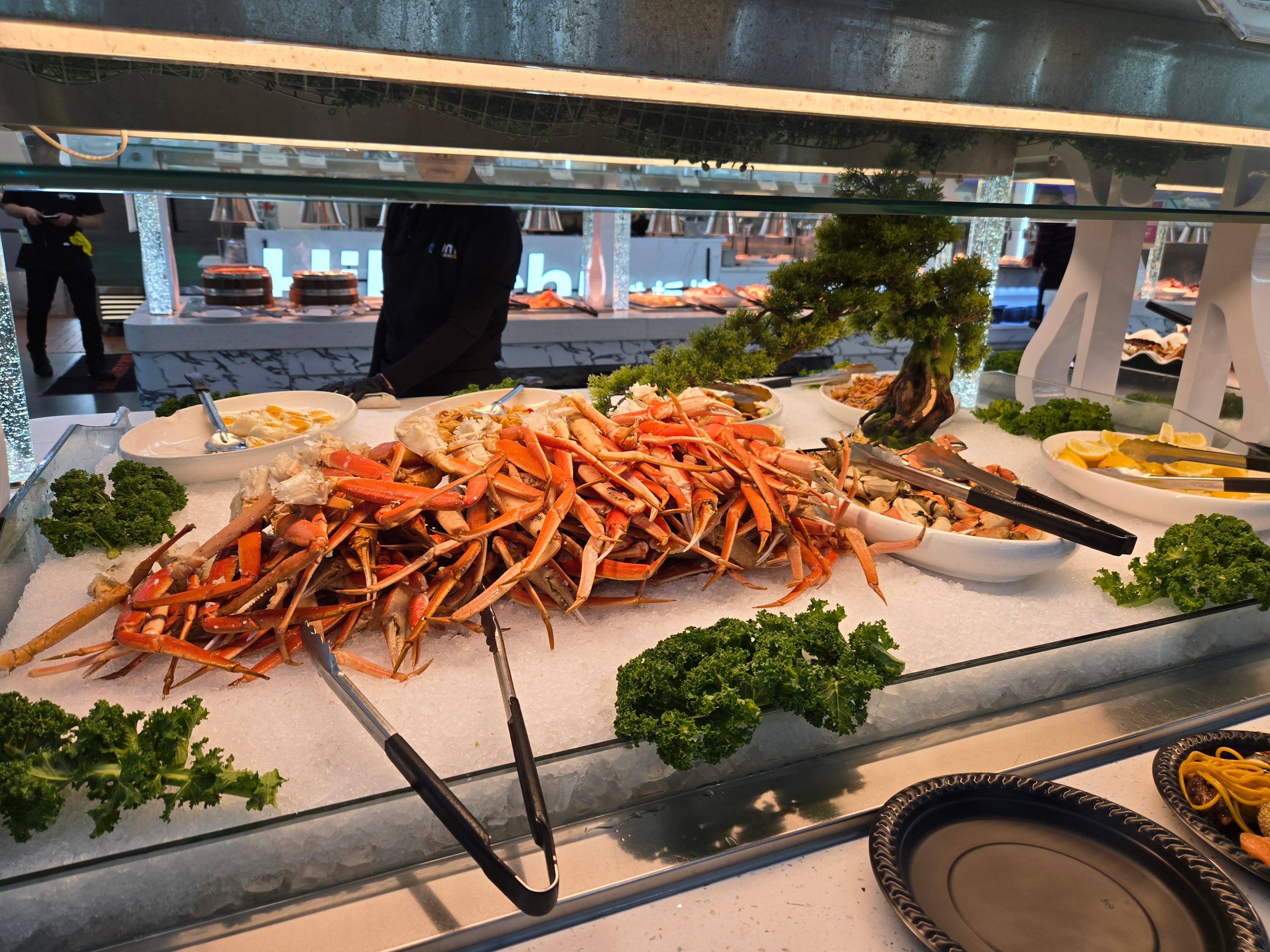
Then there’s the chilled seafood bar, piled high with crab legs which had, in my experience, about half a chance of tasting really good and half a chance of tasting like a sponge soaked in seawater. (There were stone crab claws too, which tasted worse than that, if you could get any meat out.)
There’s a fancy-looking dessert bar, and a free drink fridge too. Eh. It was just an aggressively average experience, with none of the offerings feeling worth the price on their own, or justifying it in combination.
When I write these pieces, they’re not just restaurant reviews. I’m also thinking about the evolution of the business of buffets. When I was a kid, Asian buffets were almost always Chinese buffets with token international offerings and a small sushi area. They were a bit lowbrow, I guess, but the customers seemed to be a pretty good cross-section of society. And at least when the restaurants were relatively new and still trying, the food was good.
I’ve observed over the years as the typical buffet has gotten bigger and bigger. The earlier ones had fewer steam tables, the newer ones have more. The sushi bar areas are bigger (which mostly just means more variations on the California roll). As the average new buffet has grown in size and offerings, the number of small places that offer, say, a little lunch buffet with a single steam table for a cheap price, has decreased.
What that means is that a buffet meal has become too big and expensive to just be a little impulse meal or a nice larger work-day lunch. When these places offer so much and cost so much, it feels like an event to go them. And yet they’re not quite good enough for that, either.
I get the sense that this new crop of huge, we-serve-everything buffets is trying to compete with the dedicated hotpot restaurants or Korean barbecue restaurants or elevated all-you-can-eat sushi restaurants, which seem to be the new growth opportunity for all-you-can-eat dining (though many of the better ones are a la carte only). Rockville alone has several such places.
Their elevator pitch is no longer “as much greasy, delicious Americanized Chinese food as you can eat for a cheap price,” but “A mediocre but over-engineered attempt at all of the trendy Asian restaurant concepts for a price point that lets us turn a profit.” It feels unappealing, piggish, blah, much more so than the Chinese buffets of the 1990s and 2000s (which of course still exist, but don’t seem as good they used to be most of the time, either).
It feels, I guess you could say, a bit like those fancy computerized electronic typewriters in the 1990s, a last-ditch attempt to fend off the computer revolution. It just isn’t what all-you-can-eat dining is adapted well for, and the subjective sense of value probably just can’t match a price where it pencils out.
Nonetheless, the place is popular, so that might be me. But I will always fondly remember the places that tried to do less, and did it better.
Related Reading:
Buffet Chronicles: Disappearing Sushi
Buffet Chronicles: Back to the Beginning
Buffet Chronicles: All You Can Be Served
The Last Buffet, Or The First New One?
Thank you for reading! Please consider upgrading to a paid subscription to help support this newsletter. You’ll get a weekly subscribers-only piece, plus full access to the archive: over 1,500 pieces and growing. And you’ll help ensure more like this!
This may be a labor issue of finding dishwashers, but for $25 at lunch and $40 at dinner, disposable plates is a little too lowbrow.
A contradiction in terms, I know.
There is always something a little maddening when you see a really mediocre fast food place succeed over much better local restaurants (often at the same price point).
When I lived in Huntsville, a new fast food joint in town would be standing room only for months, while new small restaurants would languish. It's all just so weirdly alienating for me.