
Buffet Chronicles: Eat Like A Mongol?
The curious revival of a faded restaurant concept

There used to be a popular dining concept/restaurant type known as “Mongolian barbecue” or “Mongolian grill.” They’re still around, and there’s a good chance you’ve been to one of them once or twice, or at least heard of it. They’re essentially teppanyaki/hibachi, but usually served in a bowl and with the ingredients stir-fried and mixed on the flattop rather than cooked and served separately on a plate like at a hibachi restaurant.
The typical format for a Mongolian barbecue restaurant was a self-serve bar where you either paid by the pound or filled a bowl for a fixed price (less commonly they were all-you-can-eat): any amount of rice, noodles, meats, seafood, and vegetable ingredients, then selected from several sauces, and then had it all stir-fried on a giant flattop.
The self-serve/fast-casual aspect was the big distinction with hibachi in terms of the kind of restaurant these were (in a way they were fast-casual before its time.) But what was really distinctive about it—the central gimmick—was the shape of the grill; it was large and round, and set back from all the walls, so the chefs could stand on any side of it or walk all the way around it. In some places they used typical spatula-type implements to stir fry, while in others they had giant sticks that looked like a pair of massive chopsticks to mix the ingredients and gracefully slide them into the plate.
In any case, while these restaurants never disappeared, they are one of those distinctly “used to be popular” concepts. Mongolian barbecue reached its peak probably in the late 1990s, maybe early 2000s, and it isn’t very common anymore. The two most known chains, BD’s Mongolian Grill and Genghis Grill, were founded in the 1990s and have been bleeding locations for years. You can find threads on Reddit to the effect of, where did all the Mongolian grills go? Out west, they’ve also been receding.
During those years in which standalone Mongolian barbecue restaurants were popular, some of the larger Chinese buffets also featured round Mongolian grills. (Most buffets today have a make-your-own-plate teppanyaki section, with just a regular flattop.)
I can remember two Chinese buffets in New Jersey that had these giant round grills, both probably opened in the 1990s. The one we frequented had rice, rice noodles, lo mein noodles, whole eggs, frozen thin-sliced beef, pork, and chicken, shrimp, imitation crab, a handful of vegetables (probably mushrooms, onions, broccoli, and baby corn), and a fun selection of eight or 10 sauces that you could ladle into your plate in any combination you wanted. You might occasionally find an un-renovated 1990s-era buffet with one of these in the back, but they’re not common anymore.
The modern teppanyaki section in buffets today is basically the same—with the exception of the variety of sauces, for whatever reason. Nowadays, the hibachi chef just squirts a bottle of one or two kinds of sauces during the cook.
This is all a prelude to the fact that I recently ate here, a newish restaurant in Rockville, Maryland:
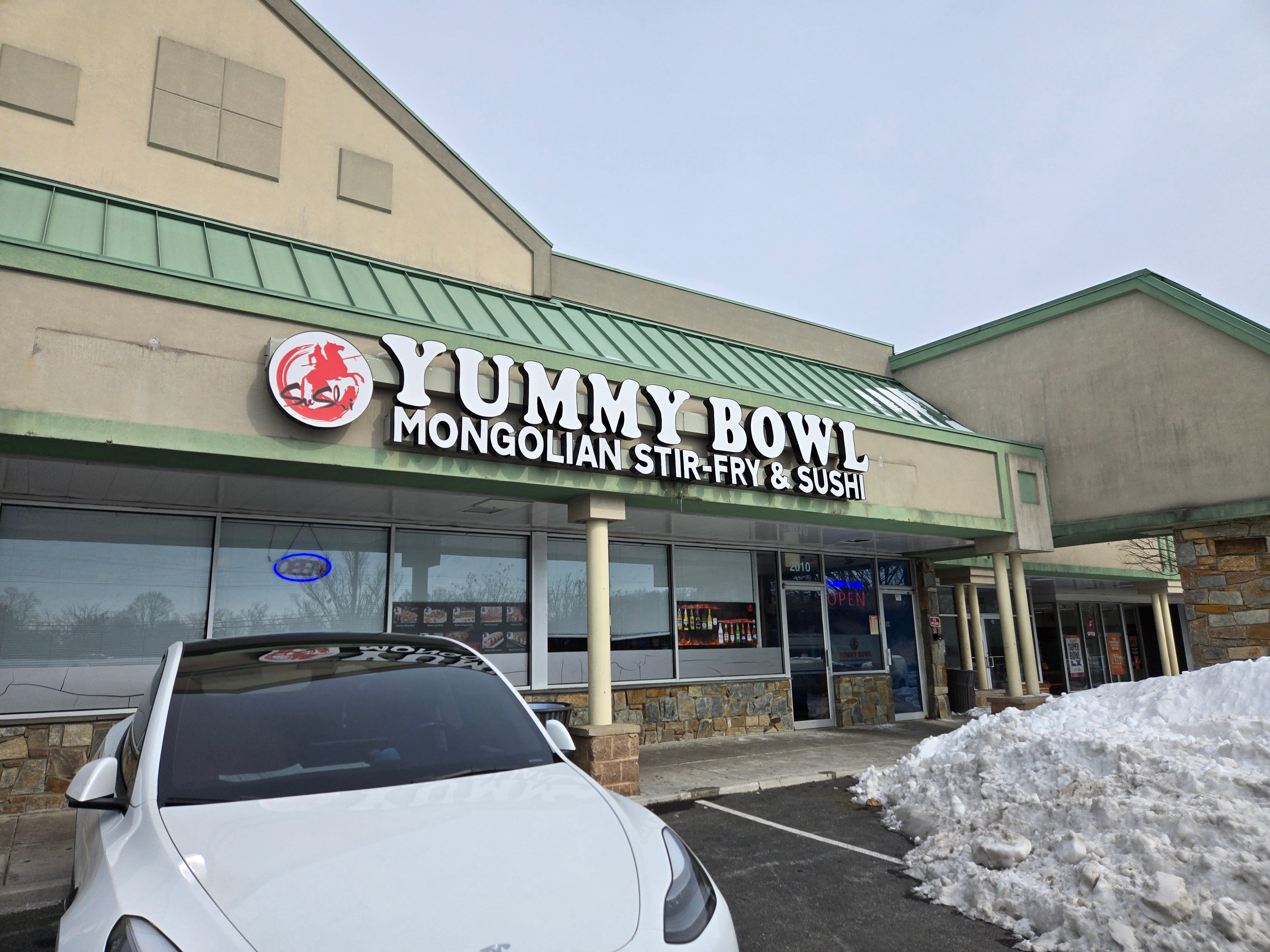
There are other recently opened Yummy Bowls in Manassas, Virginia, and in Hagerstown and Annapolis, Maryland. And there’s another recently opened Mongolian grill (and sushi) all-you-can-eat restaurant in Bowie, Maryland, called Hungry Bowl.
For whatever reason, after the older wave of these places receded, it’s coming back, but with the change of being all-you-can-eat, and having sushi, ramen, or other additional menu items.
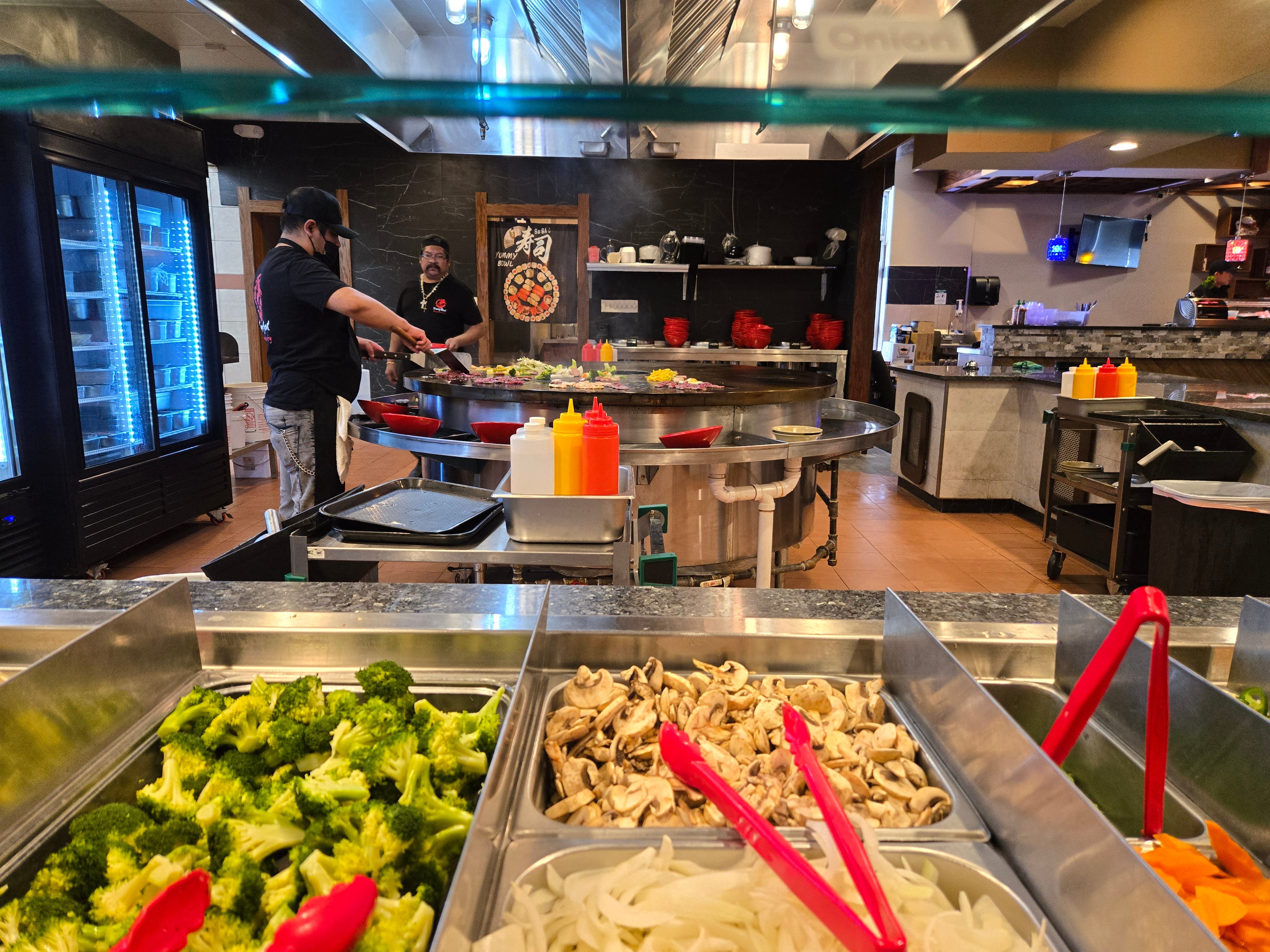
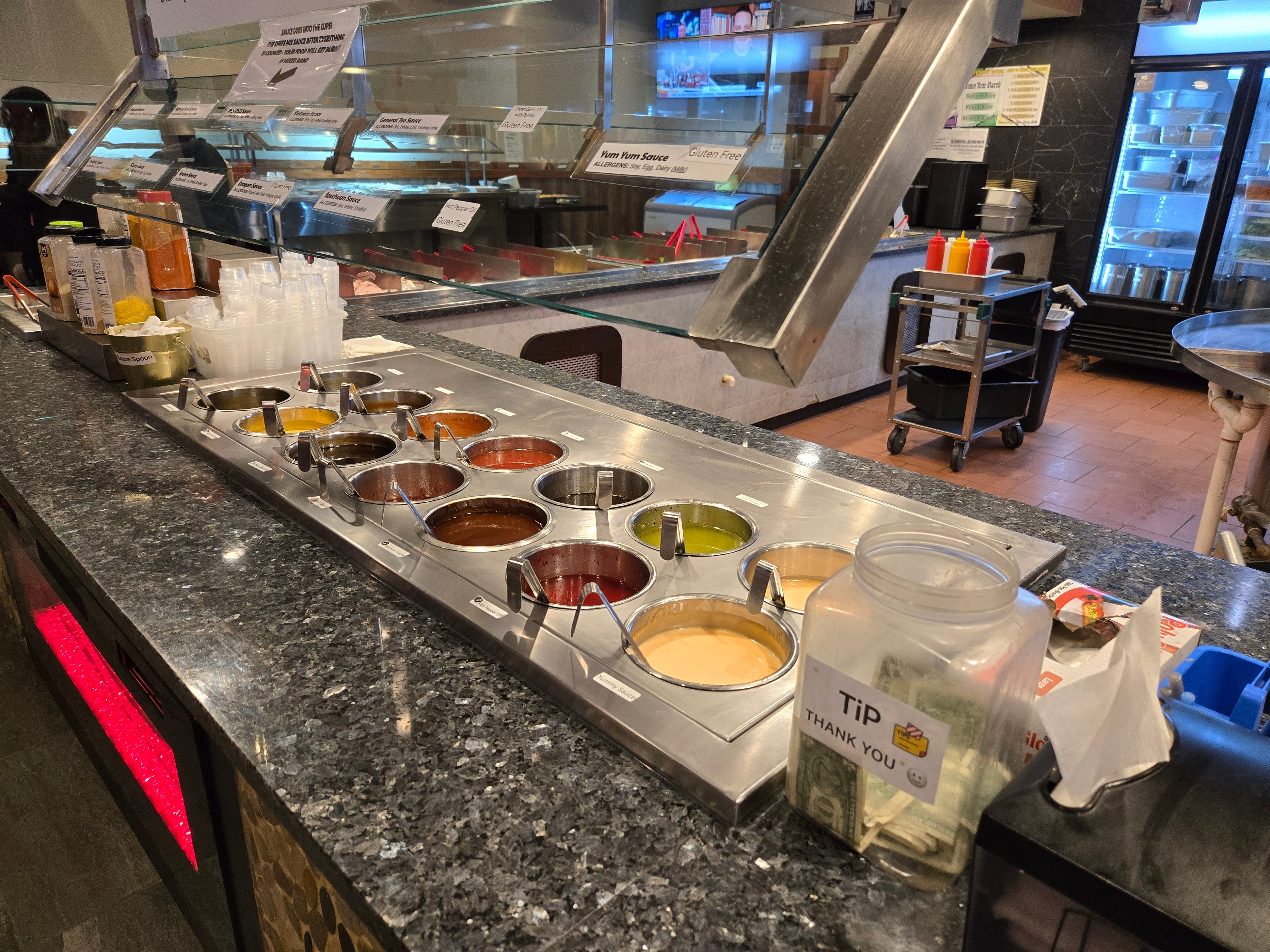
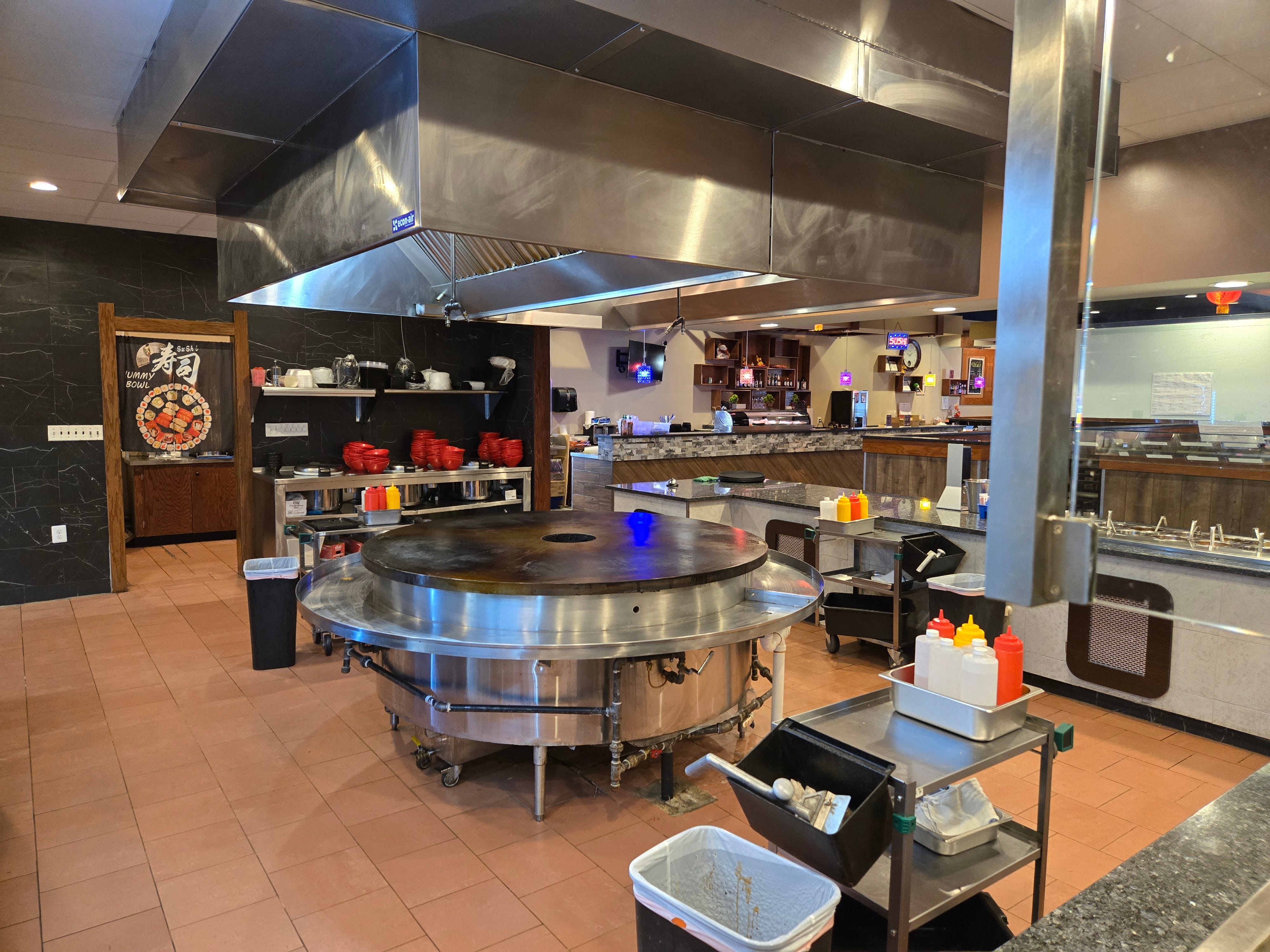
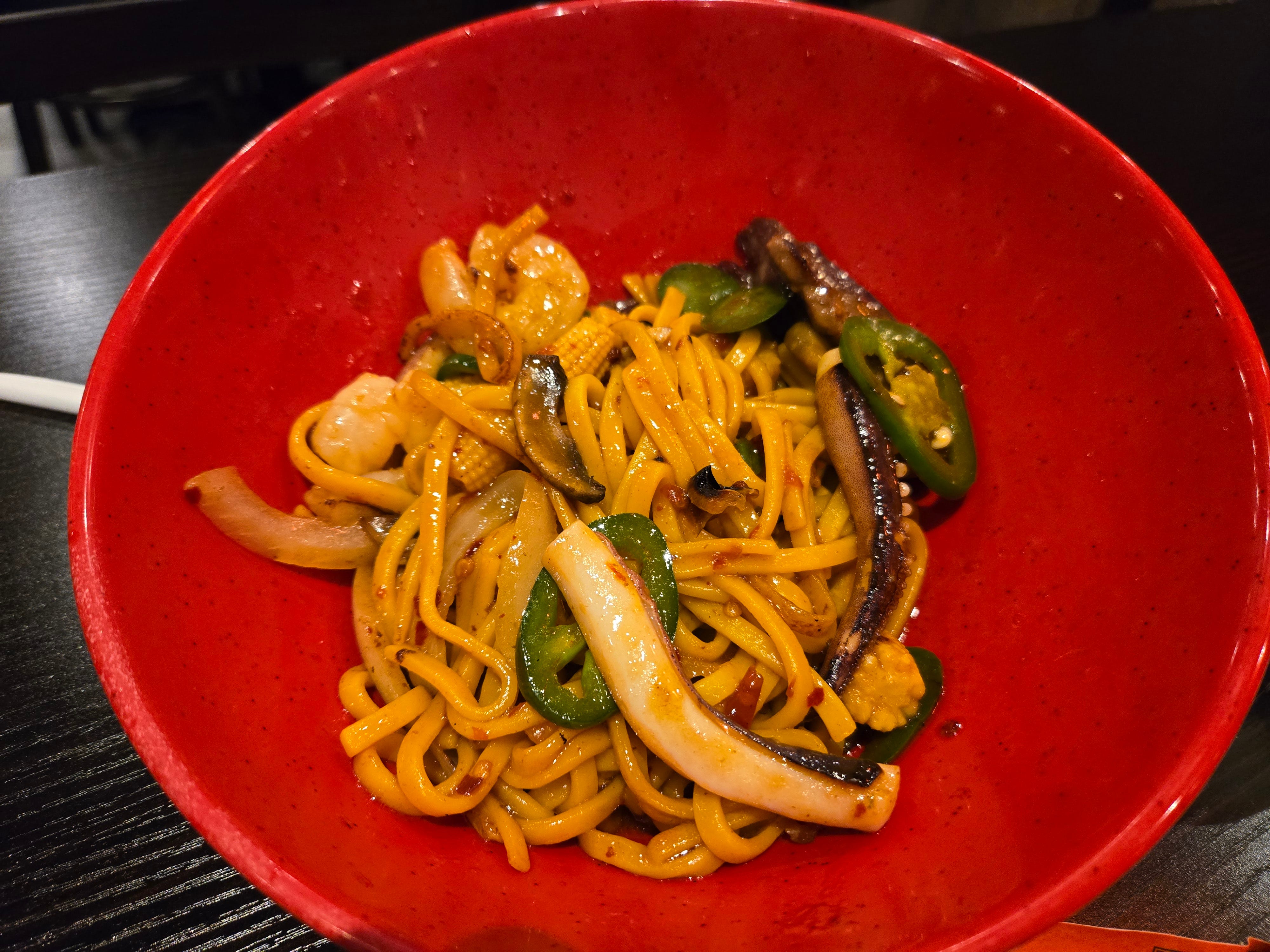
Giant round grill in the middle of the cooking area? Check. Variety of meats, noodles, and vegetables, to be selected in any amount or combination? Check. Sauce bar, which I haven’t seen since my old favorite New Jersey Chinese buffet closed down? Check.
As is usually the case with a place like this, it isn’t amazing food. But it was very reasonably priced—the all-you-can-eat lunch was $16 (before tax and tip), and it was good. There’s a little buffet bar, with spring rolls and California rolls, which is a nice touch but doesn’t add much.
It’s the cooked-to-order stir-fry bowls, a little over five bucks a piece if you can manage three, where the value is. And it’s sure to fun to throw a bunch of stuff in a bowl, mix and match from all those sauces, watch the chefs cook, and three or four minutes later dig into a fresh, hot stir fry.
It’s cheap, it’s tasty, it’s unpretentious, it’s slightly retro but not in a self-conscious way. It makes me wonder why this particular concept ever went away.
Those 1990s chains I mentioned earlier, and other imitators from around that time, were really a second wave of Mongolian barbecue. It was invented in Taiwan in the 1950s (no, the Mongols didn’t inspire the round Mongolian grill by cooking shreds of meats and vegetables on their upside-down shields) and is thought to have first been brought to the United States by John C. Lee, who came to America in 1966 after a stint as a colonel in the Taiwanese army.
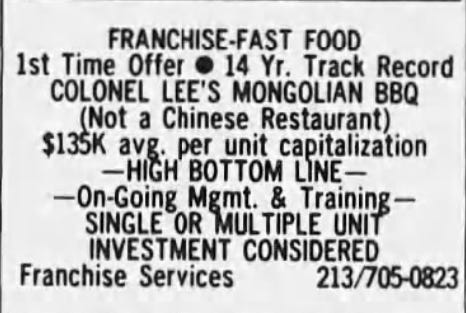
In 1969 he opened, fittingly enough, Colonel Lee’s Mongolian BBQ, which became a franchised operation with a number of California locations. In the 1970s, they were actively selling franchises:
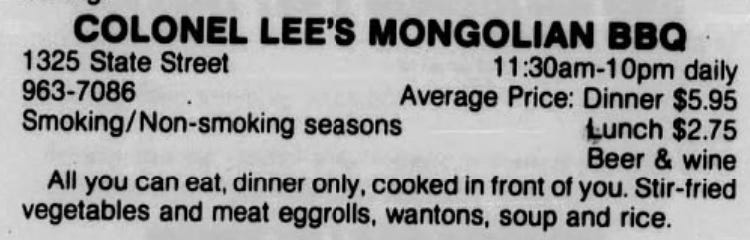
And they were also, apparently, all-you-can-eat affairs, only for dinner. From 1980:
There are none of his restaurants left, and he sold his company in 1989, which—another fascinating bit of commercial history—apparently invented the signature giant round Mongolian grill itself, at least as we recognize it today (regular woks were used in Taiwan, originally—at least that’s what some digging suggested). That basic implement is still available today from restaurant supply chains, though I’ll bet sales peaked awhile ago.
From an obituary of Lee in the Los Angeles Times:
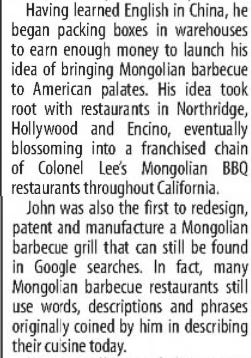
I can’t find any photographs or descriptions of the Colonel Lee’s restaurants from the 1970s, but it sounds like they set the template for basically every restaurant that has ever called itself “Mongolian grill” or “Mongolian barbecue,” including the much later chains, the little Mongolian grill sections of the old Chinese buffets, and, now, the Yummy Bowl restaurants opening today.
They are not a new idea, but an old one taken off the shelf—a resurrection almost piece for piece of a restaurant that first appeared on another coast more than half a century ago.
Related Reading:
Buffet Chronicles: Bigger Isn’t Always Better
Buffet Chronicles: Different Than All The Rest
Buffet Chronicles: Made In China
There's another Yummy Bowl, oddly, in Dunmore, PA (Scranton area). I never knew they were native to Maryland so this was a pretty shocking photo to see!
The one in PA is always super crowded, a nice change up in an area rife with pizza, bar food and Italian restaurants. My 71-year old dad is really obsessed with it, just because it's so novel and unusual for the area. The food, like you said, is fine, but it's a fun experience and that's kind of half the point of going out to eat these days.
BD's was a fixture of my high school years in the early 2000s. I was looking back at old photos recently and was shocked to see my wife and I had eaten at a BD's as recently as 2012. If I had to have guessed, the luster on those places faded much closer to 2005 or so, but when they were a thing, they were fantastic!