

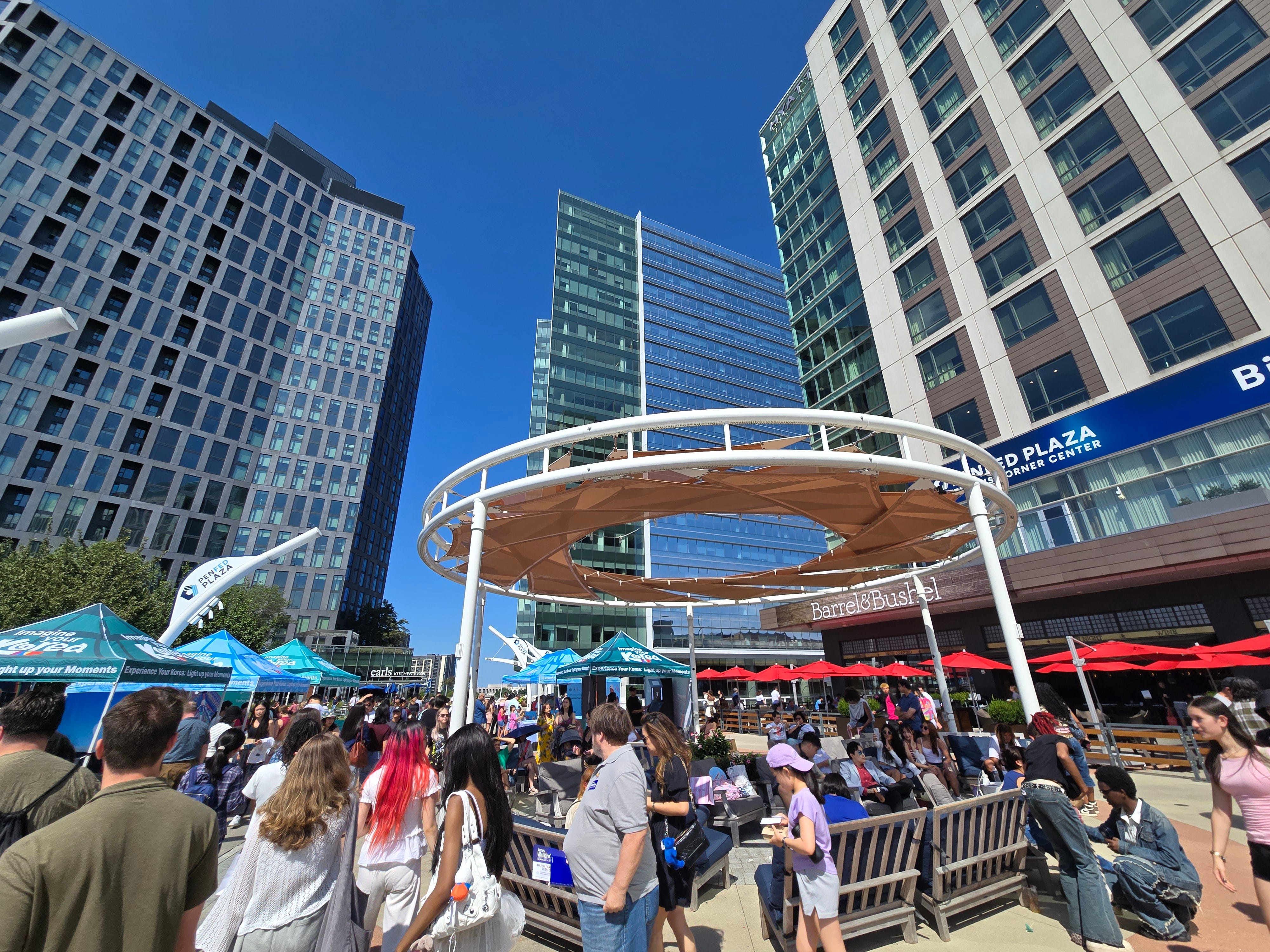
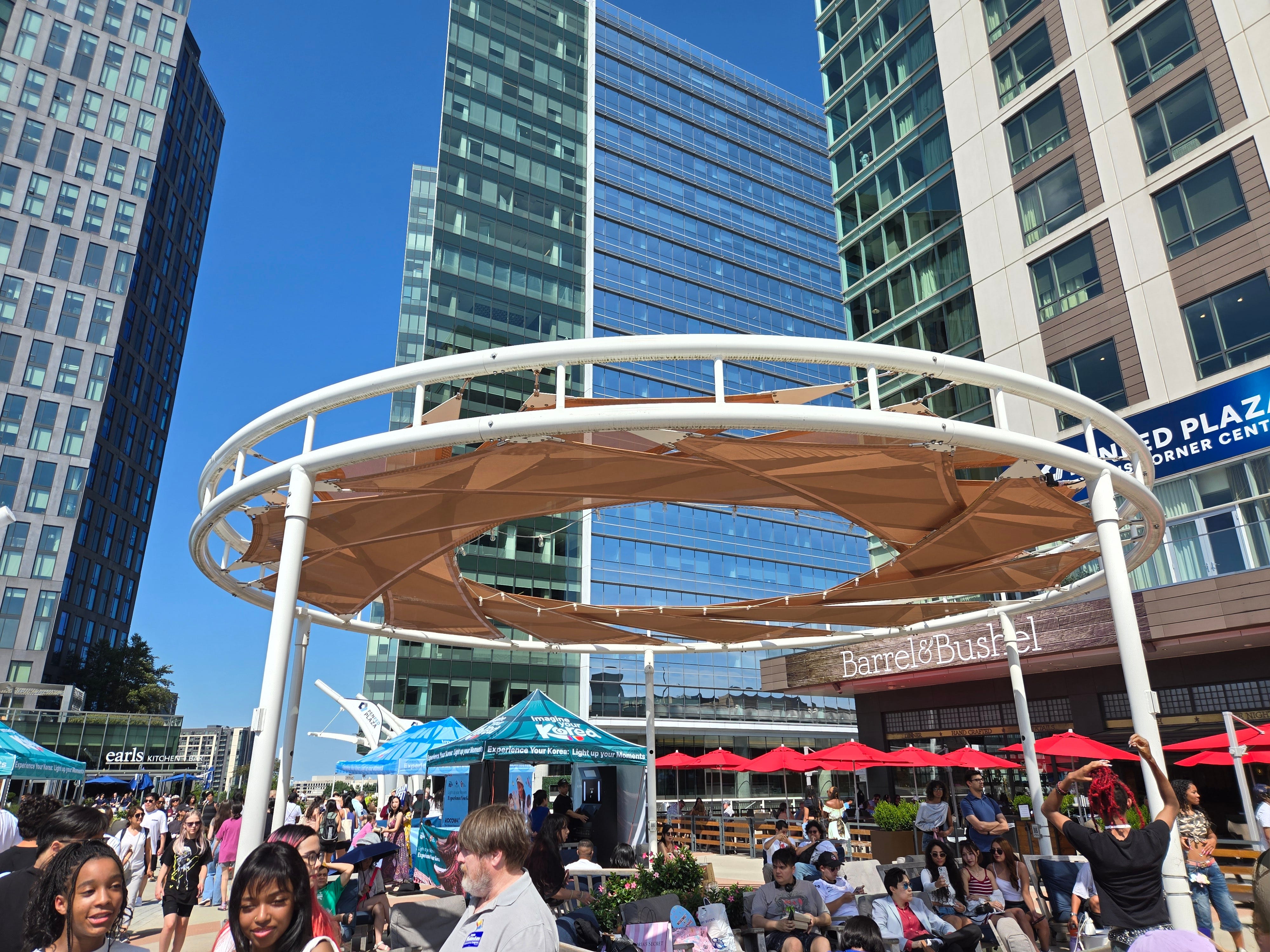
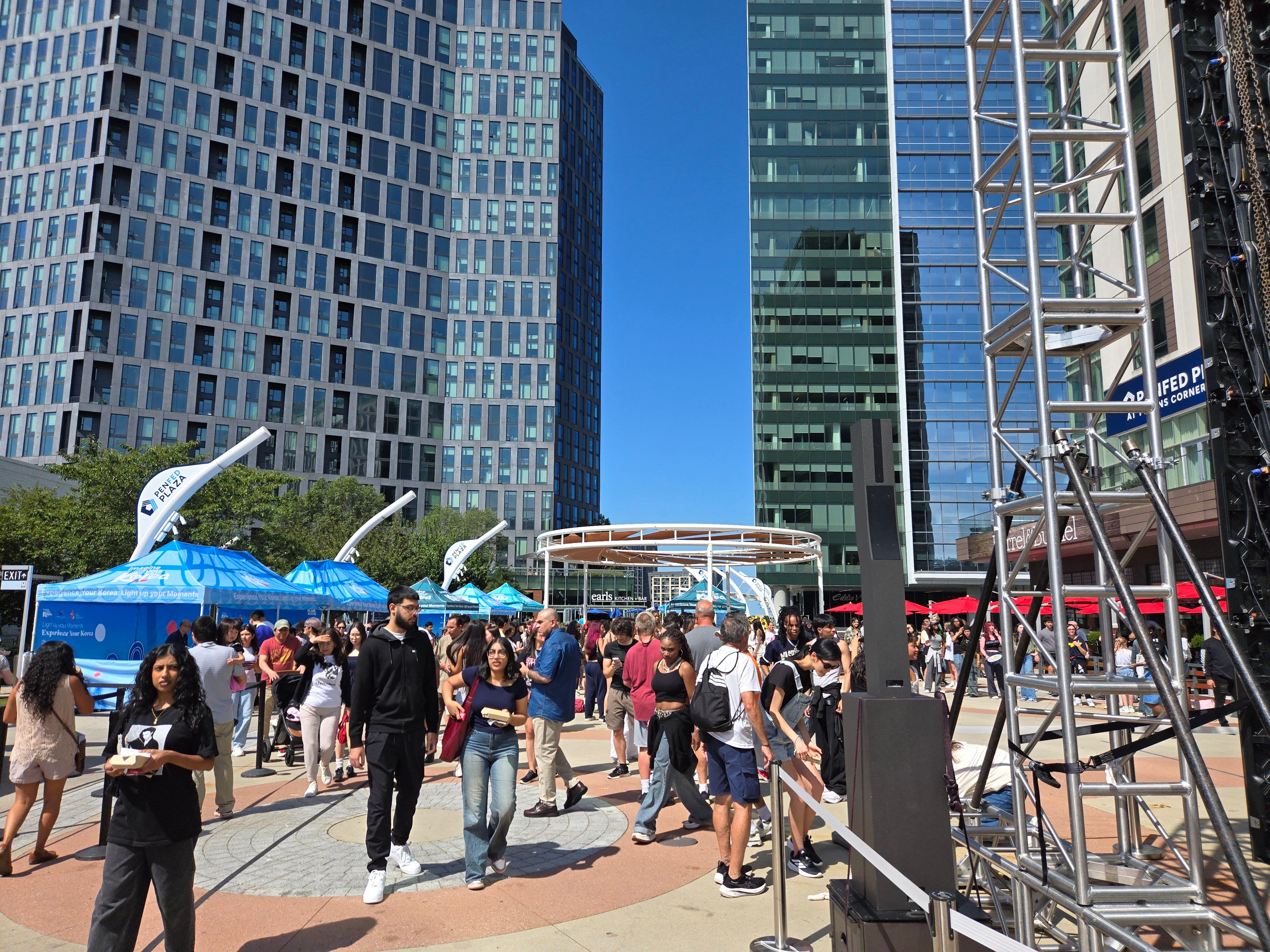
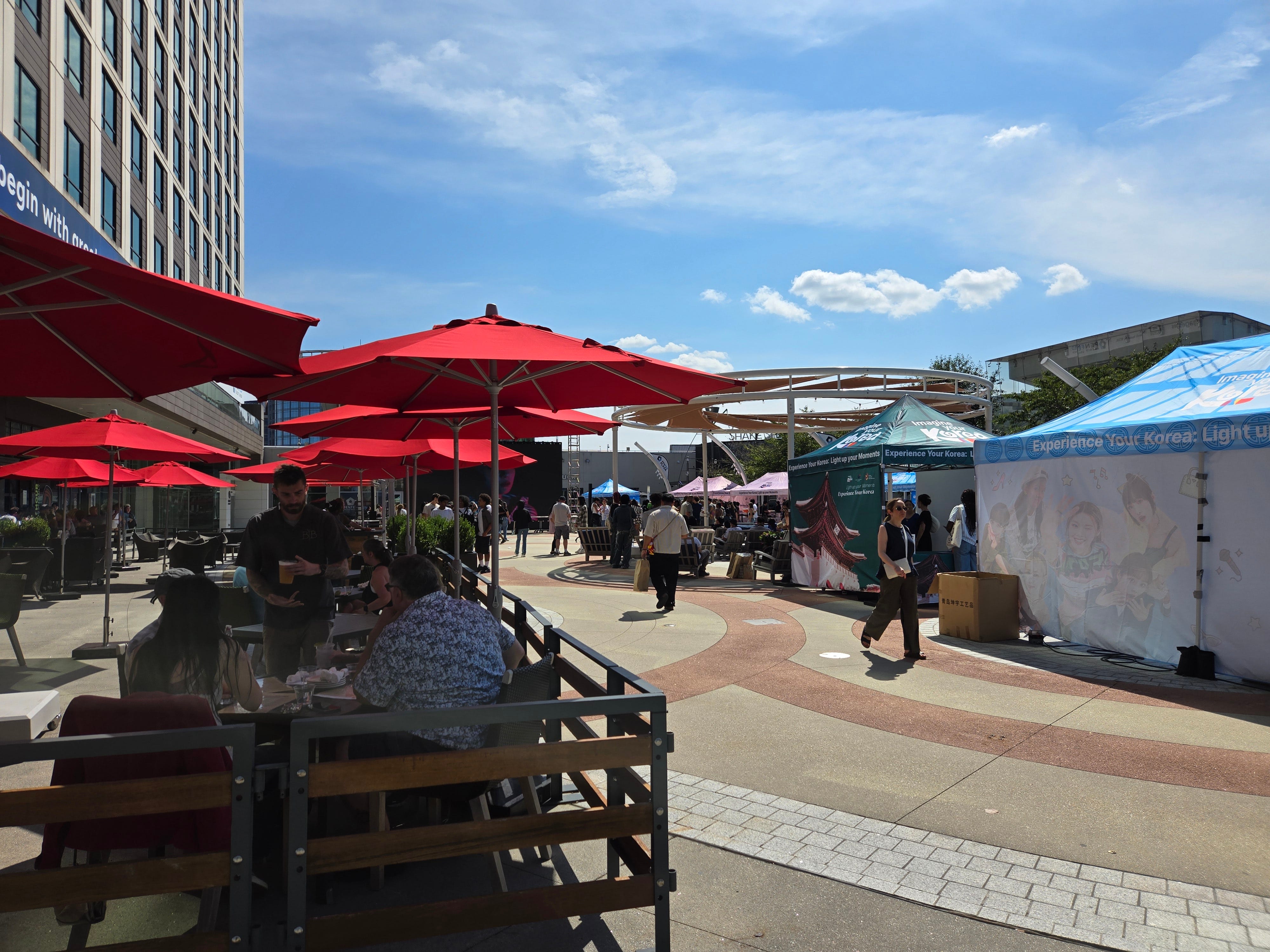
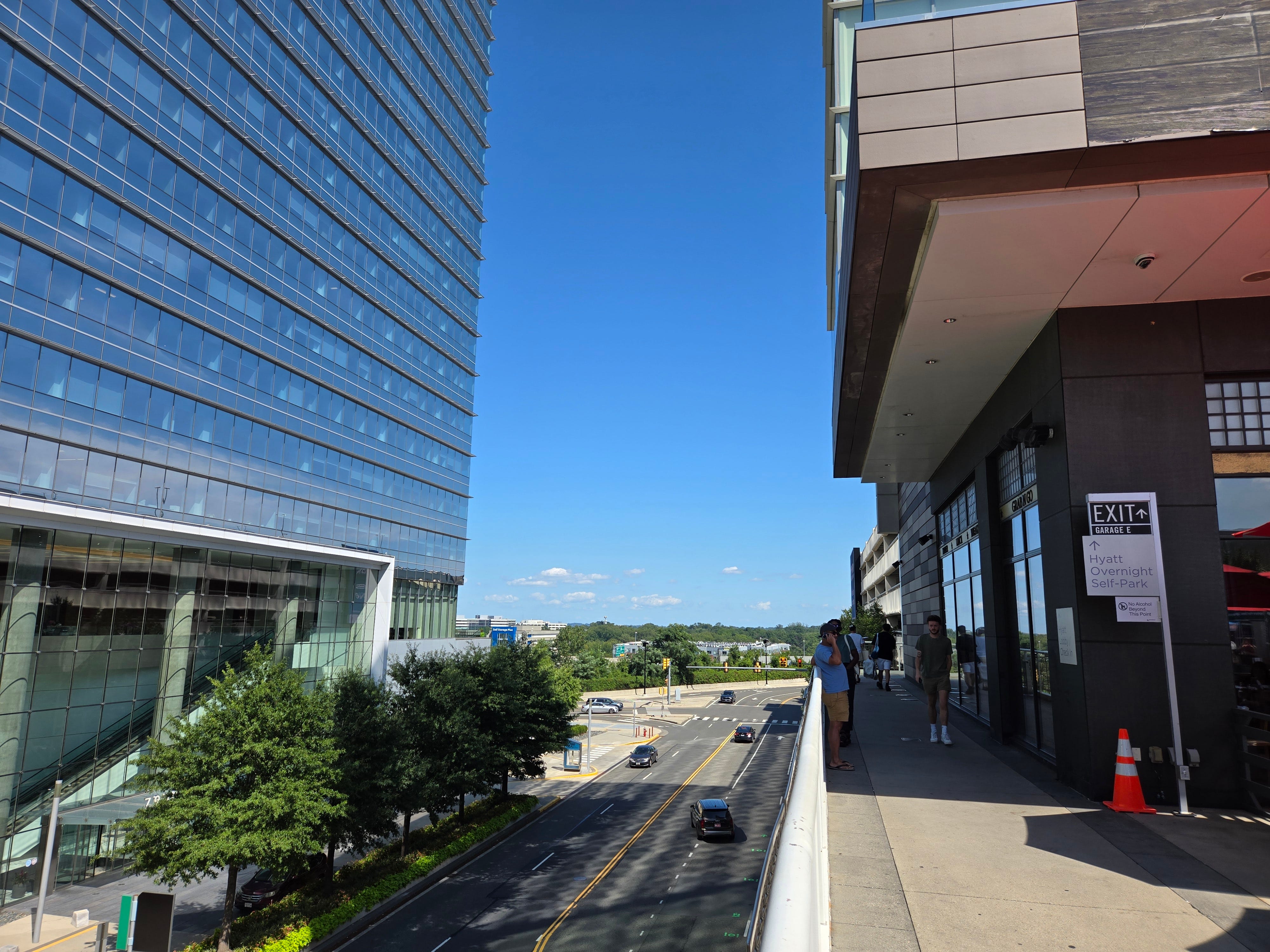
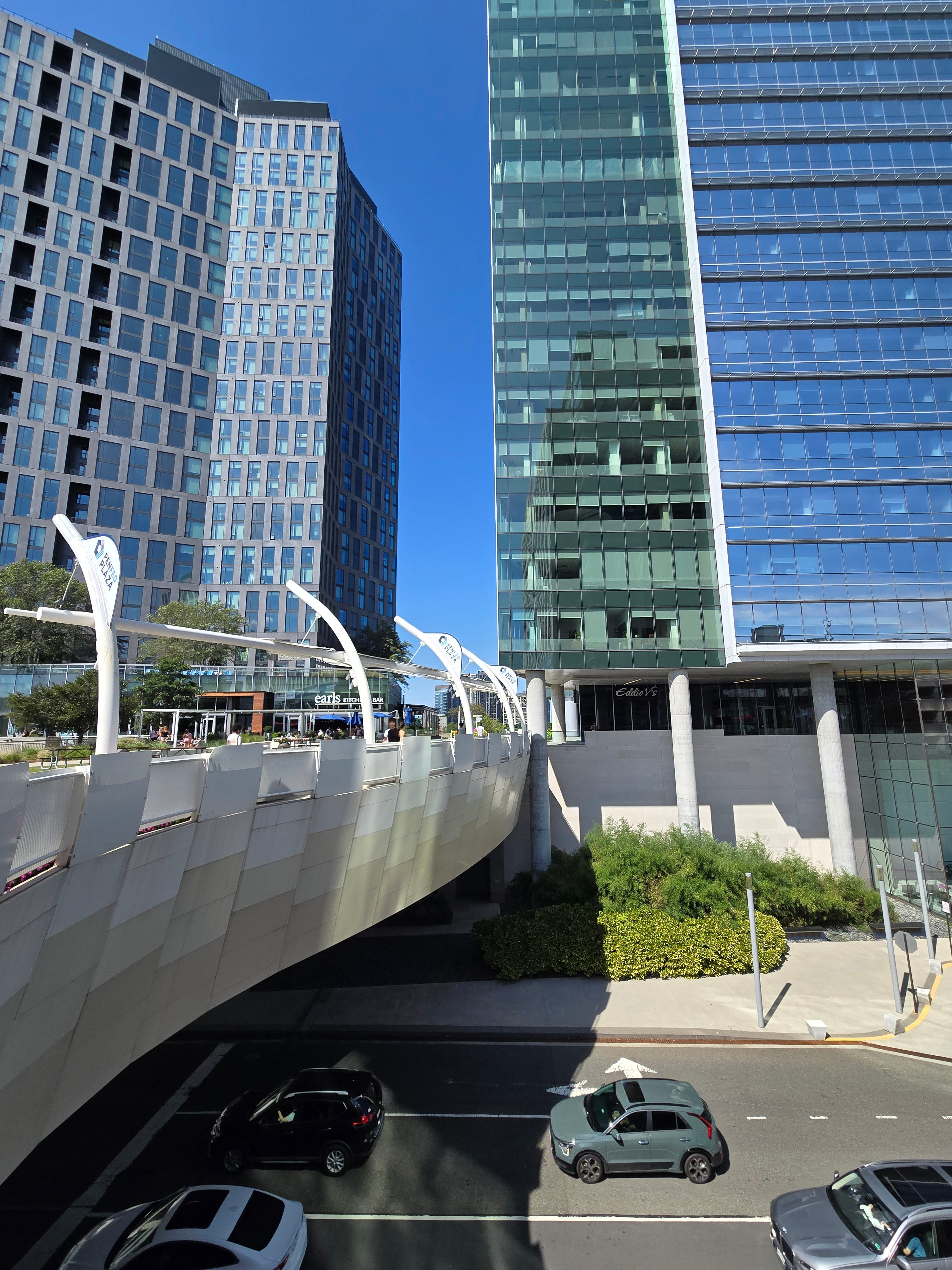
At the big fancy mall in Tysons Corner the other week, my wife and I came across a Korean cultural festival. Some of the booths and tables were set up in a common space in the mall, but most of it spilled out onto a giant outdoor patio, overlooking the highway and the Tysons skyline.
But the immediate view, with tall buildings rising up over a nicely put together outdoor space, looks and feels almost like you’re in the city. Especially with a good crowd and an interesting cultural event.
I wrote, in a recent piece for Greater Greater Washington waffling on the redevelopment of an old strip plaza for a mixed-use apartment complex, this, which is a big part of how I think about urbanism:
Suburban places like Annandale were built to be orderly and rather bland; they were occupied by their share of small, local businesses, but were also heavily designed around car trips and big-box commerce. Some suburbs are still like that.
But some, like Annandale, have become unexpectedly diverse, energetic, entrepreneurial, and culturally interesting. In a word, they’ve become urban, in the best sense that urbanists mean the word. Without changing their form, these communities have, in a real sense, become something different. Not something to freeze in time, but something to appreciate and build on.
Walking around the festival in Tysons brought to mind an article someone shared with me recently, about two Bay Area malls: the San Francisco Centre, a high-end downtown mall, and the Stonestown Galleria, also in the city but outside downtown in an area with less dense and more typically suburban land use.
Stonestown sits in the city’s southwest corner near San Francisco State University, several high schools and neighborhoods that are filled with Asian American families.
The mall has tapped into a successful formula, as Asian stores and restaurants have become popular among young consumers, no matter their ethnicity. Other malls in the Bay Area, as well as in New York and Canada, have found similar success.
At the Chinese retailer Pop Mart, customers scoop up collectible, limited edition Labubu dolls in such huge numbers it can be difficult to push through the crowded aisles.
Bryan and Maricris Buenaventura browsed the store with their Maltese Yorkie dog, Rocky, whom they had dressed like Harry Potter. The couple said they regularly have date nights at Stonestown, where Rocky likes to slurp a dog-friendly, soft serve ice cream from Matcha Cafe Maiko, a Japanese shop.
This phenomenon of areas outside, or on the edge of, legacy cities being more diverse and culturally interesting than the old urban cores is really interesting to me, and I think a lot about what exactly it means for people who consider themselves urbanists and like cities and want them to do well.
Should we be somewhat concerned about the phenomenon of suburbs sort of culturally and maybe economically outpacing cities? Or should we do what I tend to do, and see the “spirit” of the city in these places?