

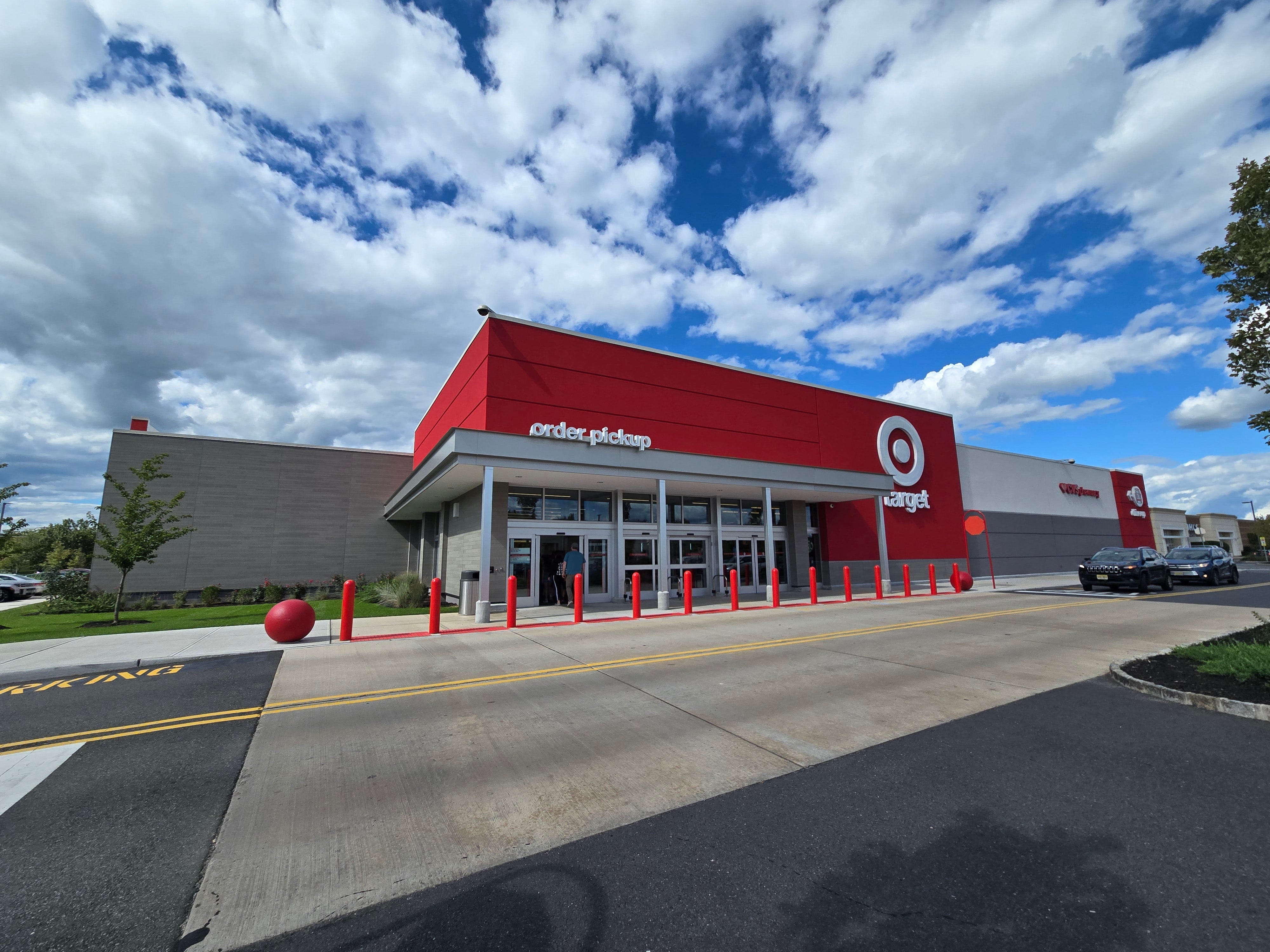
When I was visiting my hometown of Flemington, New Jersey earlier this month, I stopped in a recently opened Target. Relatively recent—August 2025. It’s got a more modern interior look than most Targets, but otherwise it’s pretty much the same.
Here’s the outside, taken on a very nice day:
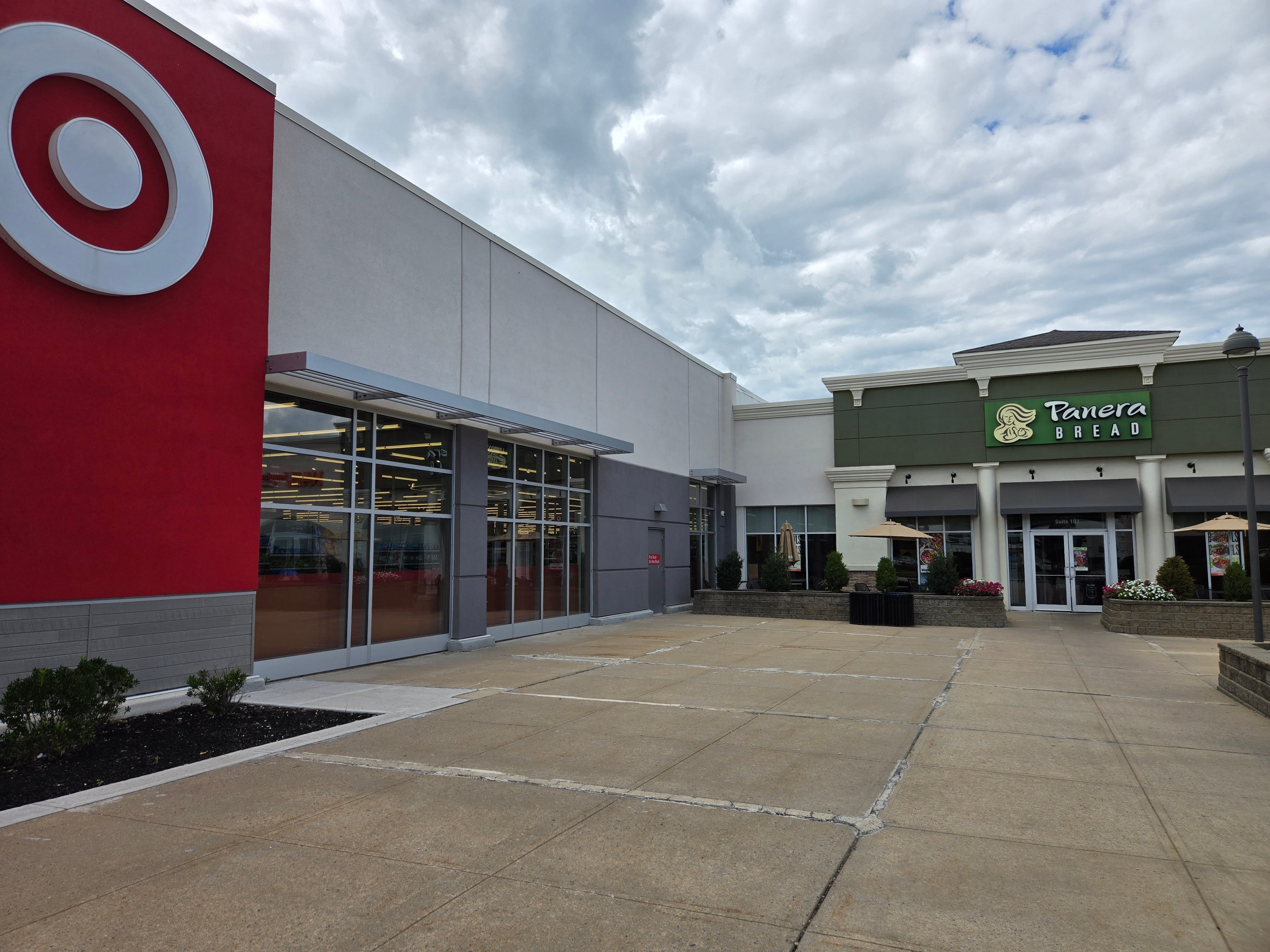
And another entrance over on the side, because the space is kind of a corner space in the shopping center it’s in:
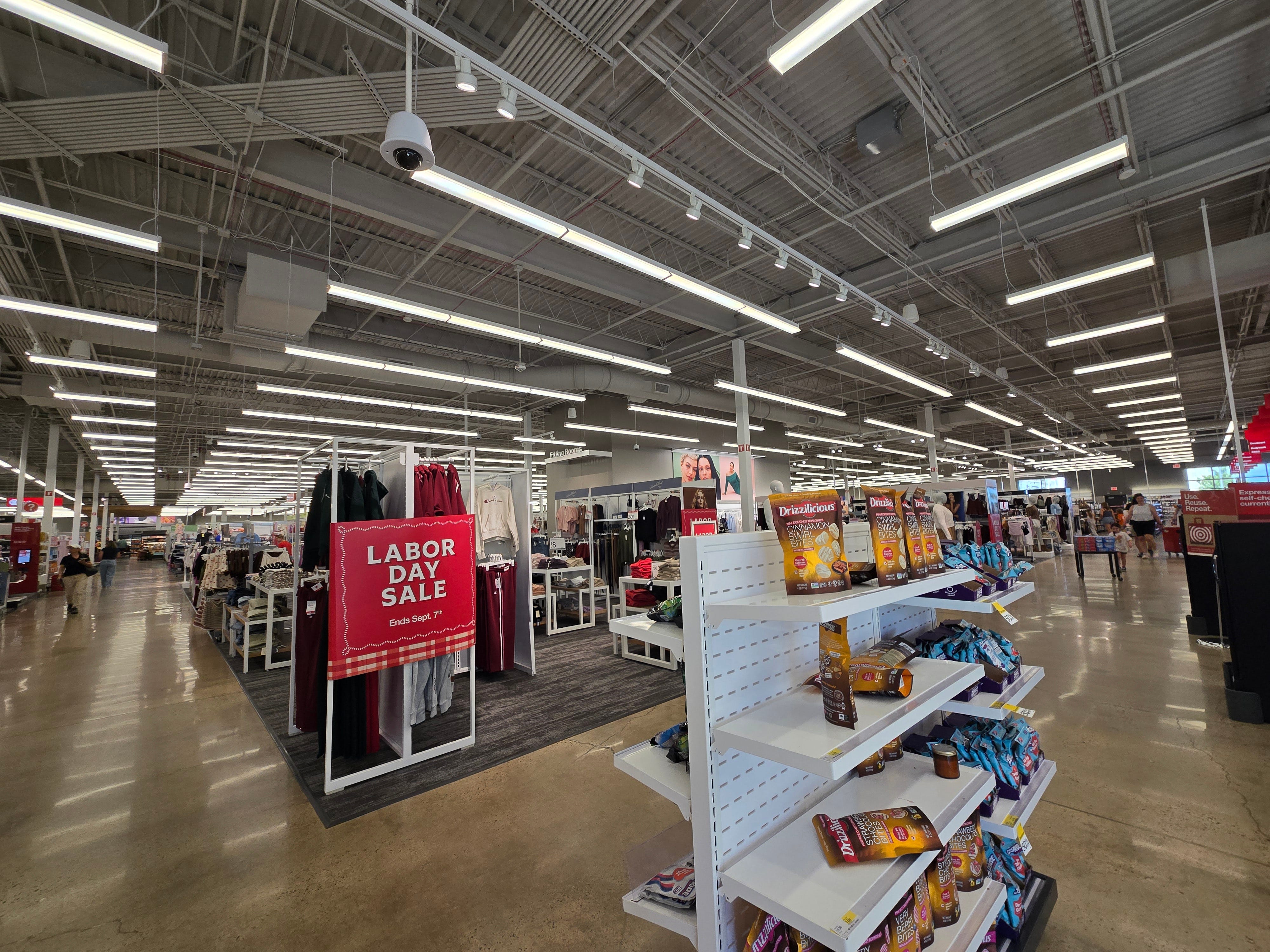
The inside lacks the typical Target drop ceiling, going for the high, exposed ceiling more like a Walmart. But it’s nicely put together.
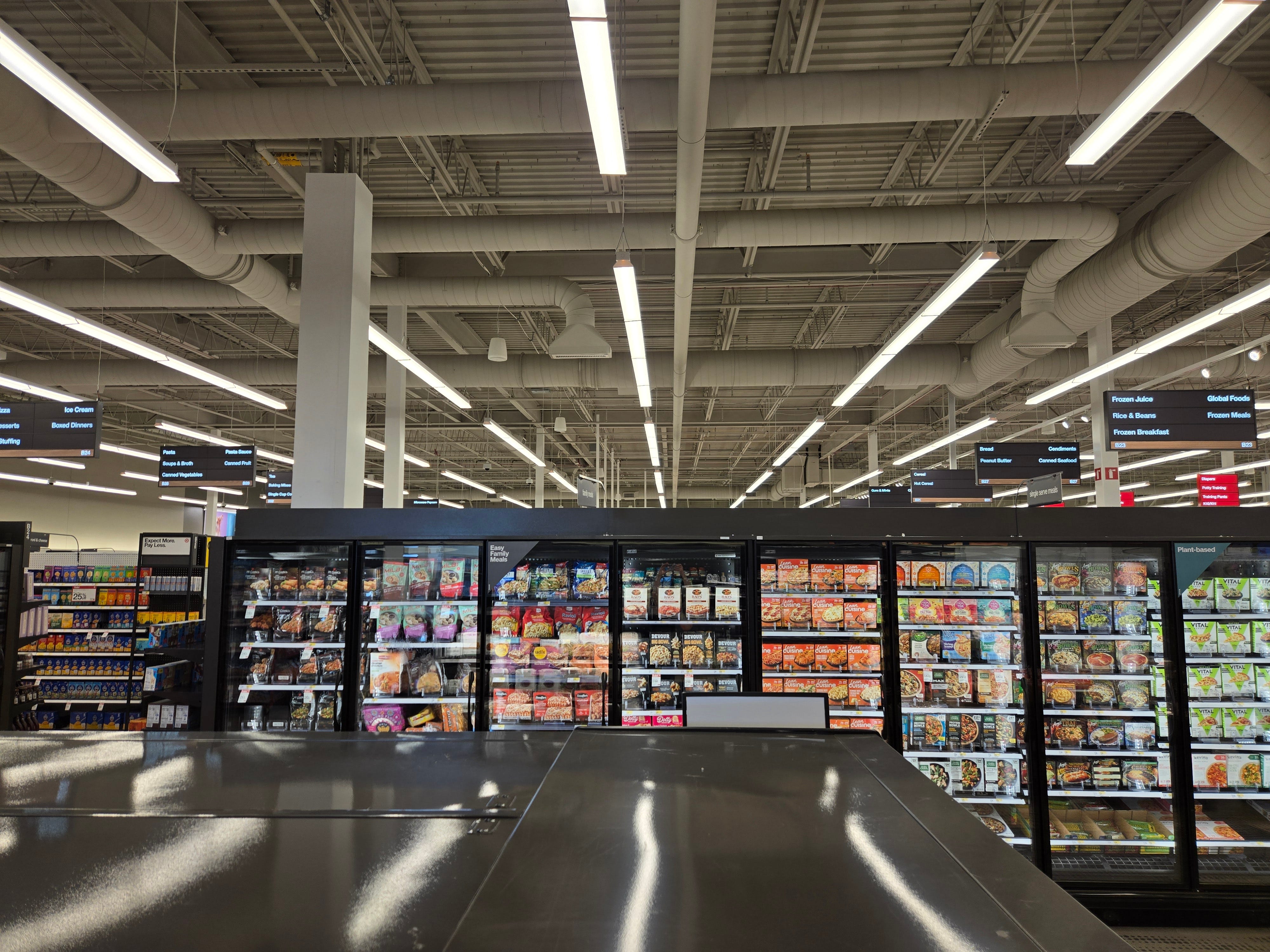
Here’s the grocery section:
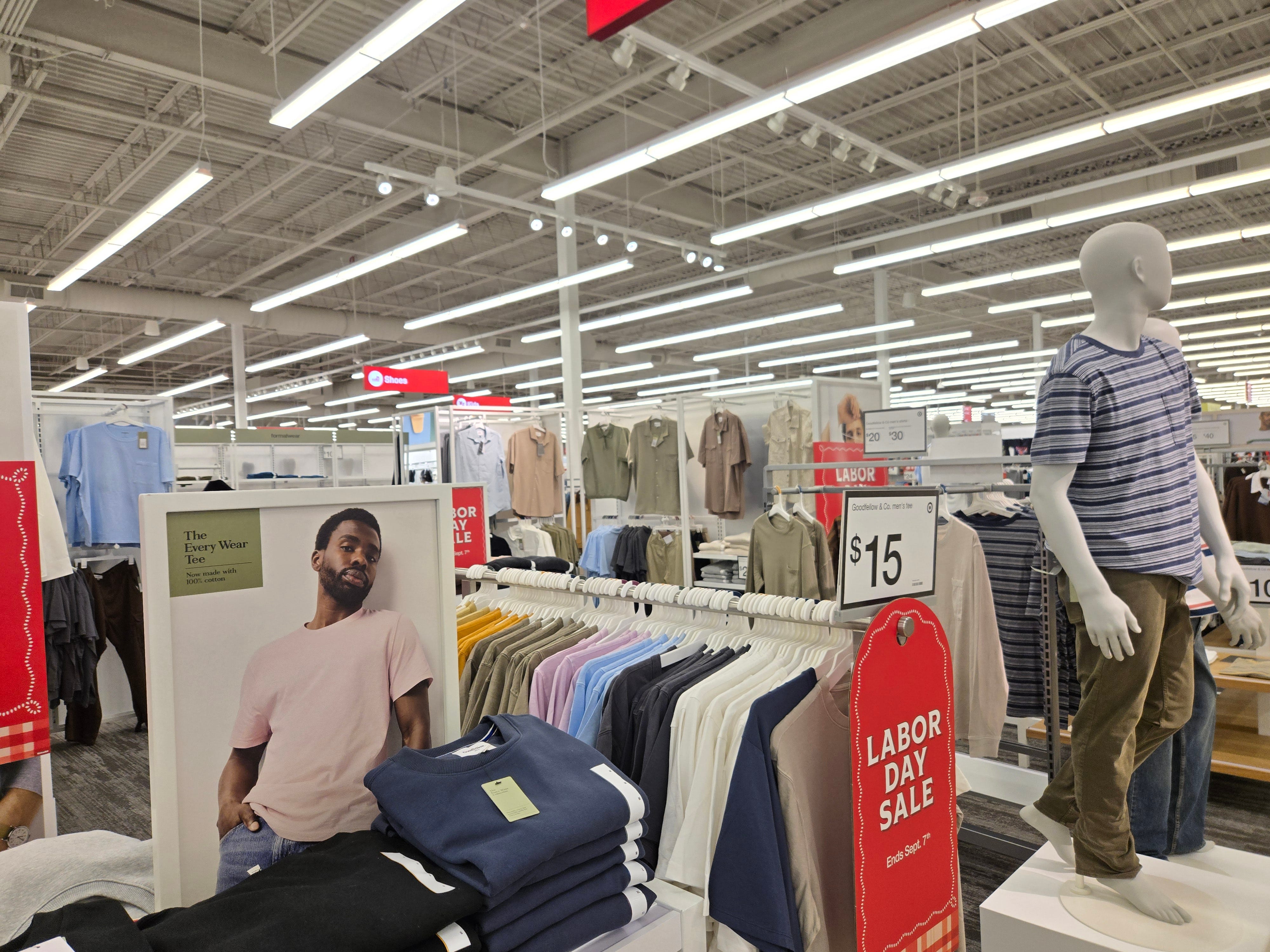
And the big central clothing department:
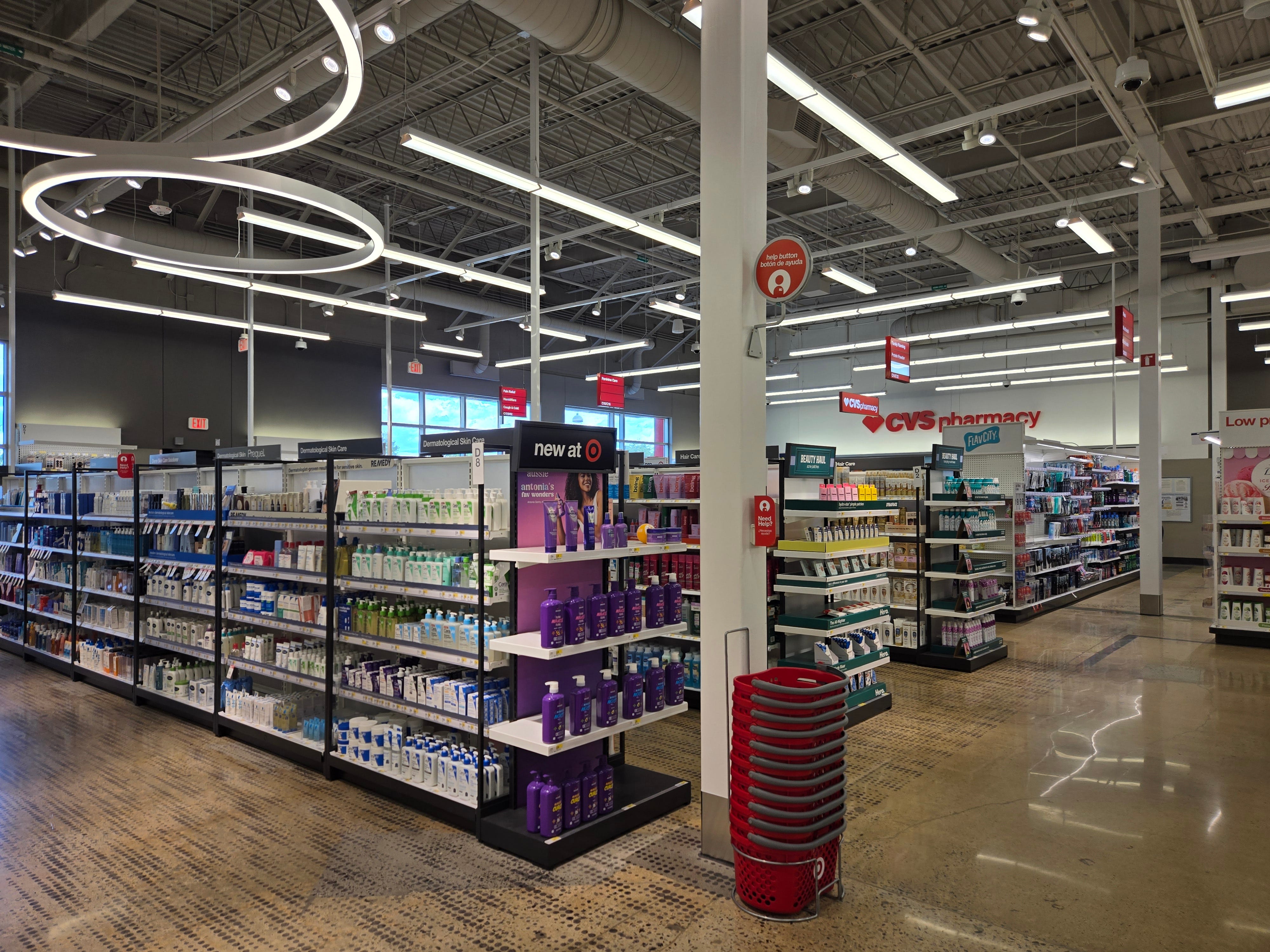
The pharmacy:
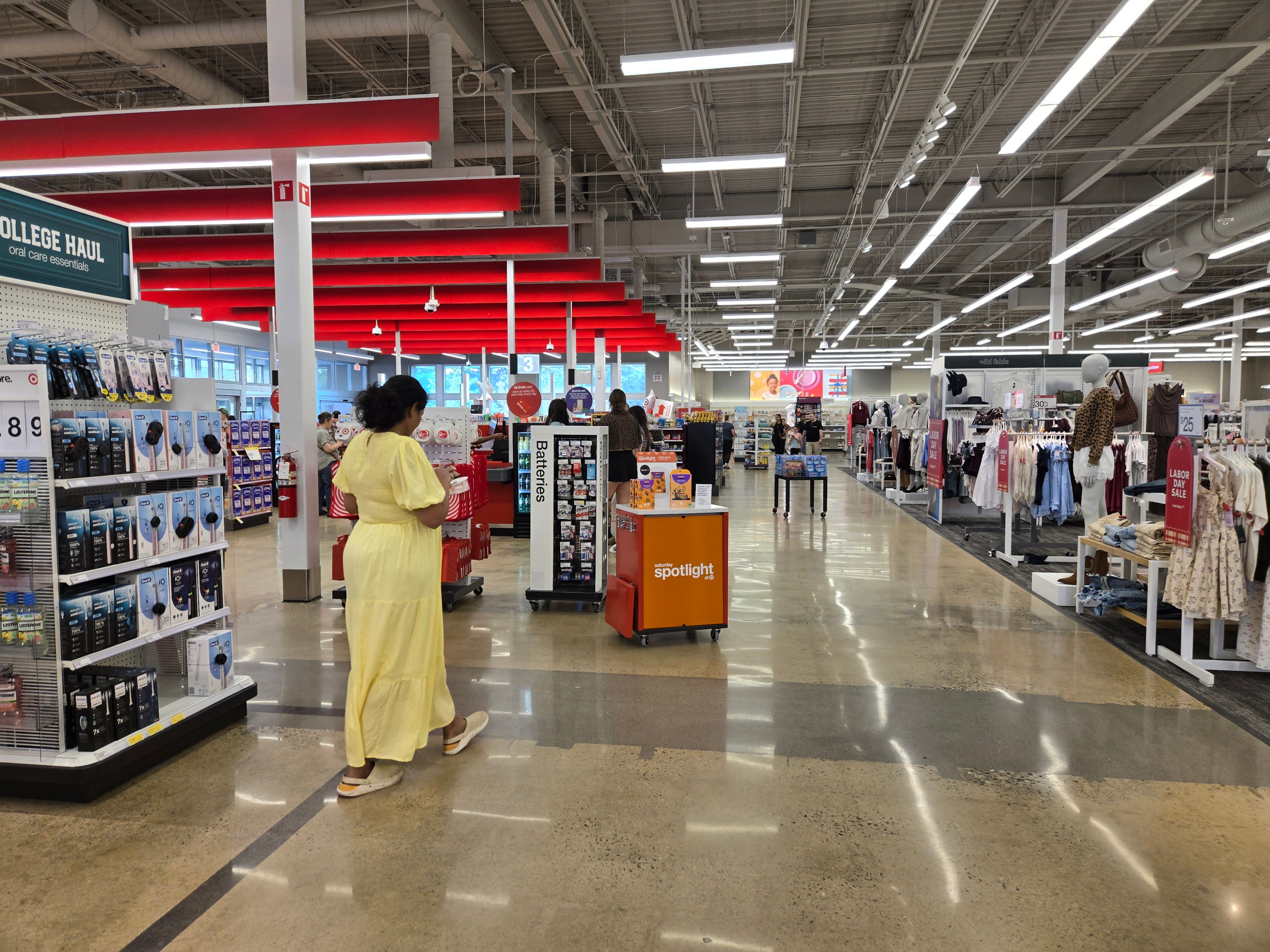
And the checkout area:
Do you notice anything? I’m not sure I would, at least in terms of the merchandise available. But this is not a regular old Target. It’s much smaller than usual, at about 75,000 square feet, compared to the typical size of around 125,000 square feet, with some stores going up to 150,000.
Much of the reporting on the store referred to it as a “small-format” Target. It’s unclear to me if Target itself technically considers these small-format stores, but they’re generally referred to that way. However, they are significantly larger than the average small-format store, many of which are near colleges or in cities, and many of which were once known as CityTarget and Target Express. I think they could properly be called “medium-format” stores.
This is what Target says about its small-format stores, from its official website:
Just how small do our small-format stores get? They’re all different, starting as small as 15,000 square feet or less, though the average small-format Target is around 40,000 square feet, about one-third the size of our full-size 130,000 square-foot store. Fun fact: our newly opened store in Chicago’s Wicker Park neighborhood is the smallest to date, spanning just 12,800 square feet. The size of each one is based on what we think will best fit and serve the neighborhood.
First of all, this is an extraordinary spread in store size, spanning from under 13,000 square feet to 150,000 square feet. These aren’t just differences in size; logistically, these are different kinds of operations. That’s impressive and innovative, compared to the way a lot of chains operate.
But more importantly, I want to return to the Flemington store, which sits in between the upper range of the average small-format store and the lower range of the typical large Target.1
This Flemington store isn’t an urban or campus store; it’s a suburban “medium-format” store, which is even more interesting. There are some other Targets in this middle range, though they’re unusual. New Jersey has an Eatontown store at 60,000 square feet, for example, in an old strip mall. But there aren’t many. I wasn’t even able to find out if there is one in Virginia, because there isn’t much on the internet. These stores are a rare breed.
Now there’s a particular reason I find this interesting, beyond just the diversity of store sizes the company is able to operate. It’s that the Flemington Target, originally, began life as a Barker’s discount department store, then became a Jamesway discount department store, and then, with a period in between as a Burlington Coat Factory, became a Target—another discount department store.
Barker’s and the later Jamesway were basically the same thing, discount department stores in the Caldor/Ames/Bradlees sort of mold. A lot of these older chains, almost all of which are now defunct, had smaller stores than the typical Walmart and Target today. Ames was known for having what would now seem like relatively small stores in smaller towns and rural areas.2 Nobody thought of them back then as “small-format” stores, or, for that matter, “medium-format” stores. Historically, they would have just been considered part of the normal range for the discount department store category.
So there’s an interesting phenomenon of size inflation going on here, where the average size for a store of this general type has gotten bigger and bigger. This is not to say there weren’t always very large discount department stores; some of the earliest ones, in the late 1950s and early 1960s, approached 200,000 square feet and some also contained full supermarkets. But on average, the size of the typical Walmart and Target considerably exceeds the average store sizes of the chains they put out of business.
How much of that size is really necessary? There’s a relationship between store size/type and land use: we need big stores so we need sprawling, open land use, which requires cars, which spreads things out, so we need larger stores to make errand-running more efficient, so we have larger houses and appliances and storage spaces to hold those big shopping hauls, etc. You can overstate this—there’s nothing wrong with a Costco haul—but it’s a real thing.
To be clear, my point isn’t that we shouldn’t have large stores. It’s almost the opposite: that whatever else we have, we should have small stores. We should have a larger and broader diversity of scale for physical retail. A Target, or similar store, being able to slot into an awkward retail space, at a size which few brick-and-mortar companies operate at these days, is an opportunity.
It’s an opportunity to make more efficient use of existing shopping centers and buildings. It can breathe new life into entire properties which were built for a different world of physical retail. It can be a missing little piece of the “scale ladder.” And for most everyday shopping trips, you probably won’t miss anything, and there will, of course, be a larger store, or e-commerce, to turn to when you need those other things.
I’m going to leave you with the former tenants of that Eatontown, New Jersey Target, which is only 60,000 square feet. It now occupies the combined space of the old Babies ‘R’ Us and the liquor store and Chinese buffet:
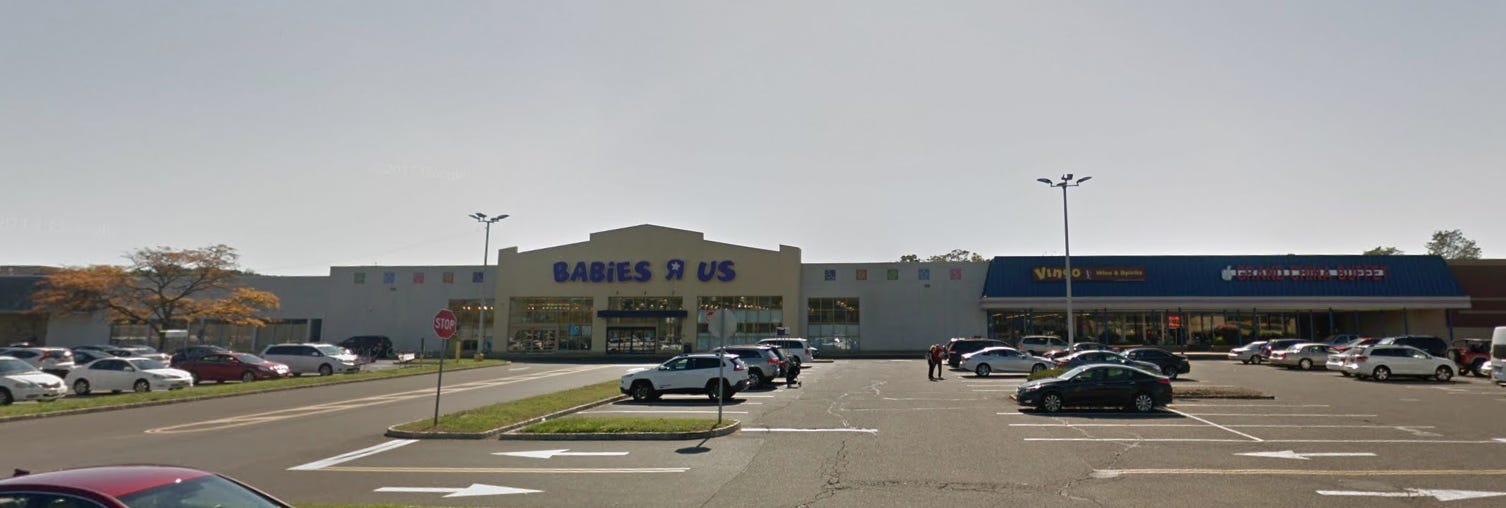
Once again you can see how these “medium-format” stores make it possible to put solid, everyday brick-and-mortar stores in spaces where the modern, usual form of a discount department store no longer fits.
The trade area for a full-size Walmart or Target is large, and there are only so many you can build before they start to cannibalize each other. There are also areas where it doesn’t make sense to build one that big.
Perhaps we’ve gotten near the saturation point for these suburban megastores, and are rediscovering—albeit with a new name and conceptual frame that was not necessary in an earlier time—an old normal for the discount department store category, for shopping centers, and for communities.
Related Reading:
The Neighborhood Supermarket Never Disappeared
An American Walks Into A Sushi Bar
It’s worth noting that the large suburban stores are still by far the most common in the chain; of all the upcoming stores listed on Target’s website, only one is below 100,000 square feet, and even that one is 90,000 square feet.
This is an interesting tidbit from a 2007 article on the afterlife of vacant Ames locations, and it gets exactly at my musings about scale here: “The typical Ames store, generally 60,000 square feet to 90,000 square feet, was too small for ‘big box’ retailers and too large for companies like Marshalls and Bed, Bath & Beyond, McNamara said. ‘There’re not a lot of 60,000-square-foot retailers out there,’ he said.”
I had noticed what I thought looked like a couple unusually smallish Target stores while driving through Chicagoland last winter, but I did not stop to explore. They could have just looked smaller and had more hidden area. I know that in the city itself, there are multi-story Targets that are very hard to judge the size of. Here in the Milwaukee area, all the ones I know of seem about the same size (~120-150k s.f.). There used to be a couple smaller Walmarts in Milwaukee County, but they closed a while back.