

One of the more arcane causes/policy areas in urbanism, broadly, is parking: specifically, the question of how or whether parking requirements should be formulated. Parking requirements—typically specifying a minimum number of required parking spaces based on some characteristic of a business or other destination—are required by law in most localities and have been for decades. Whether part of the zoning code or a separate ordinance, they’re one of the typical things builders and business owners must comply with.
There are some absurdities here which are often used to make the broader, and more difficult, argument that there should be no parking requirements at all. For example, parking reform folks point out how we penalize drunk driving with one part of the law, but require bars and drinking establishments to have parking spaces with another part of the law.
Or, things like this. This, from a parking session I attended at the Strong Towns National Gathering conference in June, shows the parking spaces required for bowling alleys in seven different Connecticut towns and cities. One small state, one type of business, and they all have different numbers of spaces required.
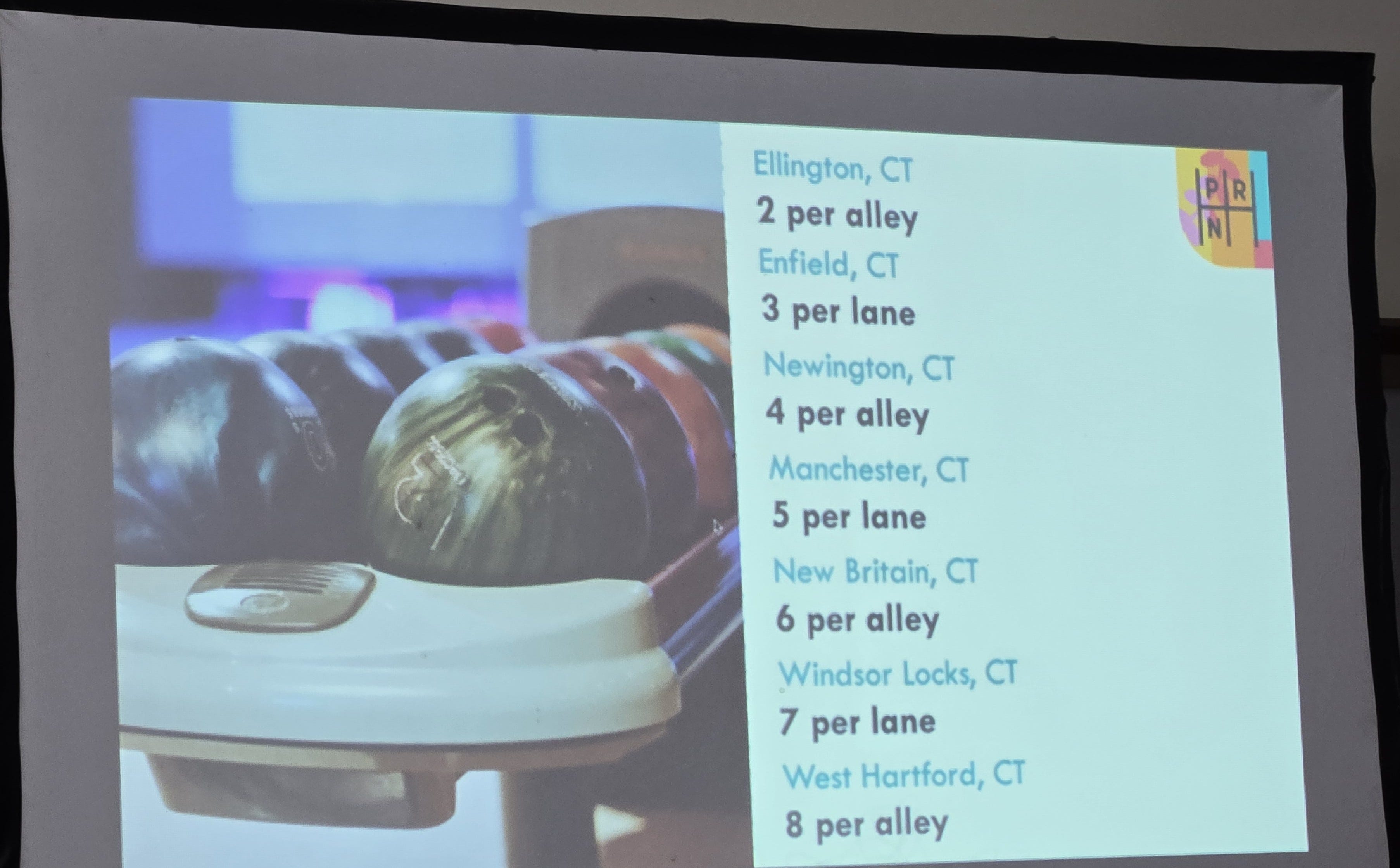
Sometimes different cities use different metrics to determine the required spaces for the same types of businesses (square footage, number of employees, etc.). In other words, it’s basically a pseudoscience.
But anyway, many Americans would still feel that requiring some amount of parking for things people go to is reasonable. How else are you going to get there? And the thing is, in suburbia, this is often true. But also, it’s chicken and egg.
I saw this post on a food group for a town near me in Fairfax County, Virginia:
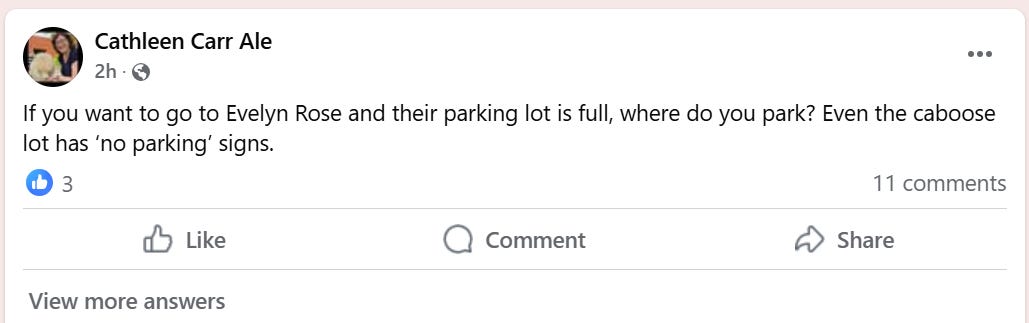
Evelyn Rose is a nice, fancy restaurant with a small parking lot, which is true of many restaurants in Vienna, and in many older towns. So it can difficult, at a peak time, to park somewhere convenient in the town.
Now I want to contrast that with this, from Japan. On our trip to Japan we visited the Nintendo Museum, in a town outside Kyoto in a kind of warehouse/quasi-industrial district. There is no car parking at the museum, nor, based on this warning from Nintendo, is it likely easy to find a place nearby to leave a car for half a day. Take a look at this:
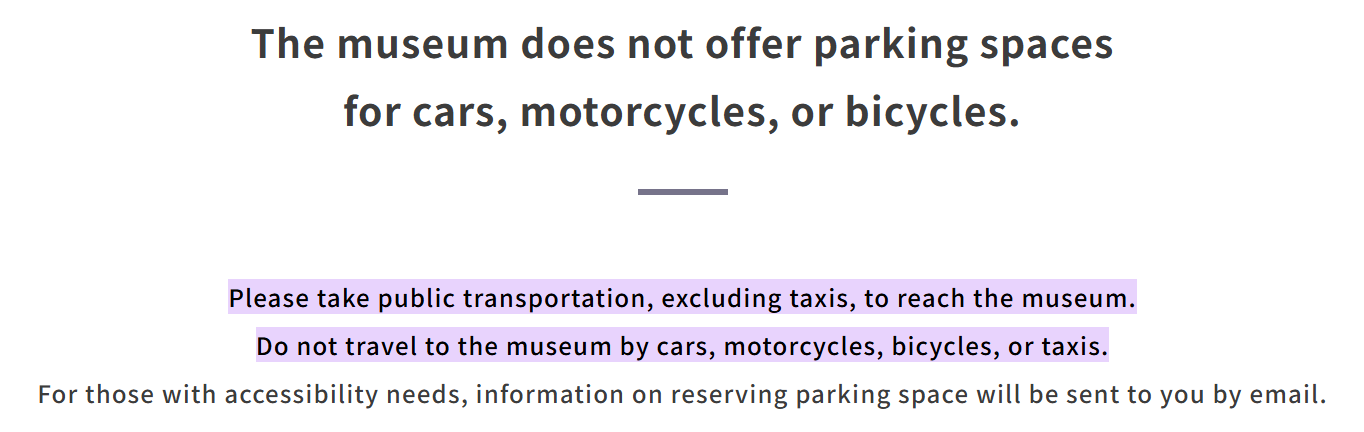
And not just cars. Not even bikes! Half of this, obviously, is that public transportation actually exists, and is clean and reliable. It’s not some big ask in a Japanese city to ask someone to use transit; more than that, it’s the obvious, logical choice. It would be inconvenient and unreasonable to ask someone in that environment to use a car!
But the other half is political/psychological.