

There is a large addition to a small house in an old subdivision in Fairfax County that is getting a lot of attention in the local news. It’s being called a “monstrosity” and the family who had it built is being called selfish and clueless and terrible neighbors. Someone on a Reddit thread said it looks like a “skyscraper” from the ground.
This construction site happens to be a few minutes from my home, and the street it’s on is identified in many of the news stories. So I checked it out.
Yes, it is pretty big, especially compared to the mostly stock Levitt houses in the development (the actual Levitt & Sons company built it, between the late 1960s and early 1970s):
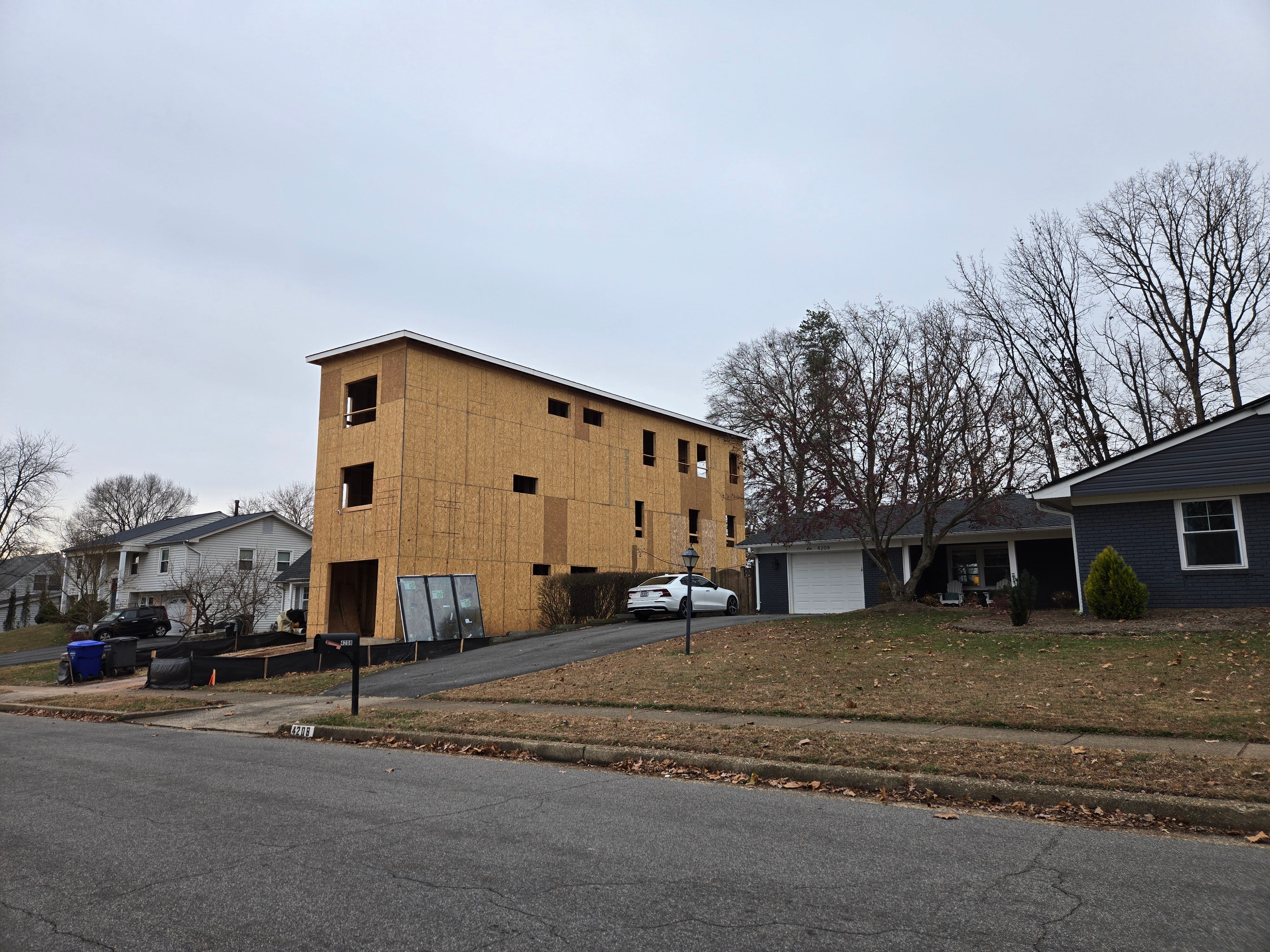

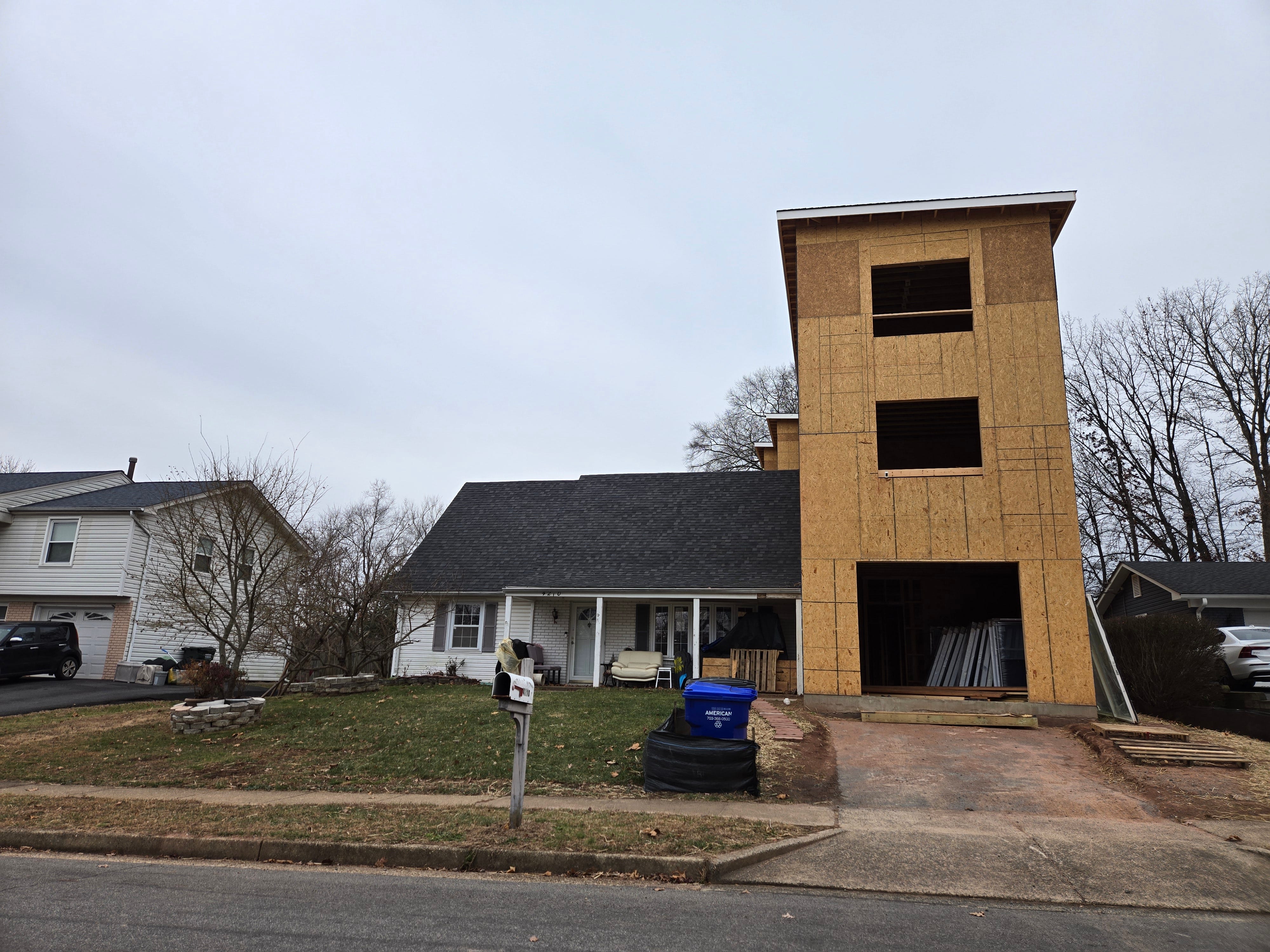
The family building it says it is for their own extended family; it’s an addition to their house, not a rental/apartment building:
Mike Nguyen began building an addition to his home on Marble Lane in Fairfax County earlier this year so his parents could live with his family.
“In our Asian community, we tend to take care of our parents when they get old and stay with us,” Nguyen said. “They’re able to spend more time with the grandkids.”
It looks pretty large for a set of parents, so I wonder if he imagines the space being used for something else.
Someone in that Reddit thread lays out the actual question at stake:
Imagine you live next door to it. Is it fair that they tanked your property value? Who would be willing be pay a fair market price for your home if they know they’ll be living next to a giant compound?
Is it fair that you moved into a single family home neighborhood, and now you’ll have a 3 generation, 9 family freaking apartment next door? You want their 18 cars to be packing your street every day and night? It’s like the mild annoyance when your neighbor has family over for a birthday, but this is the noise, traffic, activity of that for 24/7 forever.
It’s a question that every homeowner may wonder. But it kind of underscores how suburbia builds an antisocial attitude into everyday life. I can’t exactly blame people for thinking this way, because when “people” mean “cars,” you can’t accommodate people easily. Strong Towns articulated this point well with this piece, “The Party Analogy,” arguing that modern suburbia gets worse with density, more or less by design.
But still, “It’s like the mild annoyance when your neighbor has family over for a birthday” is such a depressing sentence.
Now you might think from all this commentary that the house violated the zoning ordinances and was somehow either wrongly approved or built illegally. Technically, it did end up violating the zoning code, specifically the setback requirement. But not in a major or dramatic way.
This, from a Northern Virginia Magazine article explains the issue:
Fairfax County Supervisor Pat Herrity took a closer look at the case. He eventually uncovered a zoning violation: While the massive structure meets the height limits allowed by county ordinance, it violates setback requirements. It sits about half a foot too close to Leonard’s property. The construction was halted.
Unlike Leonard, Herrity says responsibility lies primarily with the homeowners undertaking the renovation.
“That size structure has no business being 8 1/2 feet from [Leonard’s] house,” Herrity says. “You can’t legislate common sense — common sense would dictate that the structure would have a significant detrimental impact to that neighbor and the neighborhood.”
But homeowner Mike Nguyen says he did everything according to code and never intended to disrupt the neighborhood.
“Everything is the correct way, the way that the county approved, so I don’t know what else to do,” he told ABC 7 News.
Leonard says she sees Nguyen’s point. “I respect their right and their desire to add more space for their multi-generational family, and I am all for that,” Leonard says. “It’s just the county zoning should never have let them get this far.”
That’s the extent to which this structure violates the rules, i.e. on a technicality or a construction error and not in terms of the design of the structure itself. Which makes the reactions very interesting to me.
I wonder, for example, why this doesn’t spark the same public outrage:
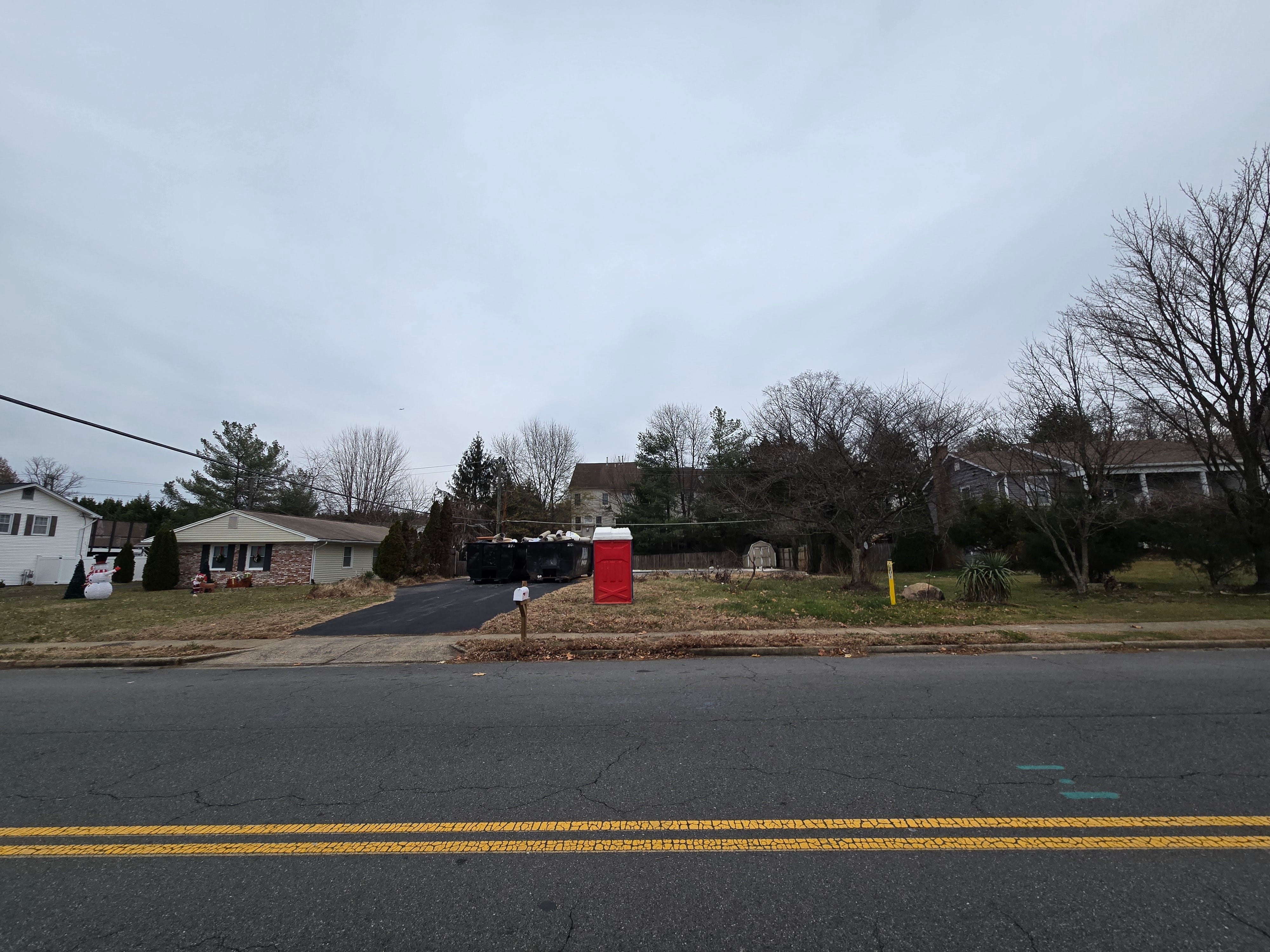
It’s a complete teardown of one of the original homes in the same neighborhood, to be replaced with something almost certainly larger.
Or this, which is an incredibly common sight all across older Northern Virginia communities:
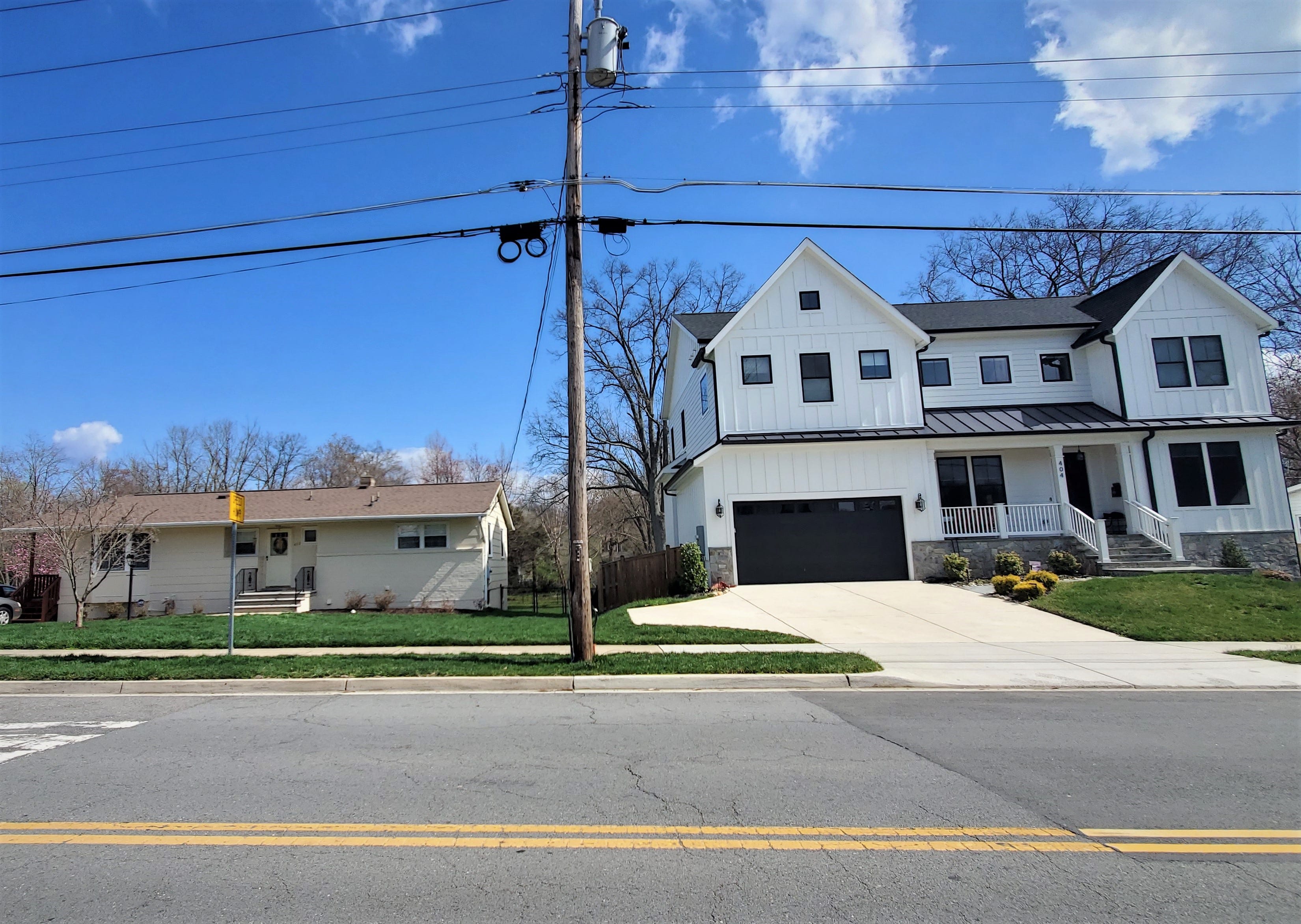
Or any of the other McMansions which are everywhere, from the larger, tree-shaded lots in Great Falls or McLean, to the old grids of Vienna or Falls Church or Arlington.
I really do understand how the height of that home addition combined with the tight spacing of the houses could cause an issue for the immediately adjacent homeowners. But I also have to wonder: did that addition become such a lightning rod because it looks like an apartment building? Does it trigger a reaction in people that even a comically oversized or ridiculously ornamented house just doesn’t?
And if that is the case—if a single-family house’s mere resemblance to a multifamily structure is enough to generate this kind of outrage and attention—what do you make of that reaction? How do you react to it?
This is where the more “political,” “strident” nature of the YIMBY approach begins to make sense to me. Yes, of course it might be an inconvenience to suddenly have your street be busier and more crowded. But that only seems like a checkmate if the quieter, less visible costs of the housing crisis have no weight in your outlook.
Commuting a long distance because you can’t afford a home closer to where the jobs are is just growing up and being an adult; complaining about a few more cars on your street is standing up for your property rights and your neighborhood. Being a good neighbor and a good community member, in this view, is literally premised on exclusion.
At the heart of this sort of NIMBYism is a kind of selfish immaturity and entitlement attitude, which follows from a breezy conflation of the homeowner’s self-interest with the public interest. This is not to say that density has no downsides; that construction sites are not disruptive; that moving to a place for a reason and finding that place changing is not uncomfortable or even a kind of loss.
Those things are true; the pain of losing a thing you know is real, whether or not the change is good. But the expectation that some people’s pain should determine public policy, and others’ should be ignored, too often slips in the door.
The objections of the NIMBYs, and the concerns of the regular homeowners, count. But they only count for everything if nobody else counts.
Related Reading:
Which Housing Is “Housing Crisis” Housing?
Thank you for reading! Please consider upgrading to a paid subscription to help support this newsletter. You’ll get a weekly subscribers-only piece, plus full access to the archive: over 1,400 pieces and growing. And you’ll help ensure more like this!
My favorite part of this saga is how quickly the “single family” zoning defenders have gone to war against somebody trying to keep their family together. Just to make this point explicitly clear: “single family” doesn’t actually mean a single family to these NIMBYs.
I am a housing advocate. I am all for 3 generations living together. I think ADUs belong everywhere. I love your columns. However, in this case, the addition is too large, too tall, insensitive to the next door neighbors, and shouldn’t be OK with the zoning code. If I lived next door, I wouldn’t be saying that it was big but I should get used to it because it serves a good purpose. I’d just be really, really annoyed with my neighbor and trying figure out how to stop it. Neighbors don’t object to McMansions because they either have property around them or buyers know they’ll have other houses close by—but those people would be screaming about an addition like this even if it wasn’t next door! And yes, the addition does resemble an apartment house!!