
The Fascination Of Old Suburbia: Glenmont, MD Edition
What Do You Think You're Looking At? #249

I finally got to take a photograph of the slightly locally famous Glenmont Arcade sign at the Glenmont Shopping Center.
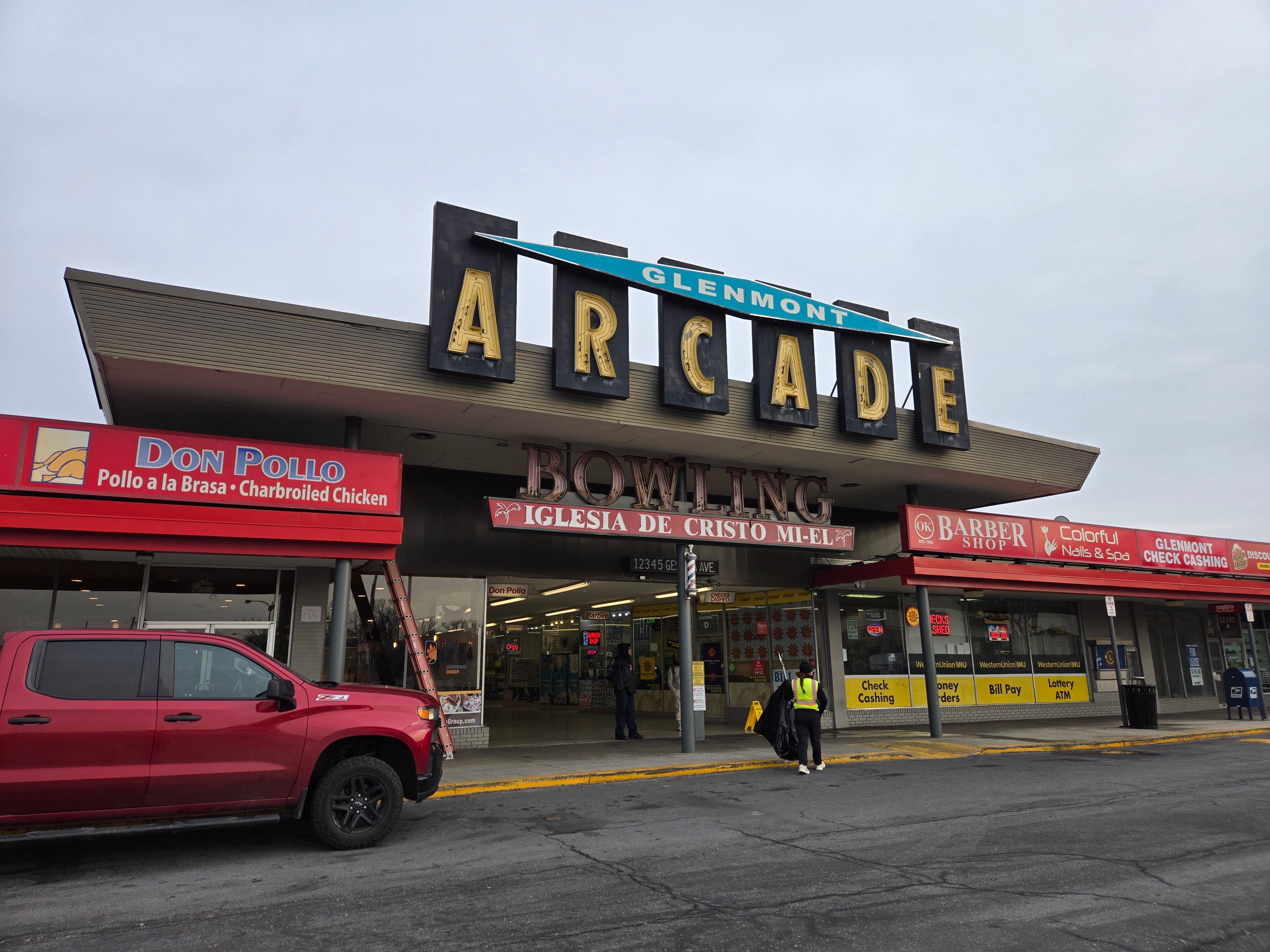
Glenmont is a community in eastern Montgomery County, Maryland just outside of Silver Spring, part of the “greater” Silver Spring area, and the Glenmont Shopping is one of the older surviving shopping centers around.
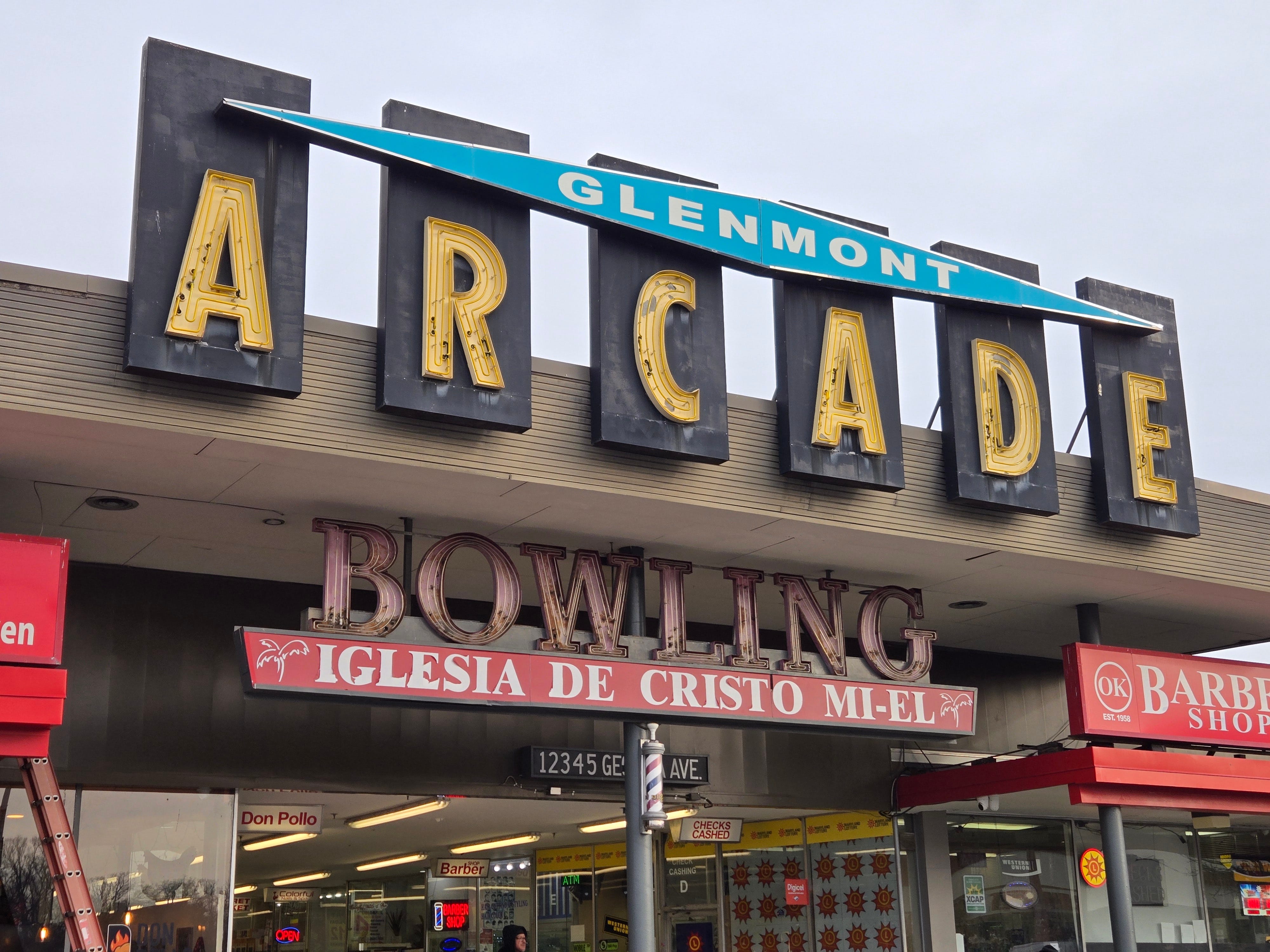
Now this isn’t a video-game arcade or an amusement arcade; it’s a tiny little indoor-outdoor mall inside the strip mall! That is, an “arcade” in the European sense of an enclosed shopping area, but in a strip mall in American suburbia.
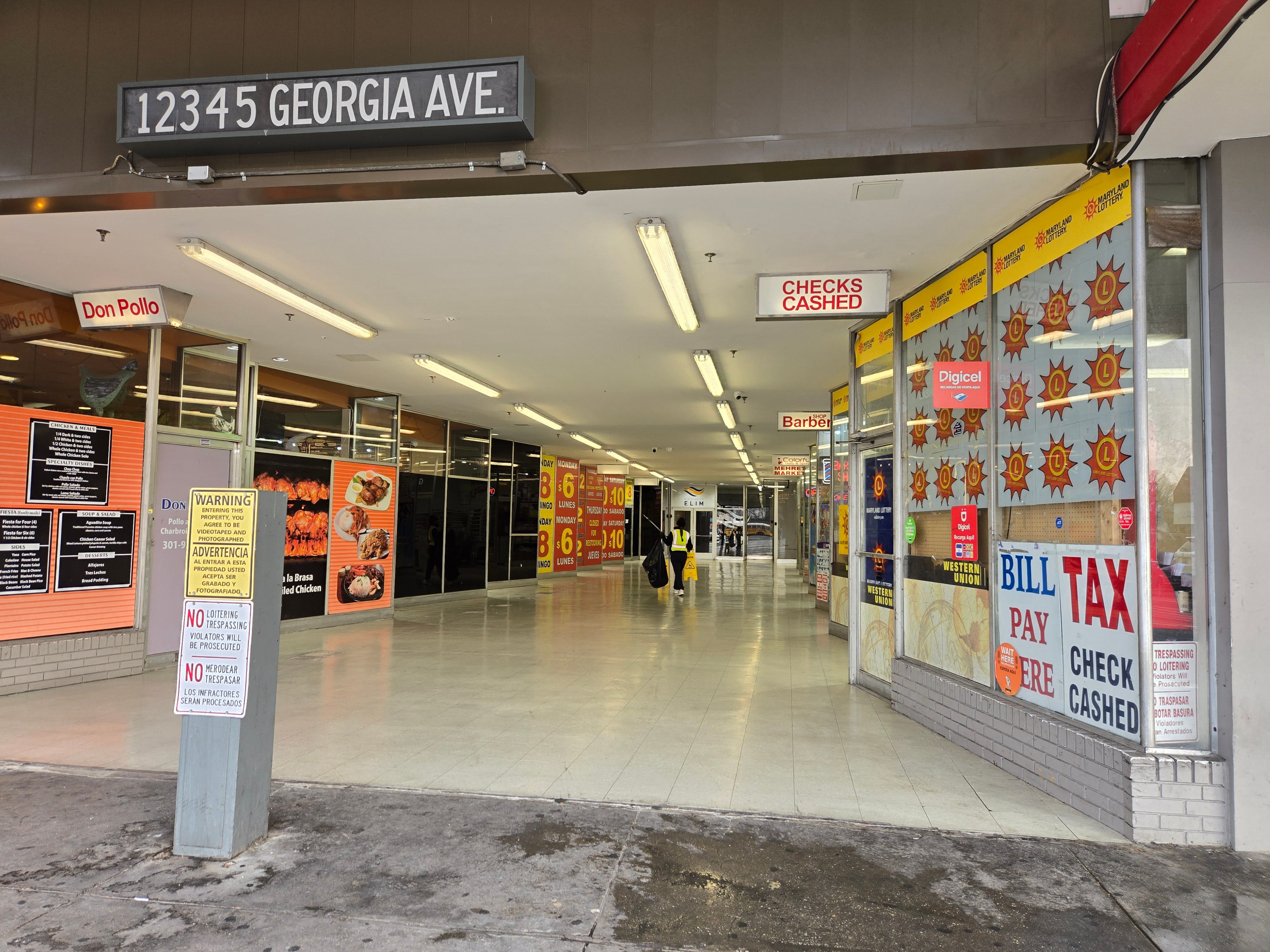
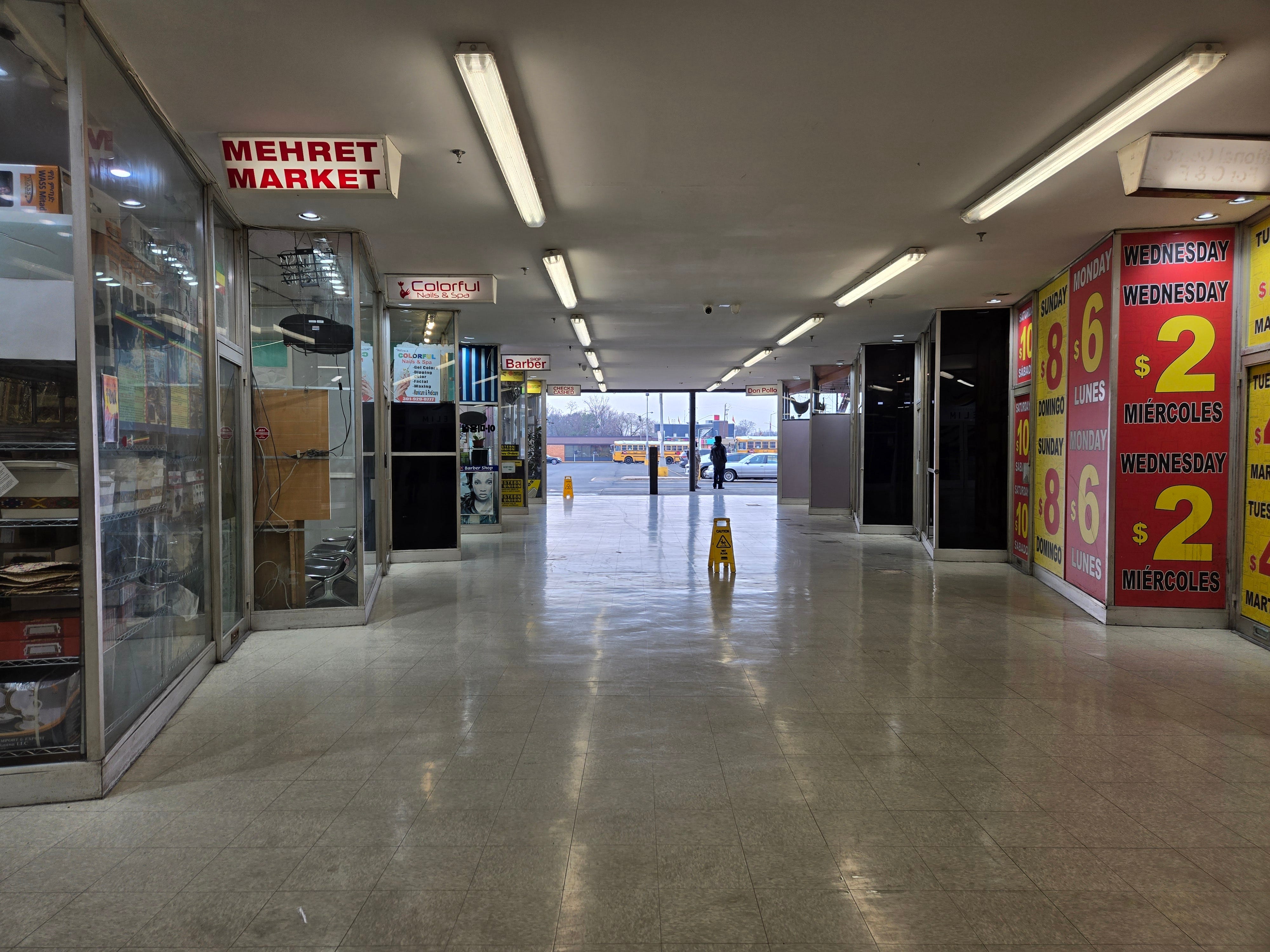
I don’t believe I have ever seen this before, and it was always a pretty unusual concept. It’s the only one I’m aware of, and certainly the only one I’ve ever seen.
But it’s still here, and it still has little shops—a barber, a chicken joint, a nail salon, a small Ethiopian market—along it. The bowling alley space is downstairs—I didn’t venture down and am not sure it’s open all the time—and it is now a church.
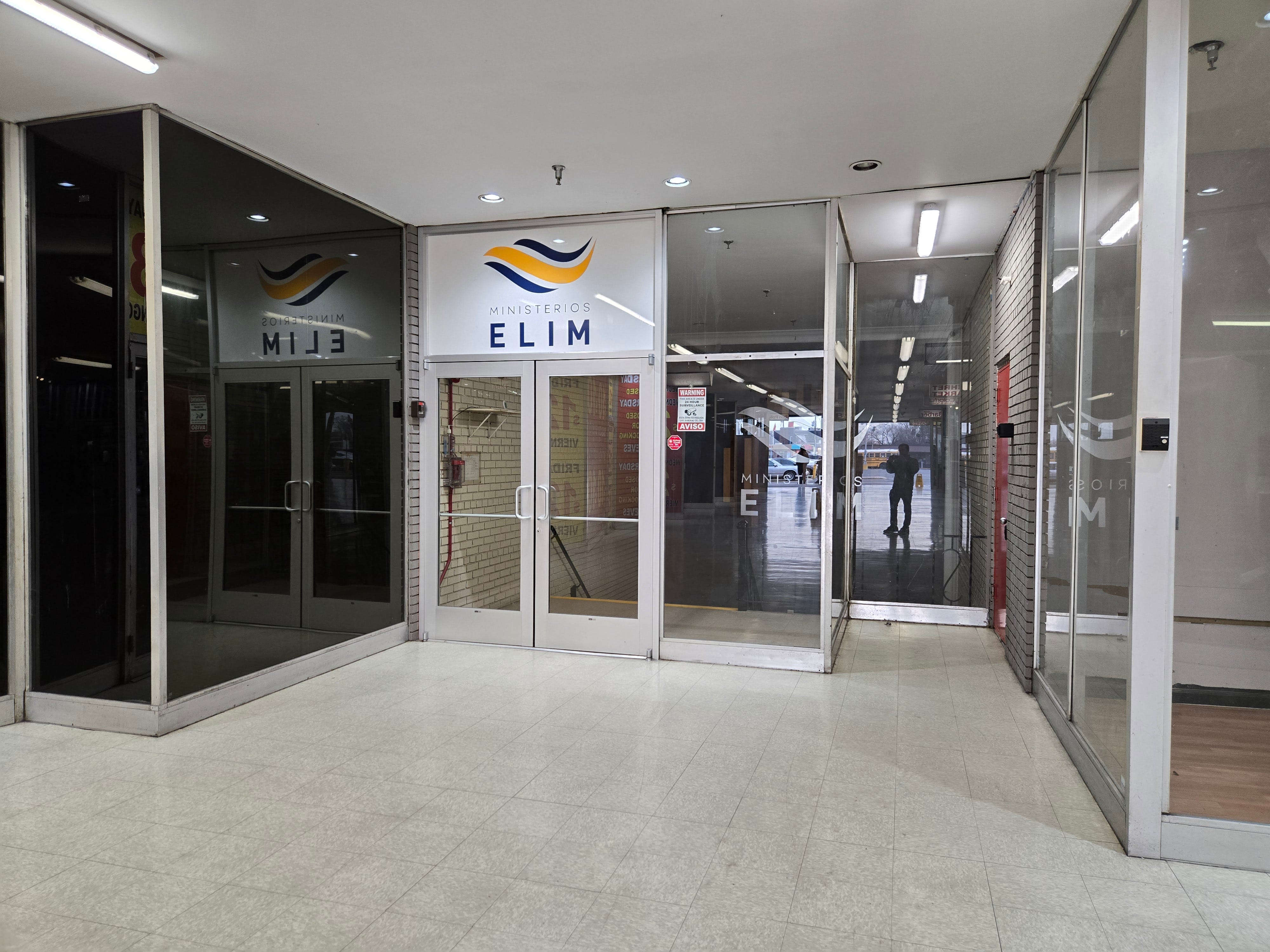
One Redditor calls the shopping center “East MoCo’s greatest eyesore.”
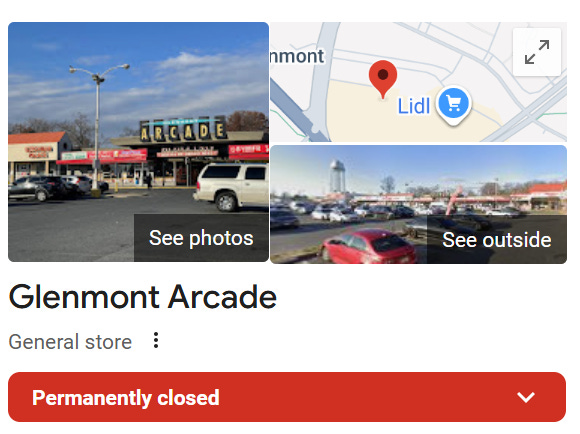
Google doesn’t even know quite what the site is, and identifies it as closed, but also as a “general store”:
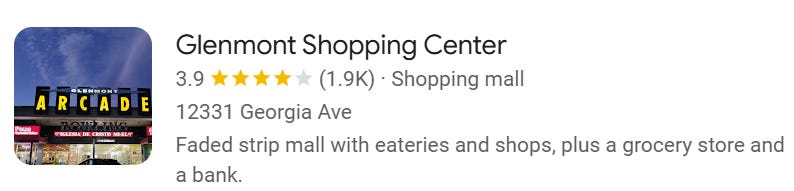
And the fact that the strip mall has physically seen better days is even written into the one-line description that Google offers, for the overall shopping center:
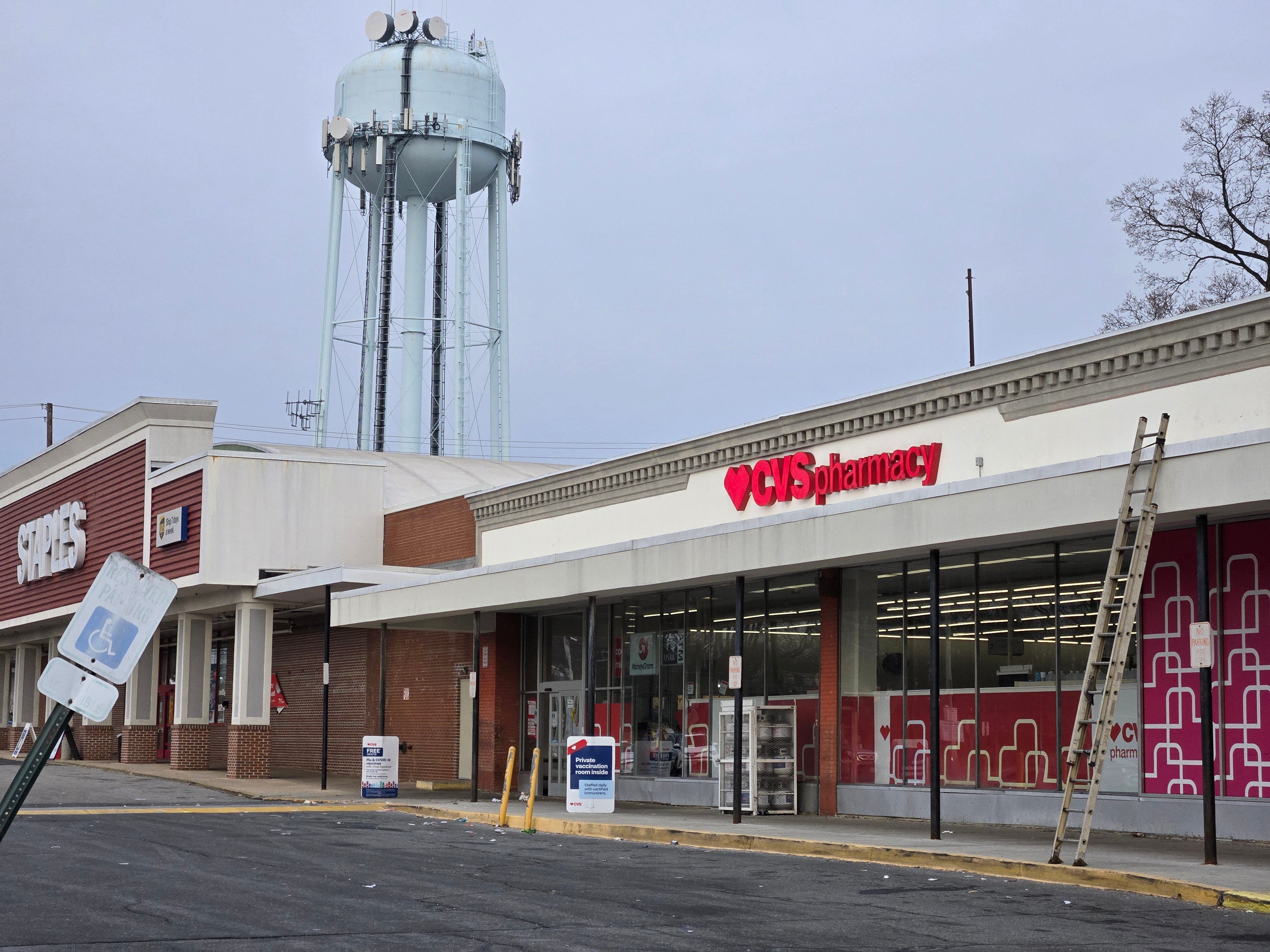
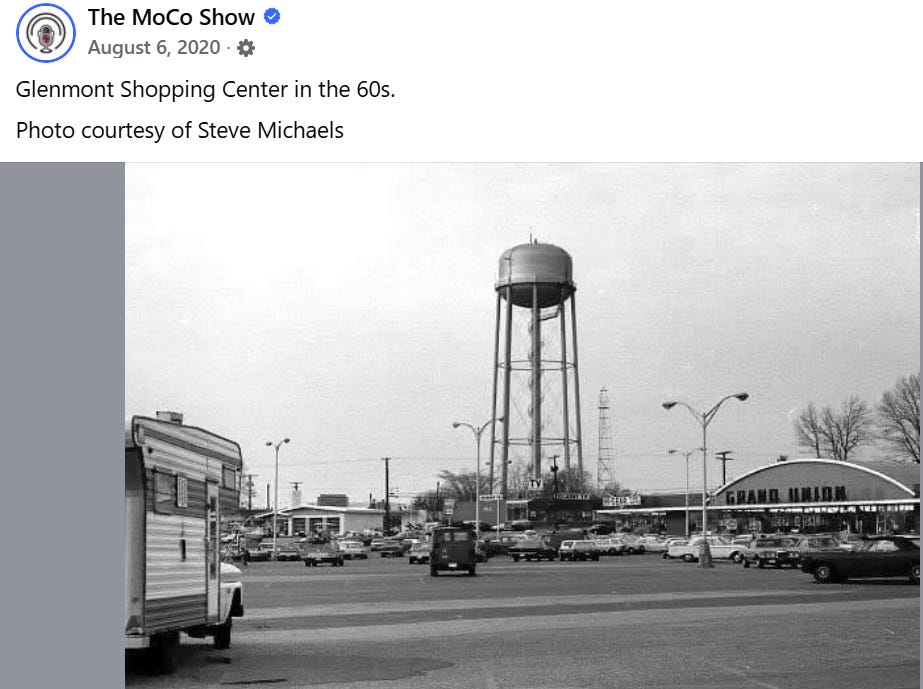
Eateries include Irene’s Pupusas (which used to be a Chinese buffet, of which there are a lot fewer than there used to be), and the grocery store is now a different space than originally; the current Staples store was once a Grand Union supermarket. (I originally thought it was a Safeway due to the barrel-vault roof. Unfortunately Staples has covered up the old ceiling with a drop ceiling.)
Here you can just see the old roof behind the new Staples facade, and also note the CVS has some old faux-cornice decoration along the top!
Here’s an old photo showing the exposed roof of the old Grand Union:
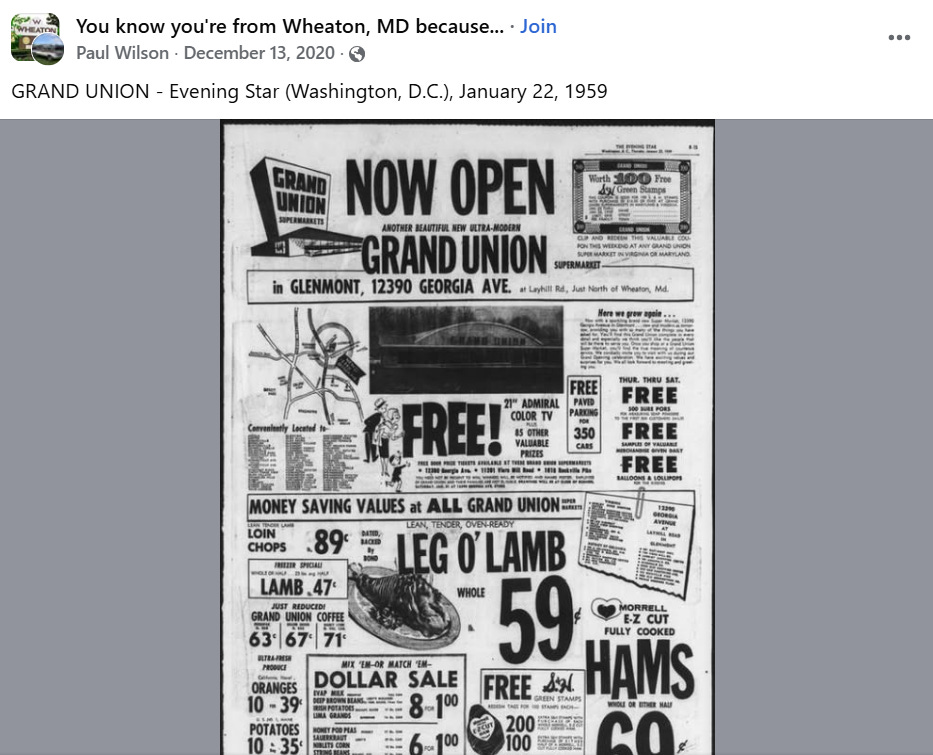
Here’s a grand opening newspaper ad from 1959! Facebook is amazing for digging up these old artifacts. (For whatever reason, you’ll find a bunch of different years as the build year for the shopping center, but this places 1959 as the correct one.)
Now, the arcade. Here’s a nice illustrated piece about it to start, from Dan Reed. Now you might think the Glenmont Arcade was a way to sell a strip mall as something a little bit more interesting; that “arcade” was supposed to bring to mind the luxurious, slightly exotic shopping districts of grand European cities. And I suppose that was part of it, or they wouldn’t have called it that.
But what’s really interesting about it is the size of the storefronts in the arcade. This is from a report on the Glenmont Shopping Center written for the National Parks Service, including a list of businesses in the space over the decades. (I’m not quite sure why, but that makes it a pretty reliable source.)
The Arcade, a wide, covered pedestrian corridor with small shops on either side, terminated in a stairway leading down to the bowling alley in the basement of the building (fig. 4). The shops in the arcade were approximately fifteen feet wide and intended for small, one-person businesses; their plate glass and aluminum framed storefronts angled into the walkway at forty-five degrees so that individual storefronts could be visible from the entrance to the arcade. It is likely that the architects selected the arcade as a typology because of its ease in accommodating the local need for smaller businesses in one area…. (my emphasis).
It was still understood, in the late 1950s/early 1960s, that even a suburban, car-oriented shopping center could and should have some room for very small shops owned by single proprietors. That is almost a vestigial feature from the old days when “shopping” meant going to the city or downtown, where you’d have your department stores but also little neighborhood shops. Lots of older strip malls have particularly small storefronts, if you look. Newer ones tend to be larger, in my experience.
On some level, these old shopping centers are liminal spaces. They can seem shabby, downcycled, semi-abandoned, floating in a weird afterlife of sorts. Some of that is the way cheap materials decay—without patina and grandeur. Some of it is just the expectation of suburbia not changing. Some it is the way people are always standing around outside; “loitering” to some, treating the strip mall as a square or gathering space, for others.
That’s the thing; on some level this represents a change, but on some level it doesn’t. Surely people would run into each other in the old days, or get to know the single proprietor at one of the little shops, and stop to chat. Surely the strip mall was a little more than a stop-and-go, commerce-only space. In so many ways, what these places have grown into represents a continuity with their original purpose, after a long interlude during which we lost our way.
Related Reading:
Kinney Shoes’ Architectural Afterlife
Thank you for reading! Please consider upgrading to a paid subscription to help support this newsletter. You’ll get a weekly subscribers-only piece, plus full access to the archive: over 1,500 pieces and growing. And you’ll help ensure more like this!
The Beltway Plaza Mall on MD 193 in Greenbelt is a larger version of this. While there are modern chains on the property, the inside is full of mom and pop places that are only viable in lower rent areas such as a shoe repair, tailor, independent small format hardware store and ethnic food (prepared and market). https://www.beltwayplazamall.com/stores While the place is pretty awful from an aesthetic and functional standpoint as it is very autocentric and has a 2 deck parking structure that obscures the stores from 193, it's an important to have these non-gentrified places to keep small businesses alive.
The parking lot currently contains Tacos Don Perez, the best taqueria in MoCo