The Silver-Haired Silver Spring Shopping Center With The Silver Screen
What Do You Think You're Looking At? #256
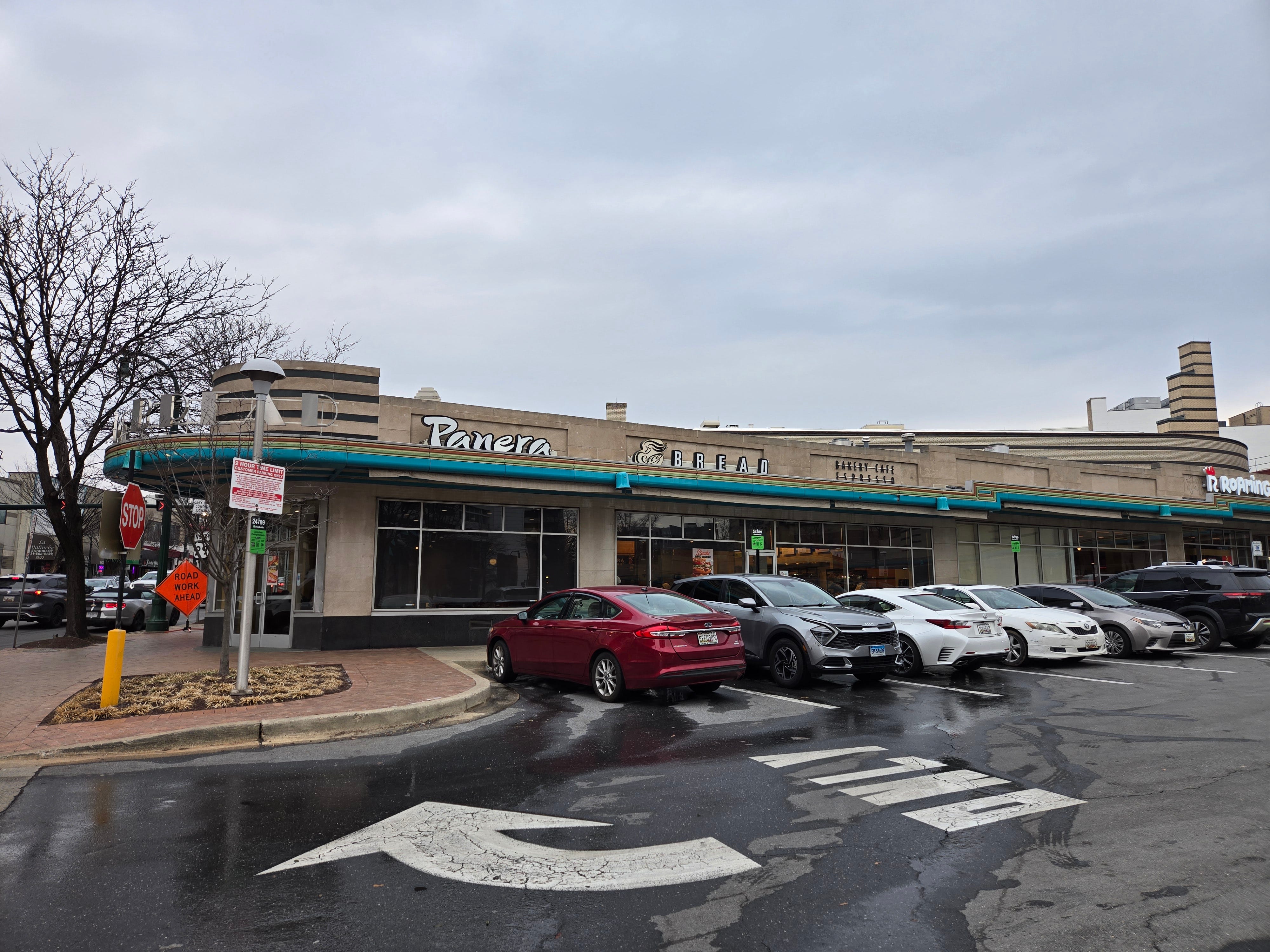
This shopping center in the middle of downtown Silver Spring, Maryland looks a bit like one of those art deco revival buildings you see sometimes being built today:
There’s also an attached theater, with that wing of the shopping center fronting the sidewalk directly:
However, this is not a new, retro-looking shopping center. It opened in 1938, and it was one of the region’s first modern shopping centers built to accommodate customers arriving by car.
Here it is, as shown in a 1946 postcard!
This is the roughly similar view today:
The immediate area is quite built up now, with a lot of tall office buildings.
You might wonder why it hasn’t been redeveloped, even given its historic pedigree. The answer to that is that it has already been redeveloped! Here is a little history on it, and here, in this case study from the Urban Land Institute, is a segment on the Silver Spring Shopping Center:
In April 1998, Duncan and PFA signed a general development agreement that specified the conditions under which the county and PFA would work together to develop a mixed-use urban entertainment and retail center incorporating existing historic structures and featuring a traditional street format punctuated by urban plazas. The agreement mandated the restoration of the Silver Theatre and the Silver Spring Shopping Center facade and parking lot, and outlined the responsibilities of the development team and the county.
Shortly thereafter, the county and the American Film Institute (AFI) signed a formal agreement to move the national arts organization’s East Coast exhibition program from the Kennedy Center for the Performing Arts to DSS, where it would occupy and operate the historic Silver Theatre. The county agreed to spend up to $7.8 million to restore the 400-seat theater and develop an adjacent facility that would include a 200-seat theater and a 75-seat theater, as well as state-of-the-art audiovisual equipment, offices, a conference room/library, and concession and retail space.
The entire project was designed to be compatible with the existing art deco architecture and considerate of the scale of the neighborhood. The restored facade of the Silver Spring Shopping Center serves as a focal point of the new mixed-use complex. The center’s limestone and granite facade has been returned to a close approximation of its original appearance; where signage for a People’s Drug store once spelled out “DRUGS” in chrome art deco letters above the entrance, similar lettering now spells out “BREAD” above the Panera Bread restaurant/bakery, and on the opposite corner a “RADIO” sign has been replaced by “MY EYE DR.” (The new signs were conceived—and paid for—by the retail tenants.) The facade also features a re-created clock with art deco numbering. A second-floor addition was set back from the original structure to minimize its visual impact, and a multicolored, illuminated “Downtown Silver Spring” sign is located between the two halves of the upper addition. In front of the center and its small parking area—which, as the area’s first free, storefront parking lot, is as historically significant as the shopping center itself—sits an elliptical landscaped park faced by a five-foot-high (1.5-meter-high) stone wall featuring metal letters that spell “Silver Spring.” A sheet of water falls across the face of the wall, behind the letters, presenting a visual and aural reminder of the community’s namesake. Walkways connect the historic shopping center with new development and public gathering places.
This is the best kind of historic preservation, I think: something dynamic which preserves a sense of what came before, but which puts it to use for what a place demands today.
Related Reading:
How Many Nuts Do We Have In This House?
Thank you for reading! Please consider upgrading to a paid subscription to help support this newsletter. You’ll get a weekly subscribers-only piece, plus full access to the archive: over 1,500 pieces and growing. And you’ll help ensure more like this!


I agree it’s a very successful redevelopment, and shows that really successful development needs an institutional anchor like the AFI and not just retail, which is ephemeral.