
The Straight And Narrow
Snow shows just how much space our roads take up, and it might make us better drivers

This is something that happens when there’s a lot of snow:
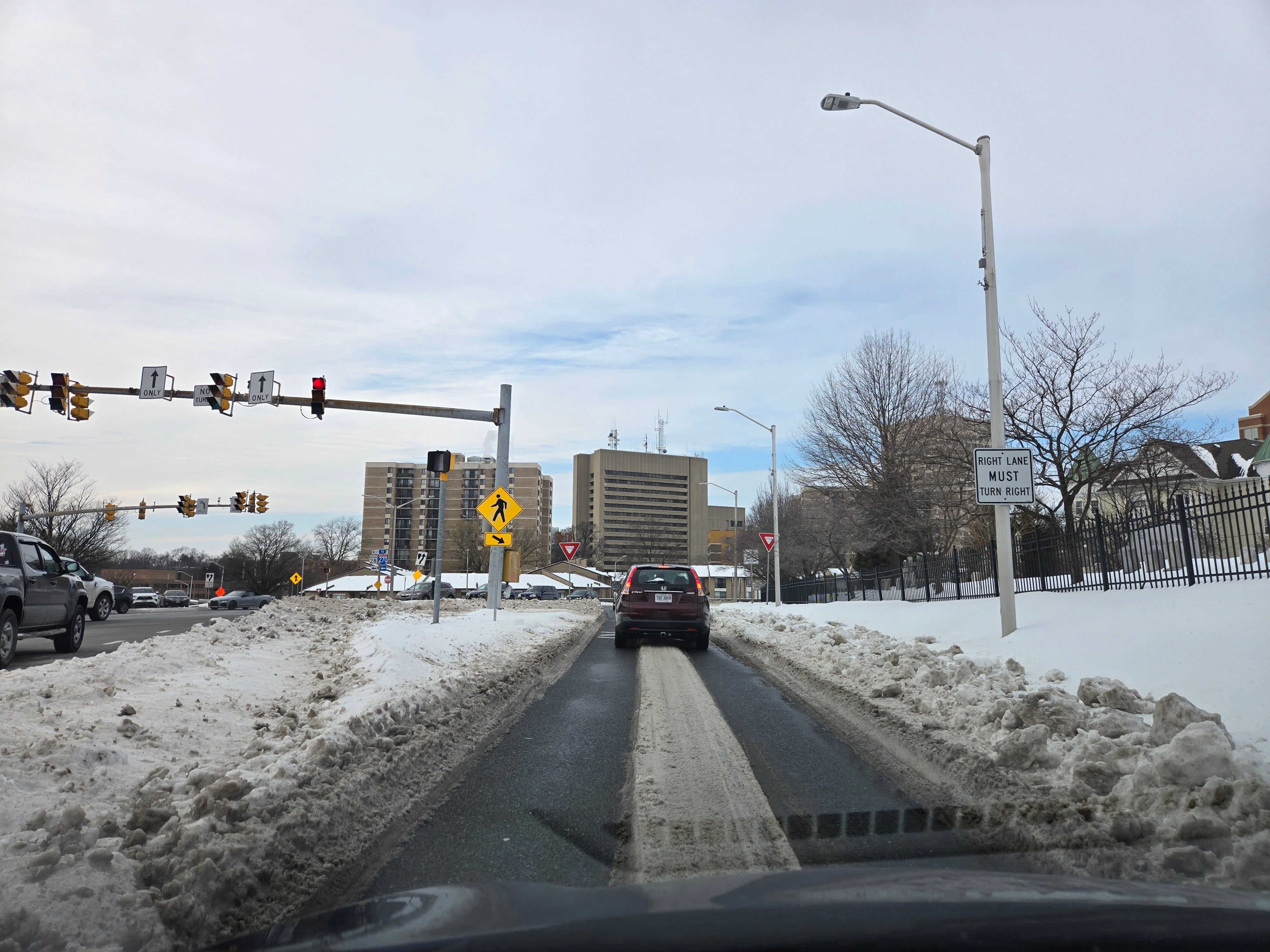
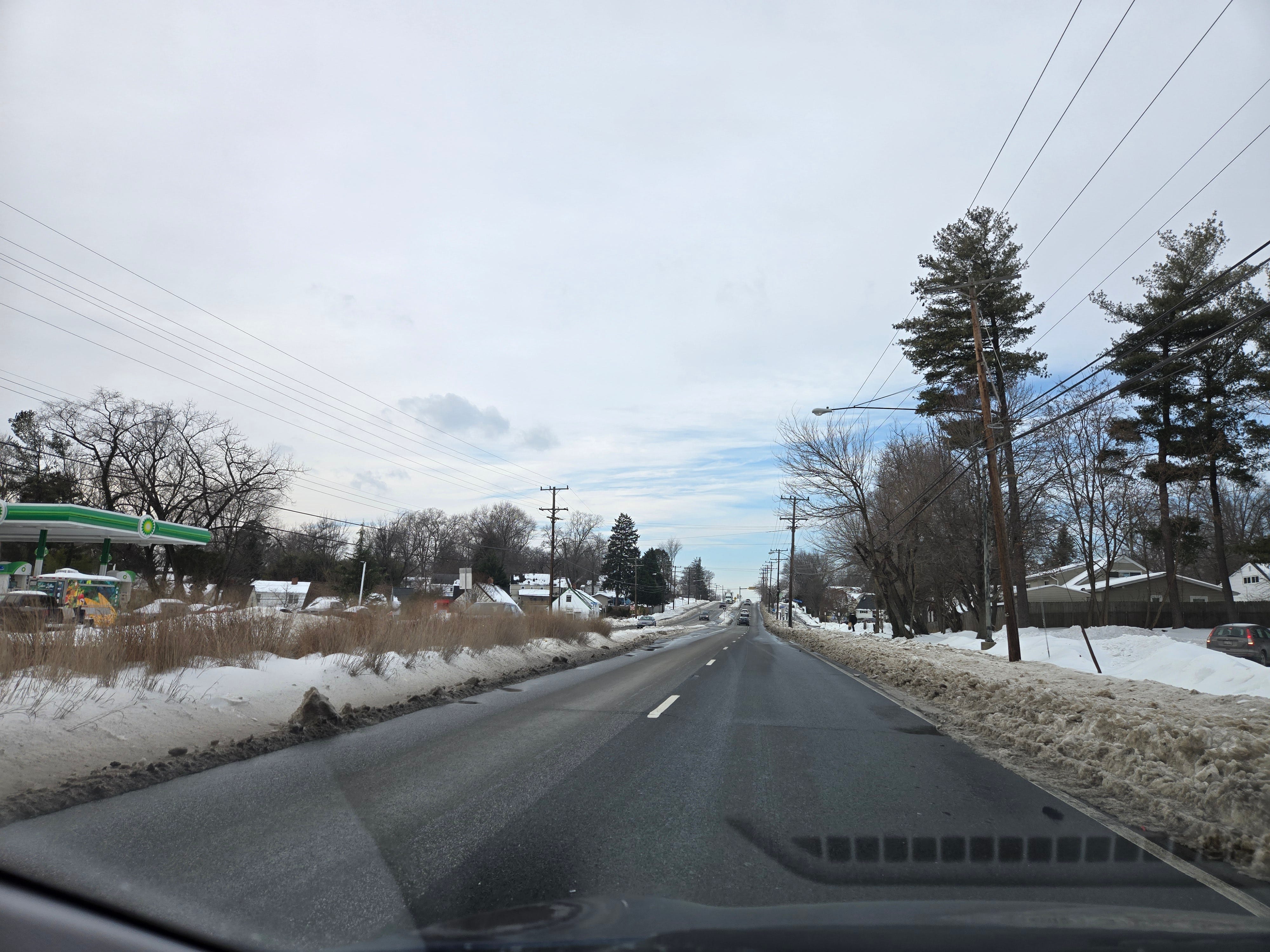
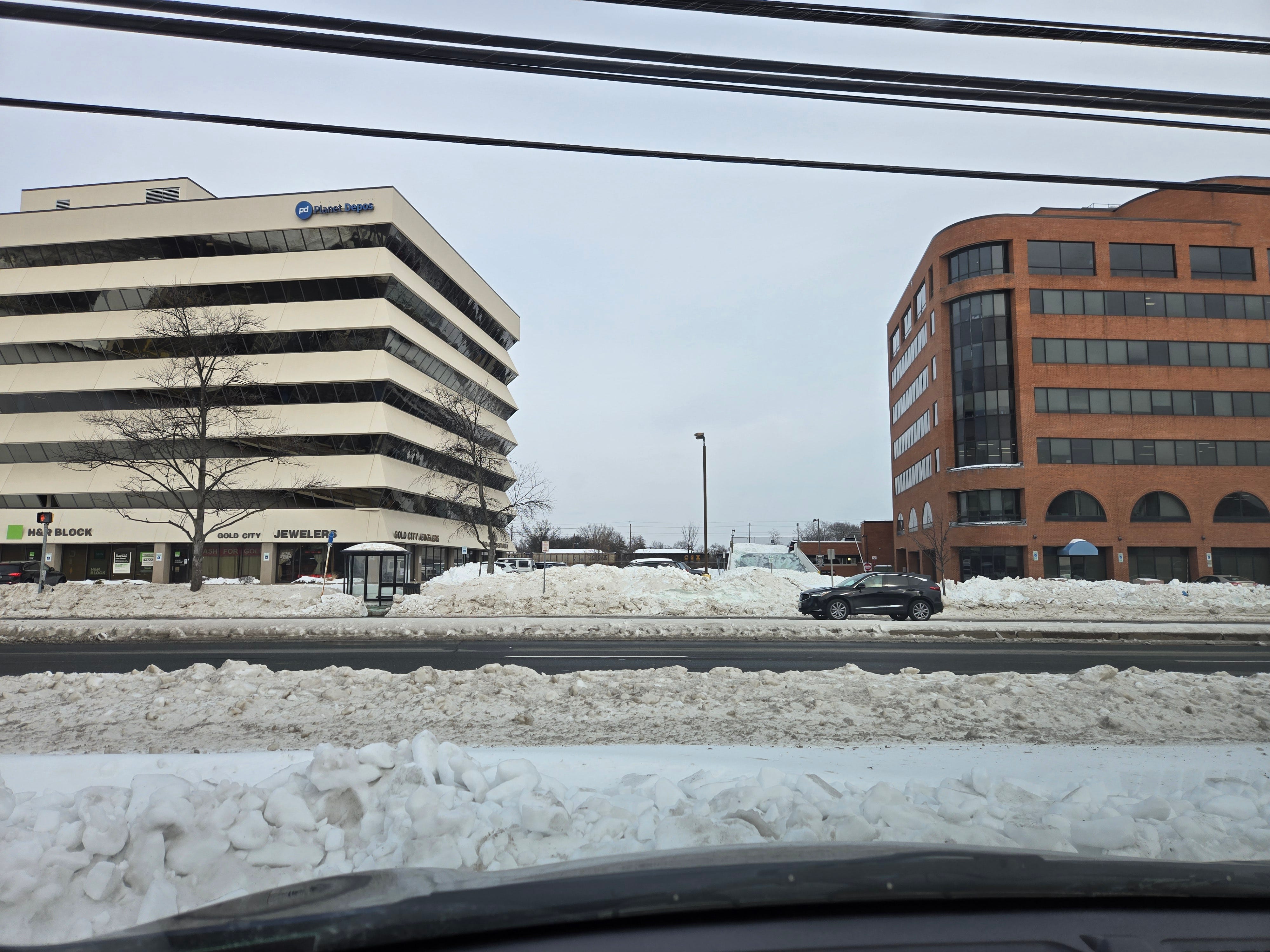
You may not be seeing anything except, you know, snow. But part of urbanism is a kind of perception of the world, and in urbanist/transportation circles, you’re looking at what’s called a “sneckdown.”
I’ve never liked the word, personally—partly because my brain wants it to be “snakedown,” and partly because “snowy neckdown,” which it is short for, also doesn’t tell you what it is. And partly, I guess, because it sounds jargony to me.
“Neckdown” is a planning term which I’ve actually never heard used outside of its use in the word “sneckdown.” I wish there were a snappier, more intuitive word for this phenomenon. Caitlin Rogger, at Greater Greater Washington, explained it well here:
Where there’s snow, there are sneckdowns. The word “sneckdown” is a combination of “snow” and “neckdown”; neckdown indicates a spot where the sidewalk extends into the road, also known as a “curb extension” or a “bulbout”. When there’s enough snow, the tracks where cars have driven through it—and where they haven’t, leading to “sneckdowns”—show us where we could use excess roadway for other things. That could be a wider sidewalk, a bike lane, pedestrian protection devices, a CaBi station, trees, rain gardens, or benches.
Read her whole piece, which is also well illustrated.
In other words, the snow shows us the spaces that the cars really use, and therefore underscores how much road space is not strictly necessary for the movement of traffic. It’s a related sort of thing to dusting a pan with flour and watching for scorched spots, which will tell you if your stove/pan has hotspots or uneven heating. It’s a kind of way to map space. (Mapping, as a general question, is interesting to me.)
My pictures are not great at illustrating the specific idea of what road space is strictly necessary and what could be allocated to other uses. But you get the idea.
Of course, this would slow down traffic. But it isn’t about narrowing roads, per se—it doesn’t mean taking away lanes but slimming down the overall asphalted space. And obviously either narrowing or slowing roads should be paired with making other ways of getting around easier—these things don’t work in a vacuum, really, but as parts of a whole approach.
On the question of slowing traffic, I noticed, driving around in the snow, that everyone drives slower and more cautiously. “Idiot-proof” design kind of makes you more of an idiot, because it outsources a lot of the work of doing a thing.
Driving is a serious matter. It feels good, almost, even though it’s more stressful, to feel forced by your surroundings to pay full attention to the task. This is a very conservative (small-c, not politically per se) insight, really: human behavior is dynamic. We don’t drive just as well with “safer” infrastructure around us; we allow the more forgiving design to let our attention to detail atrophy.
Driving in these conditions feels more harrowing but safer, in a way, because you can’t afford to be aggressive or do something risky, and neither can other drivers. This is important. Part of why driving is so frustrating is the delta between what you’re allowed to do or what’s safe to do, and what the car can theoretically do.
You feel as though if the law just allowed it, or if these other drivers could just get out of the way, you could go any speed you want. You perceive the people around you as imposing inconvenience on you, as slowing you down and literally engaging in a theft of your time.
But when the road itself is kind of scary to drive above or even at the speed limit, all of that goes away. And if a crash does occur, it will be at a lower speed and cause less damage, and less risk of injury. Having the easy capacity to break the rules taken away from you is a kind of mental relief that is hard to quite describe.
Some urbanists really don’t like cars, but I do like cars. I just can’t unsee how much we are more or less forced to rely on them, and how much of our common space they and their infrastructure take up. And snow days are great times to see that traffic continues on with quite a bit less of it.
Related Reading:
Cities Aren’t Loud, Cars Are Loud
Car-Centric Design Is A Real Thing
Always Treat A Car Like It’s Loaded
Thank you for reading! Please consider upgrading to a paid subscription to help support this newsletter. You’ll get a weekly subscribers-only piece, plus full access to the archive: over 1,500 pieces and growing. And you’ll help ensure more like this!
The way you describe snow driving - heightened sense of danger and subsequent situational awareness - is also what it's like to ride a bike all the time. I'm always shocked how much closer attention I'm paying than drivers, even when accounting for the lack of blind spots and sound proofing.
Thank for bringing this up. I remember in 2015 we talked about these revelations a lot after a series of storms here in Boston. We need to keep pushing.