

I’ve been to the newish Wharf neighborhood in Washington, D.C. a couple of times—both times, as it happens, for the Greater Greater Washington spring gala. I had actually been here once before, in 2017, when the only notable thing along the water was a floating fish market made of several barges. We had some pretty affordable clams and oysters on the half shell, and it was interesting to be in this kind of liminal space 10 minutes from L’Enfant Plaza but kind of in the middle of…not much.
The most famous of the seafood vendors, Captain White Seafood City, has been relocated to Maryland. There are still actually some seafood vendors at the site, at the far end of what is now a big waterfront development. It’s kind of an awkward but excellent spot for a big development, full of hotels, offices, pricey homes, and restaurants meant to draw people to the neighborhood. And it seems to work. My two visits, both on weeknights, saw the place pretty hopping.

“Every project we undertake follows a strategic hold plan, and for The Wharf, the time has come for a change in our role,” said Hoffman & Associates founder and chairman Monty Hoffman. “We have full confidence in our partner to carry forward our shared vision for The Wharf as we continue expanding communities across the DMV and beyond.”
This is one of the odd things about large mixed-use developments: they copy the look, and if done well the feel, of an actual urban neighborhood. But they’re owned and/or managed by single companies. On a longer timeline, you can see how that might limit their adaptability or long-term maintenance. But maybe that doesn’t really matter. There wasn’t much here at all, and now there’s a lovely, long walk you can take along the water and a bunch of places to go. If this kind of development is ultimately theme park more than neighborhood, well, what’s wrong with a city having a theme park? And if these developments may eventually be wholesale redeveloped yet again, decades in the future, instead of slowly evolving lot by lot? In the long run, how different is it, really?
I want to show you The Wharf, if you haven’t seen it or been there. Of the mixed-use developments/reverse-engineered town center/etc. developments I’ve seen, The Wharf is done quite well. The less nice of these developments feel cheap and textureless, what folks call the “movie set” feel. This one isn’t like that.
Take a look at this evening shot of one of the winding little alleys connecting the waterfront street to the outer street. It captures that nook-and-cranny feel of a narrow street in an old town. It’s well lit and inviting.
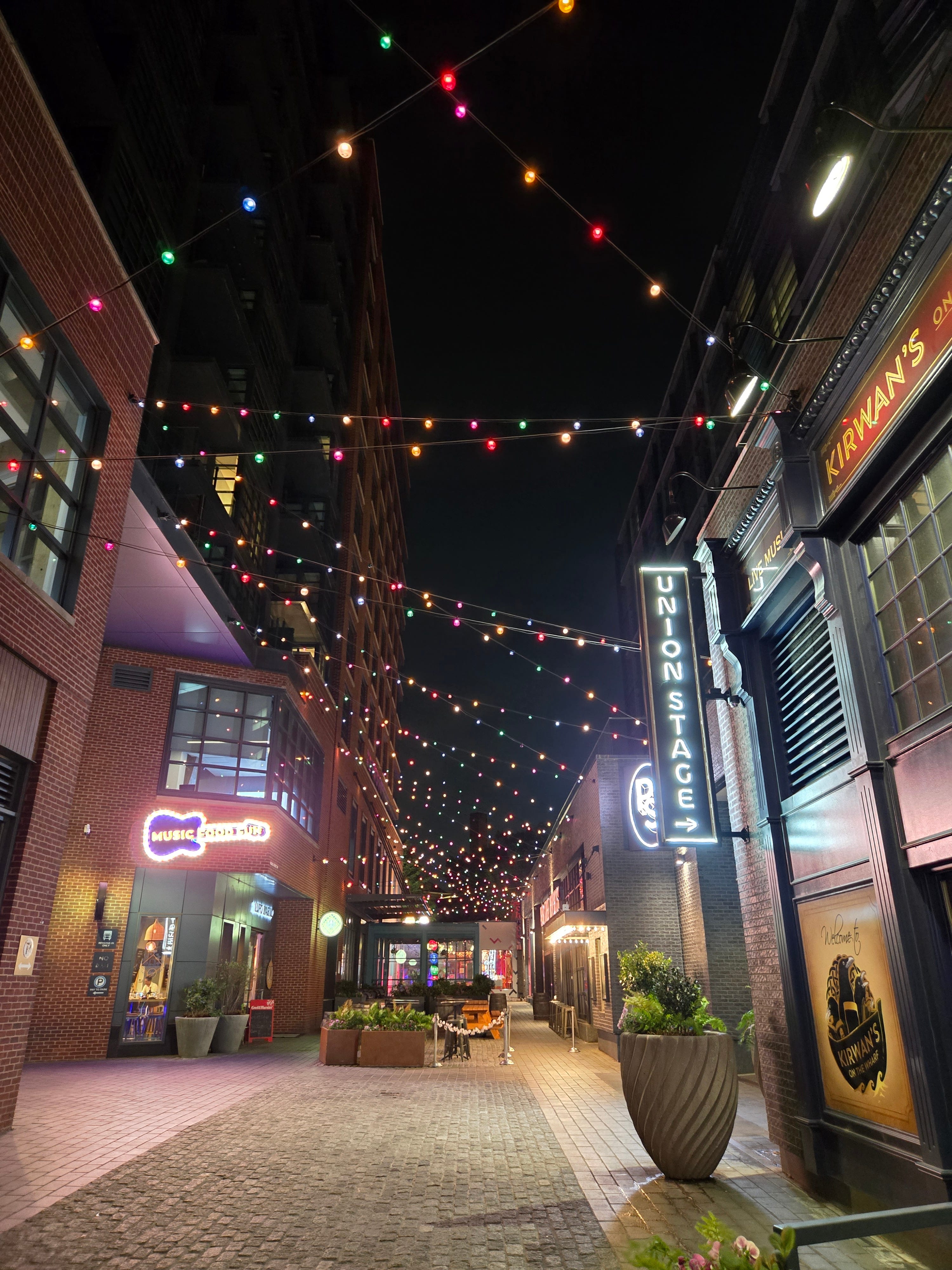
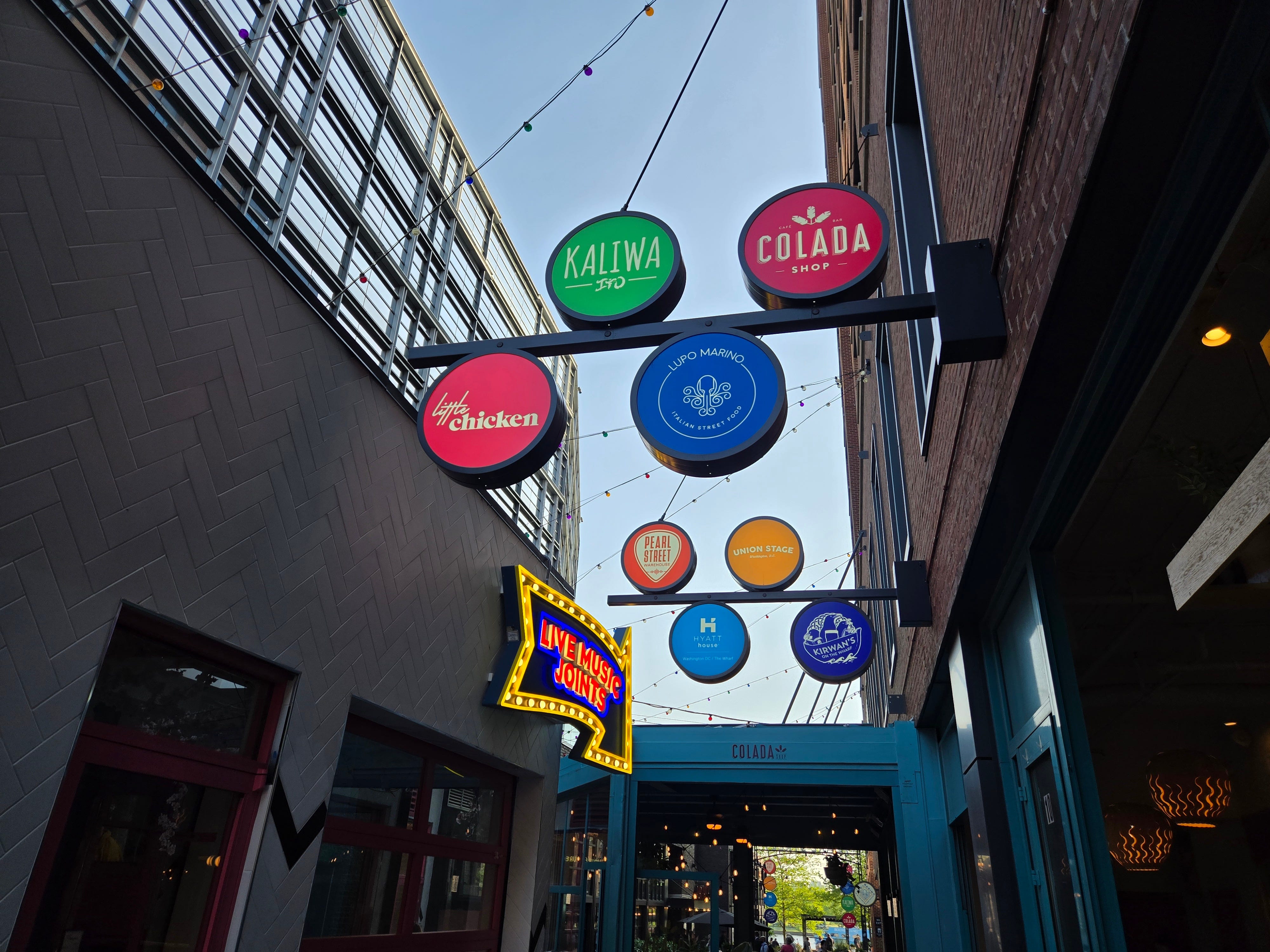
The details and textures here remind me of my mother’s recollections of pre-Vatican II Catholic churches, with their painted ceilings and devotional clutter. but it wasn’t clutter or distraction; it was entry points for the imagination. Many of those churches were sanitized and emptied out after the reforms. It was like suddenly there was nothing to engage wandering eyes and minds. A lot of new development has that blank, empty, feel. It’s so nice to be somewhere and feel your mind coming alive.