

One of my favorite genres of articles, to either read or write, is the deep dive into a seemingly ordinary thing. Questions like who really invented it, how old is it, why does it look conspicuously old-fashioned compared to modern designs, when was the last product of its type made, etc. I find these things fascinating.
So I’m previewing one that I’m working on here. About these guys, differently sized “thumb ring” Farberware stainless steel mixing bowls:
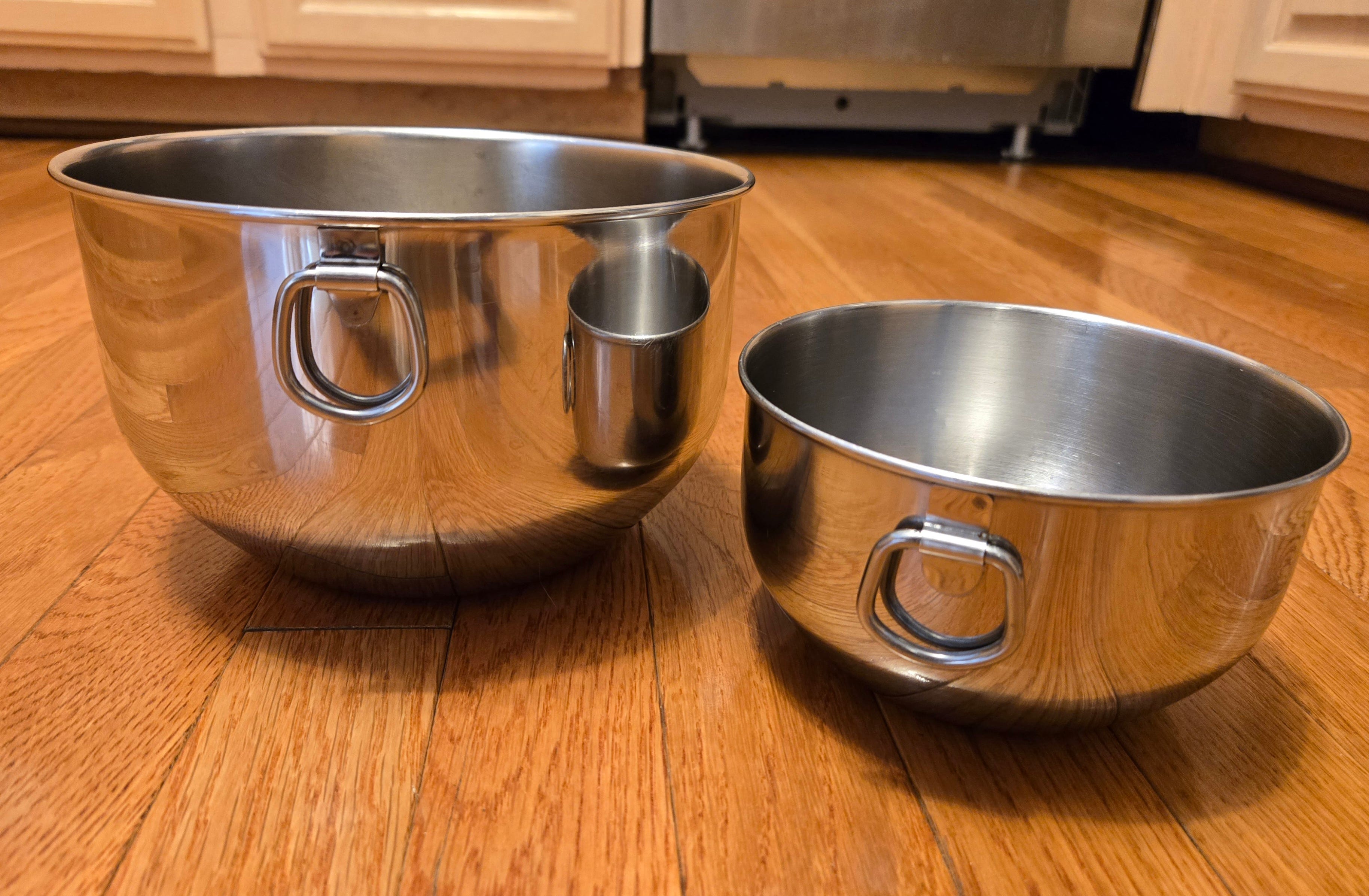
I have three of each size, and they are some of the best things I’ve ever bought. They’re lightweight but sturdy and tip-resistant because of their shape, they’re basically indestructible, they can take any temperature or temperature change. There are not a lot of products I own that every time I use them I specifically think about how useful they are, but these are one of them. And I got all of them at thrift shops for no more than $2 or $3 each.
In fact, for some reason, at least one of these is almost always available at the big thrift shops I go to in Maryland. Sometimes both sizes, sometimes multiples of one or both. There are a handful of things you'll always see in thrift stores, of course, but it’s curious to me that these exact bowls always seem to be there.
Thrift stores, like garage sales, are a window into the history of consumer products—consumer archeology, if you will. I’ve been playing through Atari 50, an anniversary collection and sort of virtual museum game with my wife, and she asked me if I’ve ever seen any of the hardware or games featured.
With the exception of the Atari 2600 and its games, I don’t think I’ve ever seen any Atari console or cartridges “in the wild.”1 (I did see a single Atari Jaguar game in a thrift store, once; I wish I’d bought it, even though I don’t own the console). That suggests that the 2600 sold a lot more than the subsequent consoles and games. Of course we know it did, from sales numbers, but this demonstrates the scarcity or commonness of the stuff; what you see out in thrift stores and garage sales is a kind of index for rarity.
So for these bowls to be available so frequently at a thrift store that they’re almost an “in stock” product—and I’ve been seeing them for years, and probably bought my first four or five years ago—tells you that they must have sold millions and millions of these things. It’s interesting what a long tail that has; I don’t think these bowls are manufactured anymore, at least not by Farberware, and yet they will probably still show up as used products for many more years, if not decades.