

On Thursday night, my wife and I went out food shopping to try and beat the pre-storm crowds. We’re expecting a pretty serious winter storm tonight/tomorrow morning, possibly the biggest in 10-15 years. So we took a drive to our local Wegmans to buy some possibly unnecessary but ritualistic storm staples (coffee, water, milk; we already had enough eggs and bread).
I have not seen a store so bare since the first week or two of the pandemic. It’s always unnerving, as an American, to see bare shelves. It makes you feel a bit spoiled, and also a bit insecure. I myself find it easy to snicker at the people who marvel at the modern food distribution system—oh yeah, big whoop, we can get sour unripe blueberries in December, yay capitalism!—but it is a marvel.
It would be very complacent, and distinctly un-conservative, to come to expect this marvel by right. There is something good about being reminded that comfort and plenty are fragile and contingent. Maybe some of us could use more reminding.
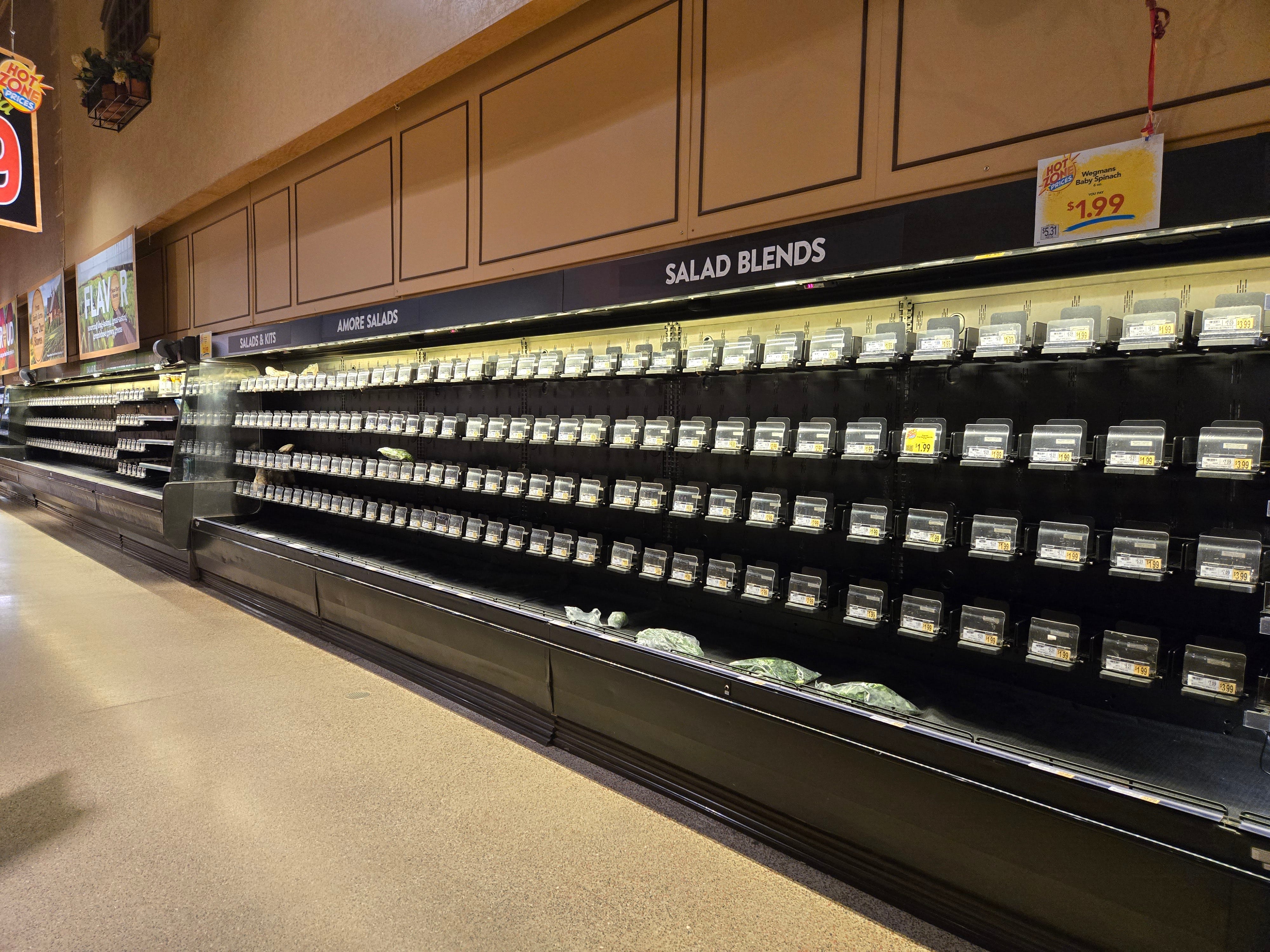
I aways find events that have something to do with consumer issues/retail to be interesting, and so I was also observing the pre-storm supermarket with some journalistic curiosity. For example, why were the salad (pictured) and cheese (not pictured) departments picked clean while chicken, hot dogs, and a decent selection of frozen food were still available?
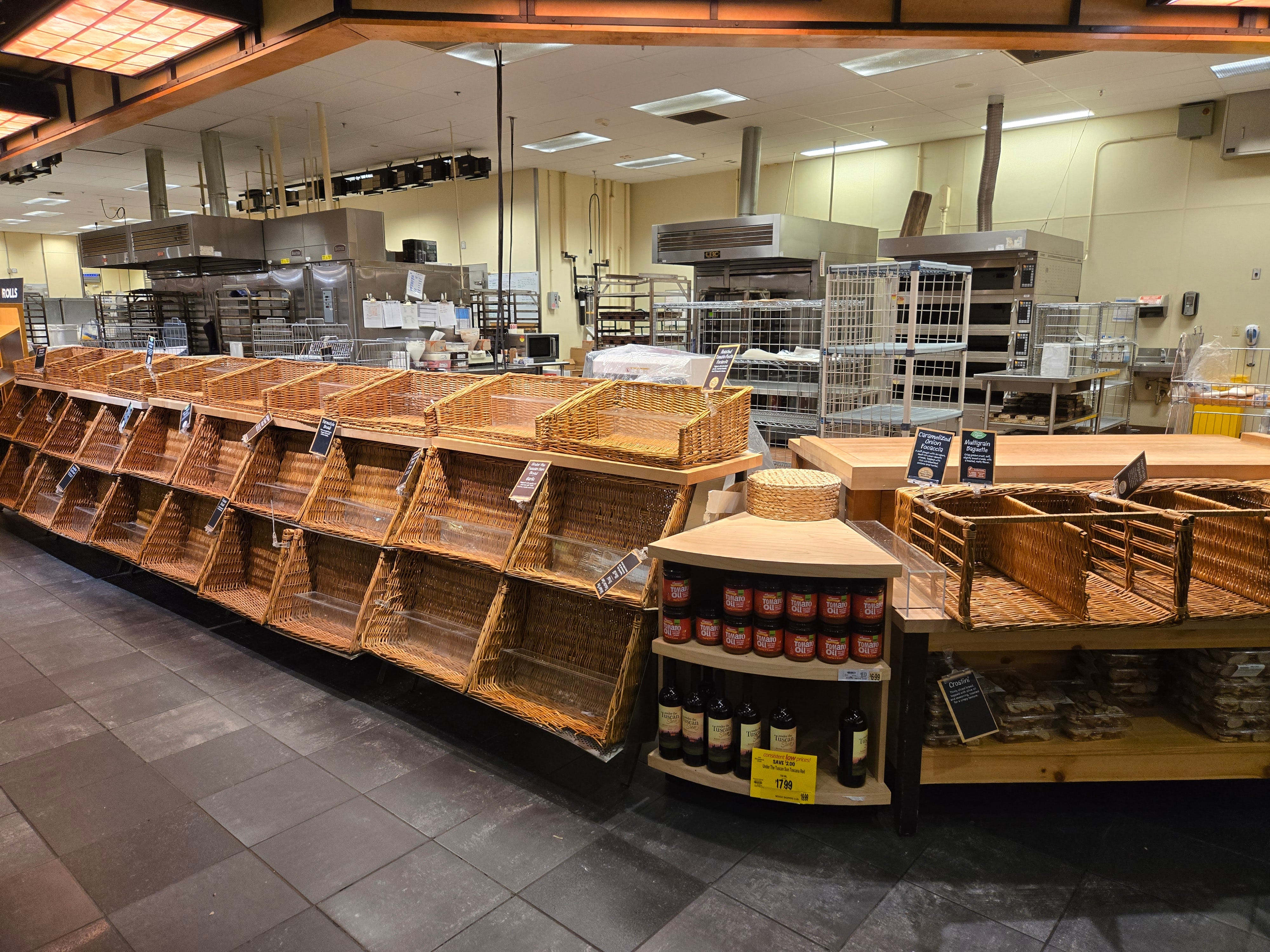
Bread—bakery and packaged alike—was gone:
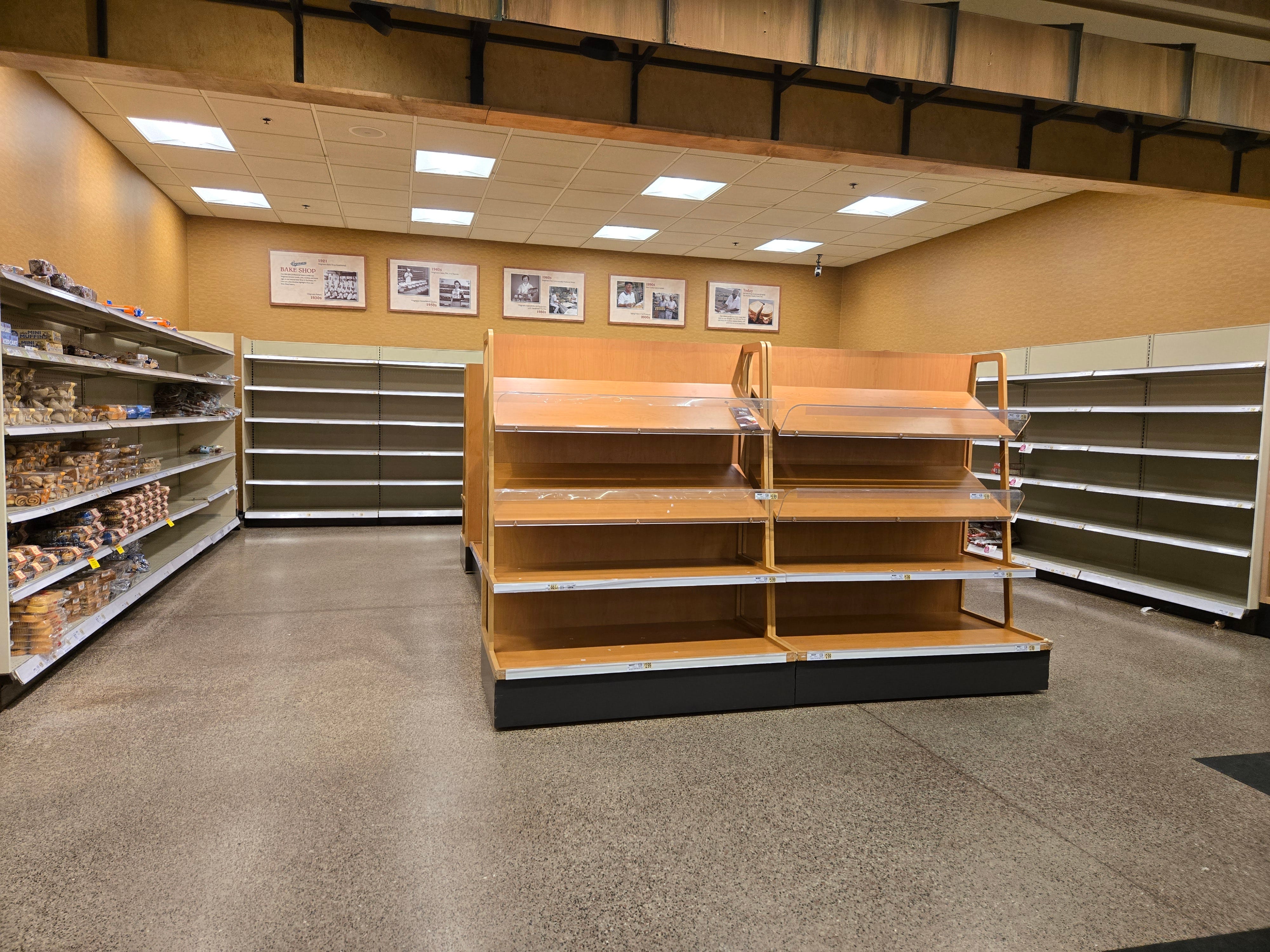
Not every department was this bare. We were able to get some higher-end milk, for example. Across the store, though, you could see the staples and basics were bought up while the boutique and high-end stuff was less touched (the gourmet cheese counter with the fancy cheeses and the olive bar area were fully stocked).
The line was extremely long, but moved quickly enough. I don’t know if more shipments came in between then and now, or if maybe more are coming in today. If not, you’d have a hard time doing your own panic-buying if you haven’t done it already.
So for this piece I was just going to write about the enormous, invisible complexity of modern supply chains, and how events like storms give us a little, disquieting, and perhaps useful peek at what collapse in a rich country might look like.
Until we drove, mostly out of curiosity, to Food Lion, a smaller, discount-oriented grocery store not far from our home.
Food Lion is a chain you’ll find in lots of poorer, more rural Virginia and Maryland towns and elsewhere in the South, and some of them are a bit dingy and old-fashioned. They remind me a lot of the older grocery stores that were around when I was a kid, the ones limping along without a remodel since the 1970s. Our local store is nicer than that, though. I wrote about Food Lion once, because I actually quite like it1, and find it to be a well-run store with surprisingly better products than you might at first think.
Anyway, Food Lion was a completely different scene.
It had a much more intact produce section:
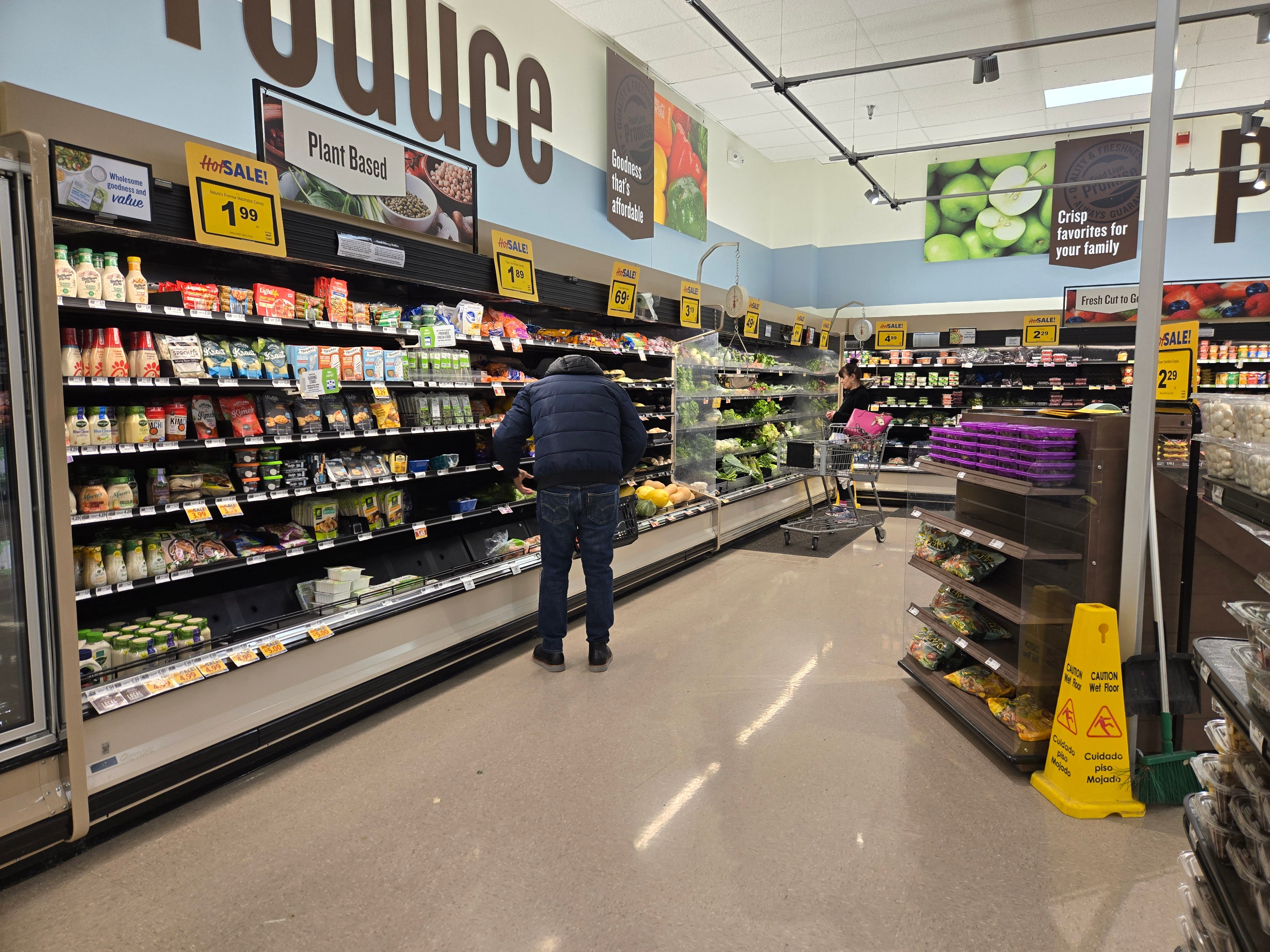
Salad cooler:
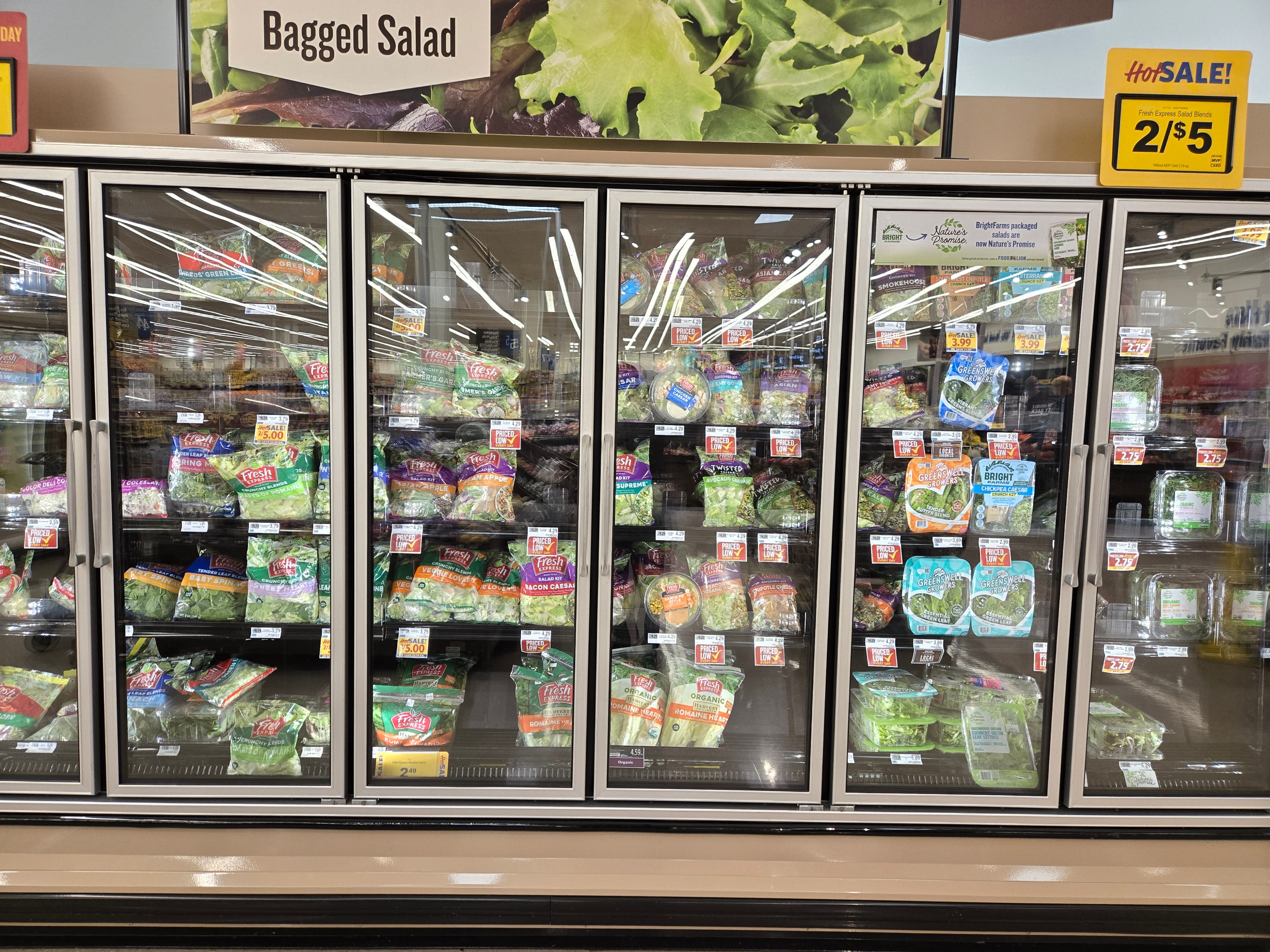
And meat department:
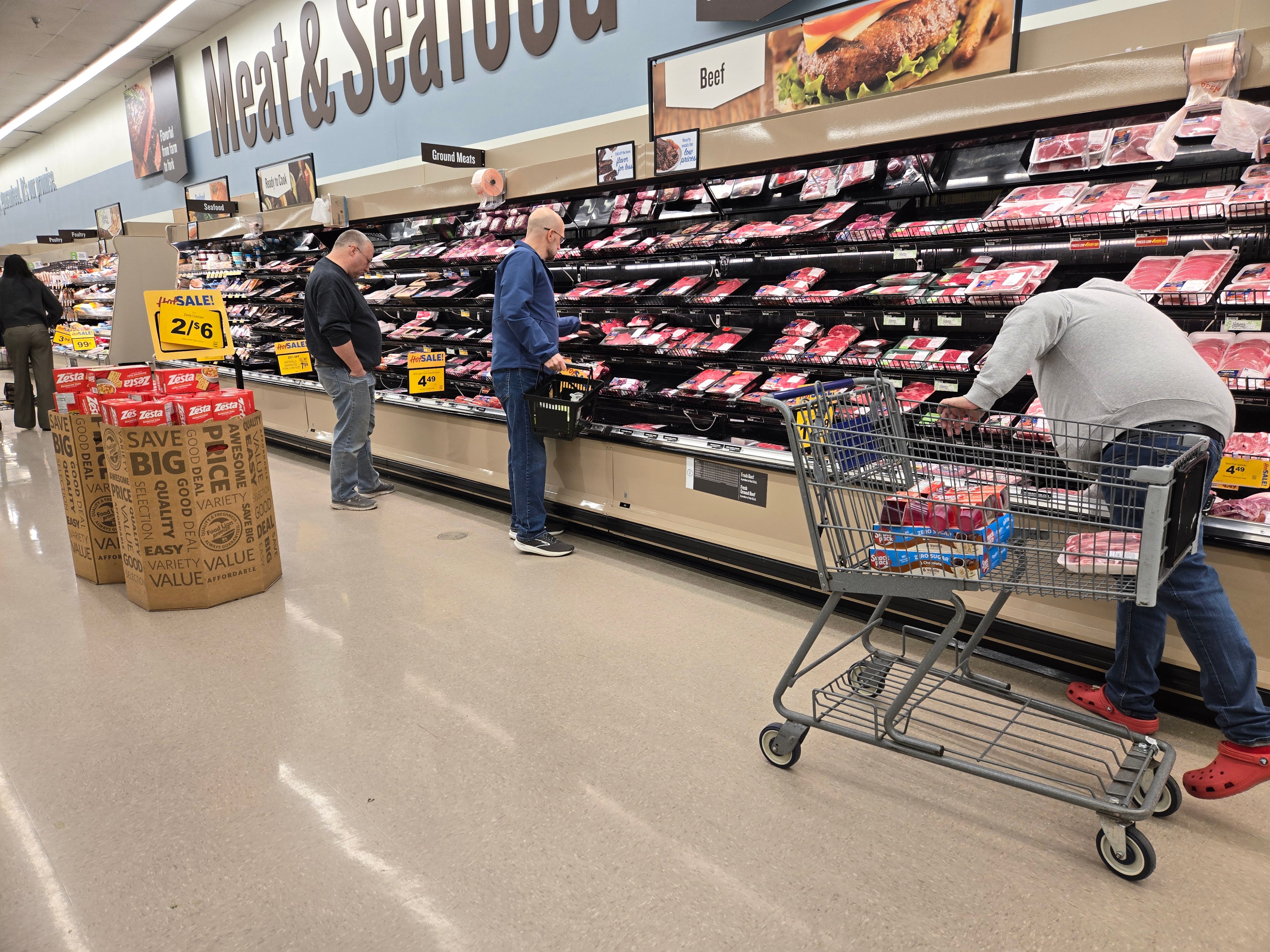
The Food Lion also had store-brand milk left, plenty of butter, and some other basics. It was quiet, too, and only a little more crowded than usual.
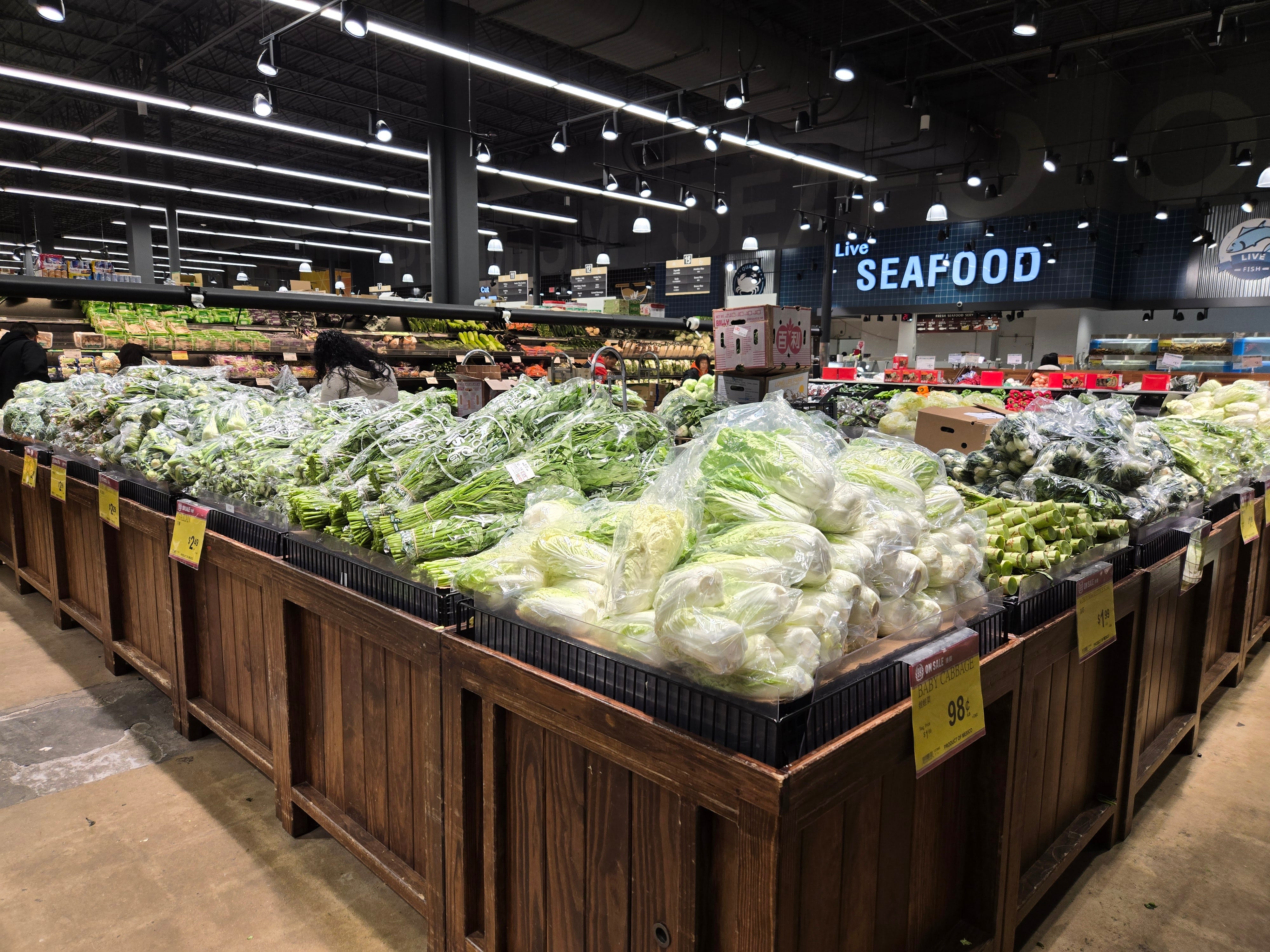
The next morning, we went shopping again for some Asian groceries we needed. We started at 99 Ranch, a Chinese grocery chain, which was crowded but not mobbed, and had as many fresh vegetables and meats as ever:
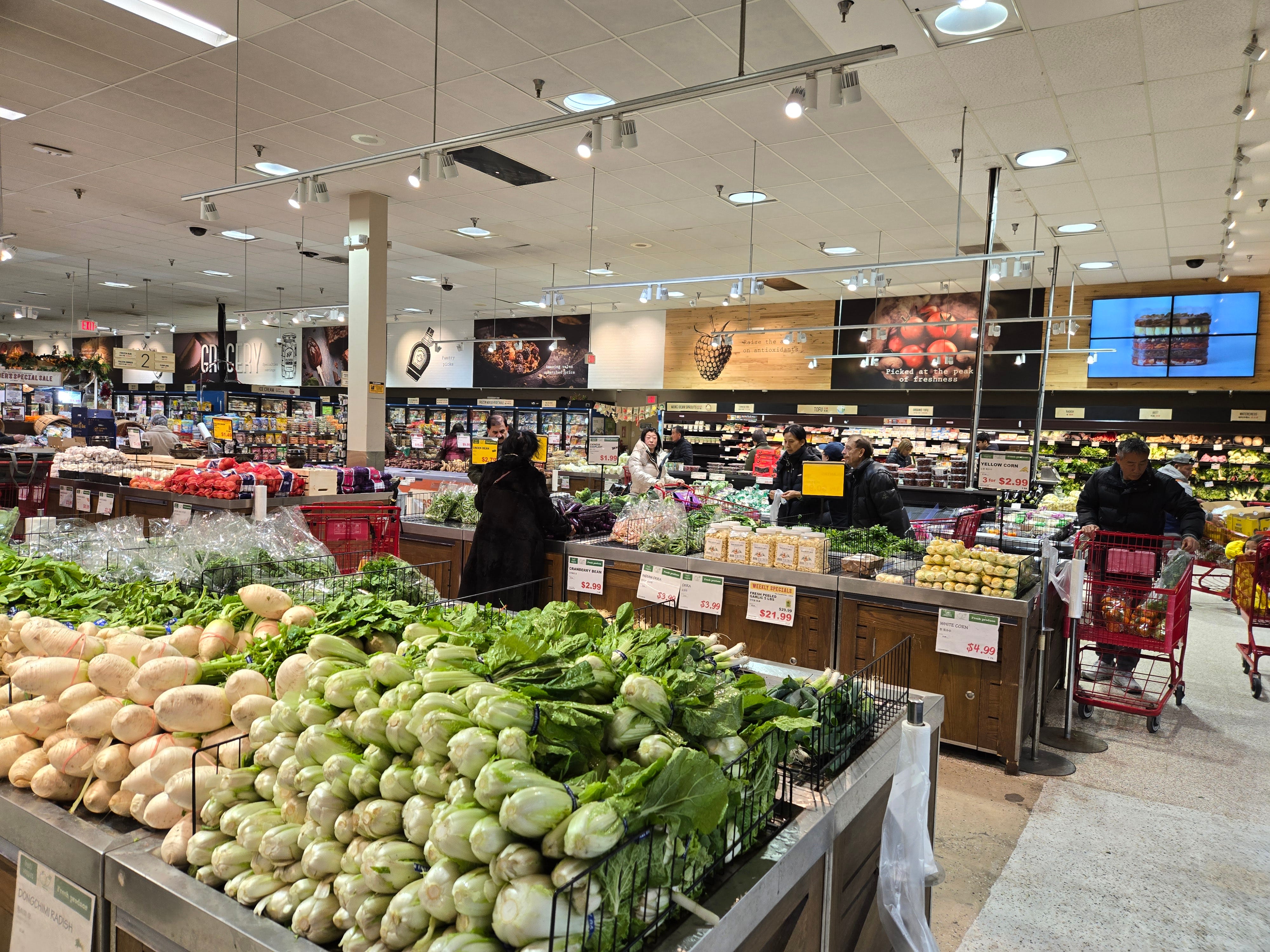
Followed by H-Mart, a Korean grocery chain, and ditto:
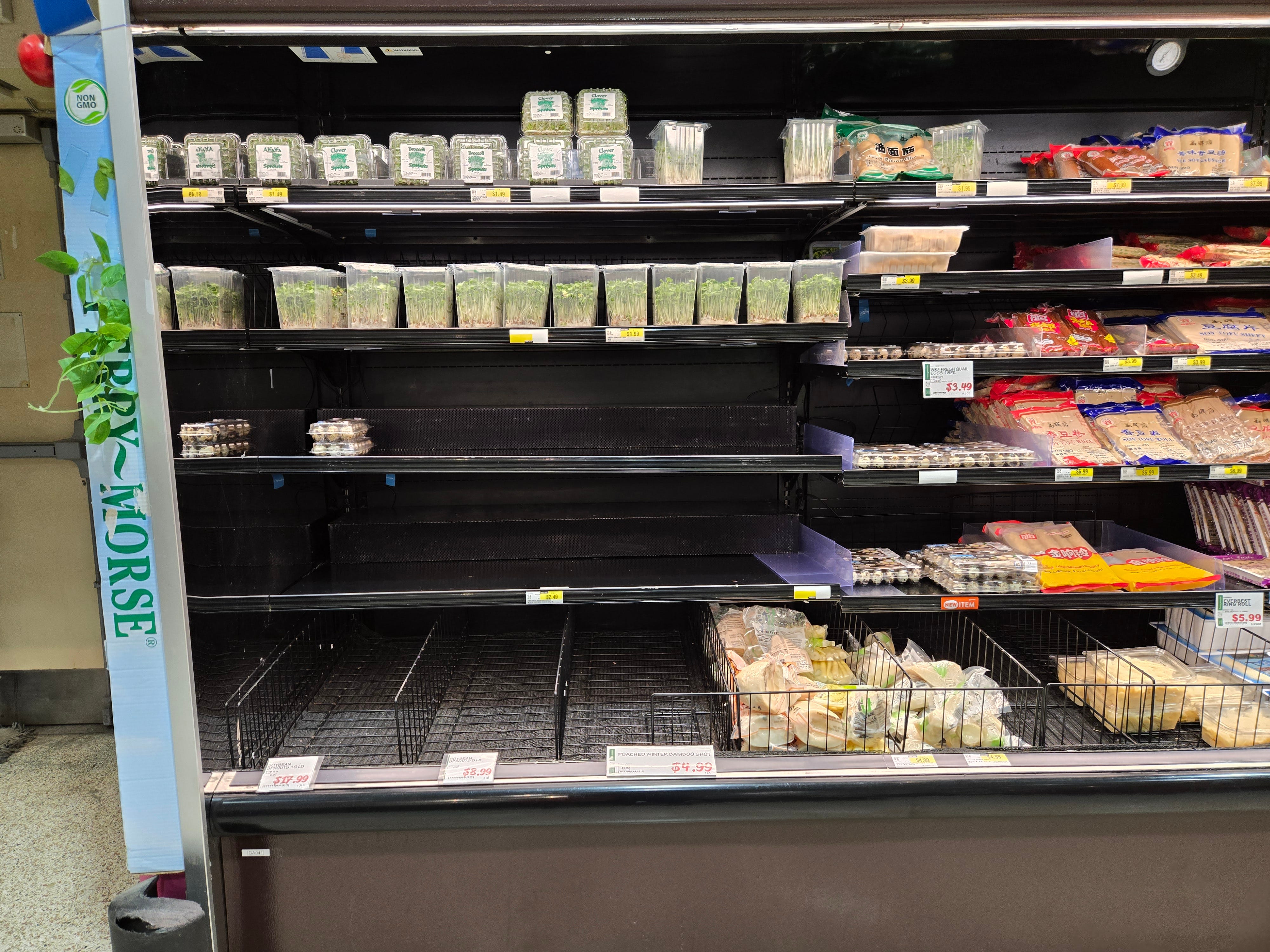
It’s curious to observe what does get picked clean in different stores. Here in H-Mart, it was the bean sprouts (same deal as Wegmans; the fancy micro-sprouts were left, while the regular bagged sprouts were gone):
As you might guess, I found this all immensely fascinating.
I have some various thoughts about this below. I’m very curious what you make of it, too.