

I had two different possible openings for this piece, so I’m just going to include both of them:
Maybe if you can not have occasional intrusive thoughts about “bean dad,” feel a sudden urge to time-travel five years so you can punch the gleeful child abuser in the face through the screen, then hear the clucking Boomers making fun of you for being so soft, want to punch them, and then realize maybe it’s all in your head, it’s okay for you to be on social media.
When you find that “being on the internet” starts to mean “mindlessly scrolling for five minutes before muttering ‘Jesus Christ,’ throwing down the phone, resolving to go to Confession, and then picking it back up thinking maybe this time will be different,” you might have a problem. Or you might be experiencing something as it is.
Increasingly, this is what the internet and in particular social media is for me. But I also increasingly think that’s just what the internet and social media are. Of course, this sort of behavior—doing a thing, but not experiencing it as something you have control over—is the essence of what addiction is.
I ask, very seriously, if it is even possible to use social media in a manner which doesn’t resemble addiction—that is, whether what we call “social media” is actually reducible to something good for us. It seems to me that in many ways it is a vice. A mild one, maybe, like cursing more than you need to. A socially beneficial one, in some ways, like drinking in moderation. But not something which is fundamentally good in and of itself. At least not the way we typically use it and the way it is typically constituted and designed, which, given the corporate world we live in, is pretty much the same thing.
More and more—and our political situation, of course, is part of it—it feels like our reality is shaped by social media. You’ve seen some of it, no doubt: restaurants designing their dining rooms and plating their dishes to be “Instagrammable”; the vice president of the United States arguing with people on Twitter; the appearance of memes and very-online discourses in real-life conversation; the smirking, grinning insincerity, the sense that it’s “cringe” to believe something “unironically.”1 Large amounts of the real world now feel infected by a certain kind of social media psychology; like some mental virus has escaped the virtual lab.

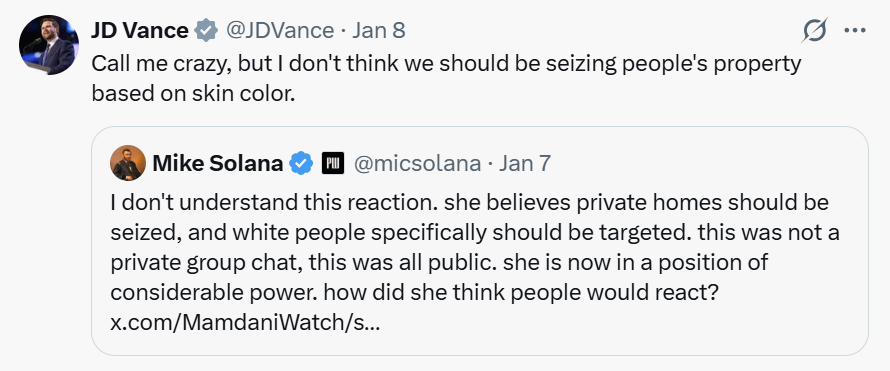
It isn’t just the content; it’s the unbecomingness and unseriousness of the entire enterprise. (The viral-trend retailing annoys me too.)
This social-media-ification of real life is a hard thing to pin down, but then a lot of trends are. It’s similar, maybe, to the notion that sports betting helps people be better fans, by encouraging them to put some skin in the game. This is an industry talking point, but it pops up “in the wild,” and over time, the popularization of sports betting and the psychology around it will subtly influence how sports fandom works, looks, and feels. In a similar way, social media, and it’s gambling-adjacent random virality mechanic, infects the way we approach real life.
I think the worst way this works is the tendency to be so used to dealing with possibly non-existent, bad-faith, one-dimensional “people” online, that the general format of social media becomes the lens we apply to the real world. “People” are just sort of living avatars. Everyone has a pose and a brand and a schtick, which means that nobody is truly honest, forthright, or plainspoken. (Or if they are, that is the pose.) The algorithm is a sort of scorekeeping god, who awards meaningless points for winning an exchange. You can quite forget that the real world is real.2
In this world, there is no truth. Reaction and convincingness—did you get lots of likes, or did you get ratioed?—are the arbiters of truth, such as it is. Being correct, or even meaning what you say, don’t really matter. They matter, of course, to some people. To many, maybe even most people! But nonetheless this social-media worldview is a discernible, describable thing.